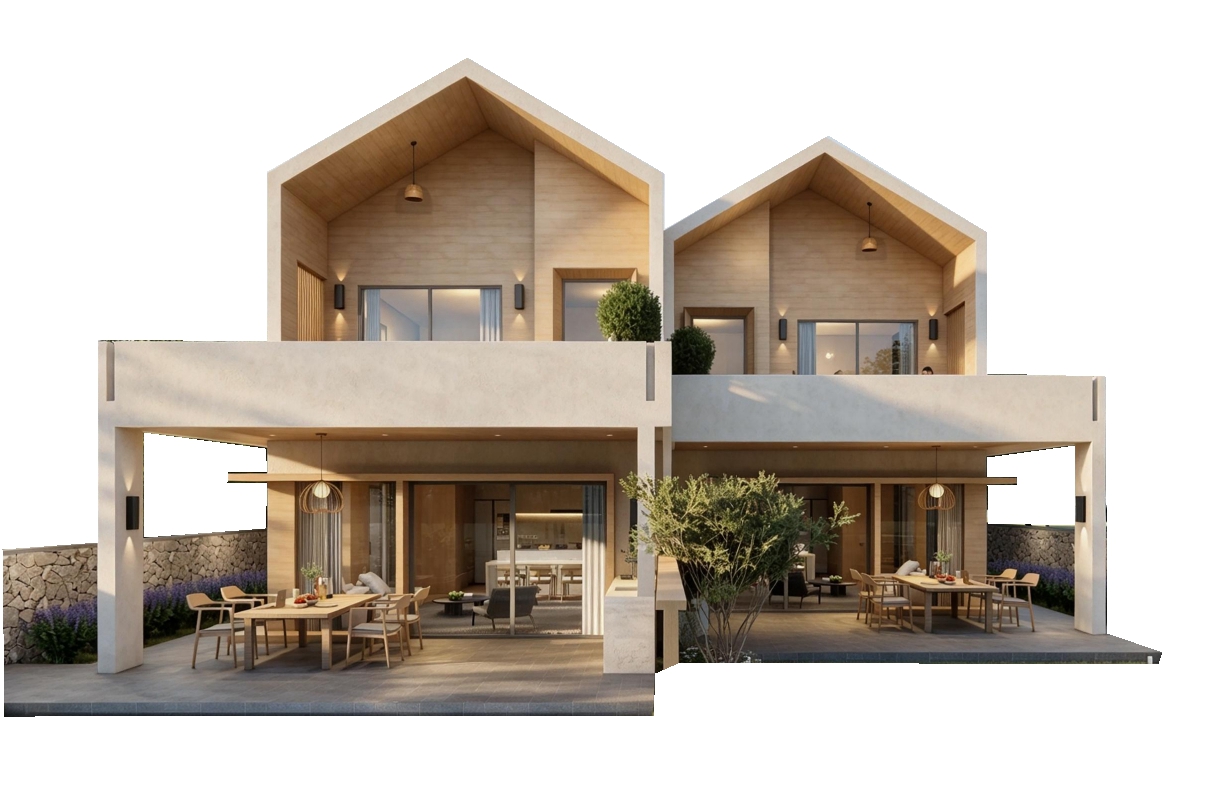
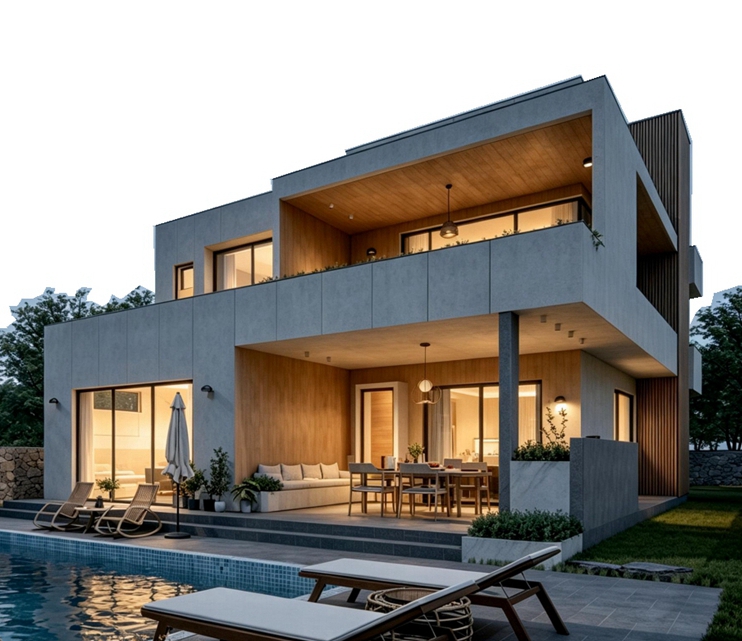
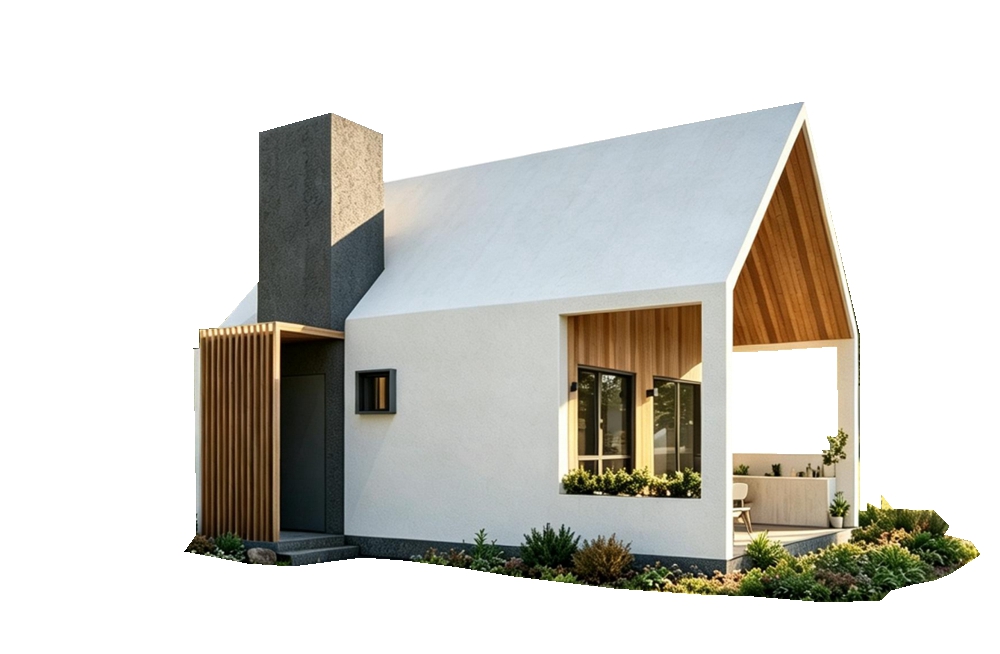
Rural tourism has been booming in recent years, and homestays, as the core carrier of rural scenery and cultural characteristics, have become the first choice for many investors. However, building rural homestays often faces numerous challenges: long construction periods affecting opening schedules, damage to rural ecology, poor adaptability, and cumbersome later maintenance. Choosing the right building type is crucial to the profitability of homestays. With years of experience in the light steel construction industry, Ruijie Light Steel Villa combines the operational needs and regional characteristics of rural homestays. With its advantages of aesthetic compatibility, flexibility, practicality, and low-cost operation, it has become the preferred solution for rural homestays. It can not only fit the style and needs of rural areas in different regions but also help investors lower entry barriers and increase returns, perfectly adapting to the business logic of rural homestays.
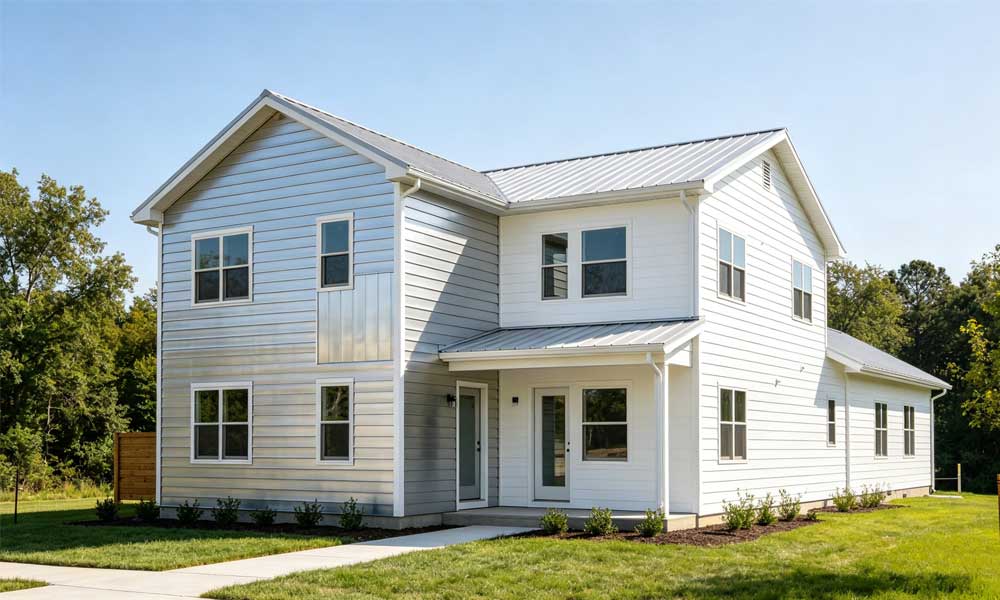
One of the core competitiveness of rural homestays is their integration with rural natural scenery and cultural context, avoiding the monotonous industrial style. Ruijie Light Steel Villa breaks the stereotype of "single appearance of light steel buildings" and can customize the exterior according to the characteristics of rural areas in different regions. It can accurately adapt to the pastoral fresh style of southern rural areas, the simple and solid style of northern rural areas, and the simple and elegant style of mountainous rural areas.
The exterior can be matched with various materials such as real stone paint, wood panels, and cultural stone, combined with designs such as sloping roofs, terraces, and courtyards, which blend naturally with the rural fields, mountains, and streams. It can create an Internet-famous check-in spot without additional decoration, enhancing the attractiveness of the homestay. At the same time, its architectural style fits the "small and beautiful" positioning of rural homestays. A single building can be controlled within 4 floors with a construction area of no more than 800 square meters, fully complying with the construction requirements of rural homestays in most regions and avoiding affecting the overall rural style due to abrupt styles.
Rural areas have great regional differences: southern areas are humid and rainy, northern areas are cold and snowy, and mountainous areas have complex terrain, which places high requirements on the adaptability of homestay buildings. Ruijie Light Steel Villa optimizes its design according to the characteristics of different regions, fully adapting to diverse rural scenarios and meeting Baidu geo-location adaptation needs.
For the humid climate in southern rural areas, it adopts moisture-proof rock wool insulation layer + waterproof and breathable membrane to effectively block moisture penetration, avoid wall dampness and mold, and improve the accommodation experience. For the cold northern rural areas, the insulation layer is thickened to more than 130mm, combined with an aluminum foil reflective layer to reduce heating energy consumption, meeting the energy-saving needs of rural areas. For mountainous rural areas with complex terrain, light steel villas are light in weight and have low requirements on the foundation, without large-scale excavation, and can flexibly adapt to slopes, woodlands and other terrains. At the same time, the anti-seismic and anti-wind design is strengthened, which can resist earthquakes below magnitude 8 and strong winds of magnitude 12, ensuring the safe operation of homestays without worrying about geological disaster risks.
What rural homestay investors care most about is the opening efficiency and operation cost. The construction period of traditional brick-concrete homestays is as long as 6-12 months, which not only misses the tourist peak season but also incurs continuous capital occupation costs. Ruijie Light Steel Villa adopts a prefabricated + on-site assembly mode, which is as efficient as building blocks. For a homestay of about 200 square meters, the main structure can be completed in 30-45 days, and it can meet the move-in standard in 45-60 days. The construction period is reduced by more than 60% compared with traditional buildings, helping investors quickly seize the rural tourism market.
In terms of cost, the material cost of Ruijie Light Steel Villa is only 1/3 of that of traditional brick-concrete buildings. Moreover, no heavy machinery is needed for construction, reducing labor and material waste. The later maintenance cost is also greatly reduced, with an annual maintenance cost of only 500-1000 yuan, mainly used for roof waterproofing and simple inspection of metal components, which is much lower than the annual maintenance cost of 2000-3000 yuan for traditional brick-concrete homestays. At the same time, more than 90% of light steel materials can be recycled, and the construction is free of dust and wet operations, complying with the requirements of rural ecological protection, so there is no need to worry about environmental compliance issues.
The construction of rural homestays must comply with local territorial spatial planning, building safety, fire safety and other requirements. Many investors encounter obstacles in registration due to non-compliant buildings. Ruijie Light Steel Villa fully follows relevant standards such as "Basic Requirements and Classification of Tourist Homestays" and "Code for Fire Protection of Farmhouses (Homestays)", and can provide complete qualification documents such as building safety appraisal reports and fire detection reports, meeting the registration requirements of rural homestays.
Its building structure is safe and firm, and can pass the reliability appraisal of third-party institutions, meeting the special management requirements of commercial self-built houses. In terms of fire protection, it can be equipped with independent smoke detectors, fire extinguishers and other facilities according to homestay standards, with reasonable design of evacuation routes and safety exits, which can easily pass the fire inspection. At the same time, the approval of rural homestays in most regions implements "one-window handling". Ruijie Light Steel Villa can provide a full set of compliant materials to help investors complete the registration quickly, and the relevant procedures can be completed in about 7 working days, saving cumbersome processes.
Q1: Is the approval process complicated for using Ruijie Light Steel Villa as a rural homestay?
A1: No, it is not complicated. Ruijie Light Steel Villa meets the relevant standards for rural homestay construction and can provide complete qualification documents such as building safety appraisal reports and fire detection reports, which are in line with the "one-window handling" and "joint registration" approval requirements in most regions. After submitting the relevant materials, the registration procedures can be completed in about 7 working days, which can be adjusted according to local rural construction policies.
Q2: Is the later maintenance cost high for rural homestays using Ruijie Light Steel Villa?
A2: No, it is not high. Ruijie Light Steel Villa adopts AZ50 grade hot-dip aluminized zinc keels, which are corrosion-resistant and durable. The service life of the main structure can reach 70-100 years, and the annual maintenance cost is only 500-1000 yuan, mainly used for roof waterproofing and simple inspection of metal components, which is much lower than the annual maintenance cost of 2000-3000 yuan for traditional brick-concrete homestays, making long-term operation more worry-free.
Q3: Can Ruijie Light Steel Villa meet the demand for personalized layout when used as a rural homestay?
A3: Yes, it can. Ruijie Light Steel Villa has no load-bearing wall restrictions, and the internal layout can be flexibly adjusted. According to the operational needs of the homestay, it can design spaces such as guest rooms, public leisure areas, tea rooms, and terraces. At the same time, the exterior style can be customized to fit the rural style and homestay positioning, which can accurately adapt to both small and high-end homestays and large-scale homestay clusters.
 Follow us