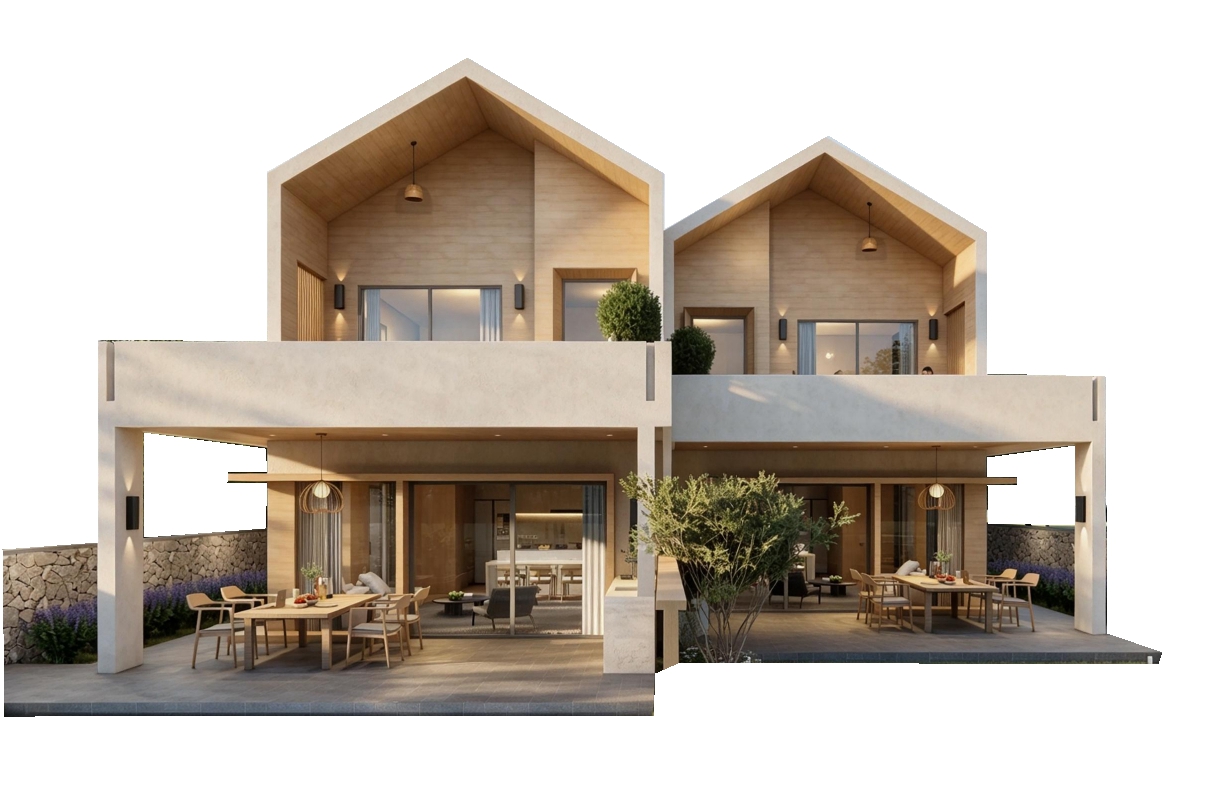
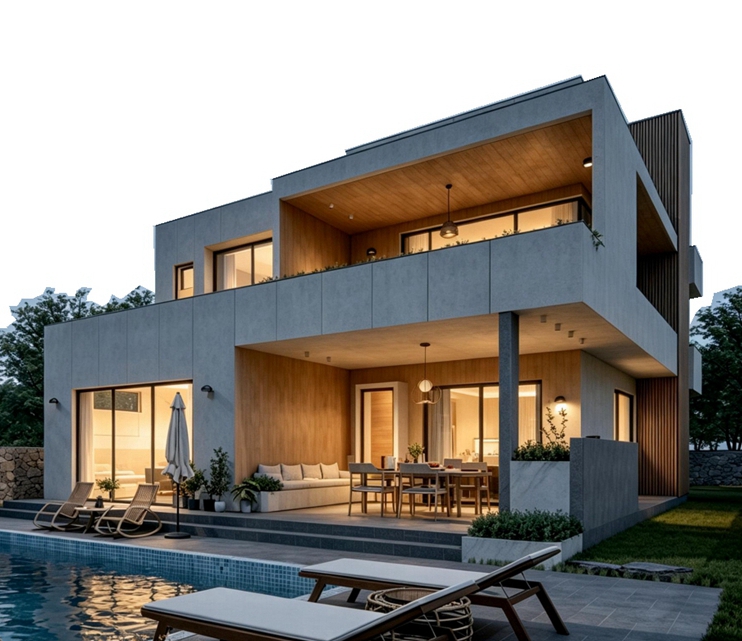
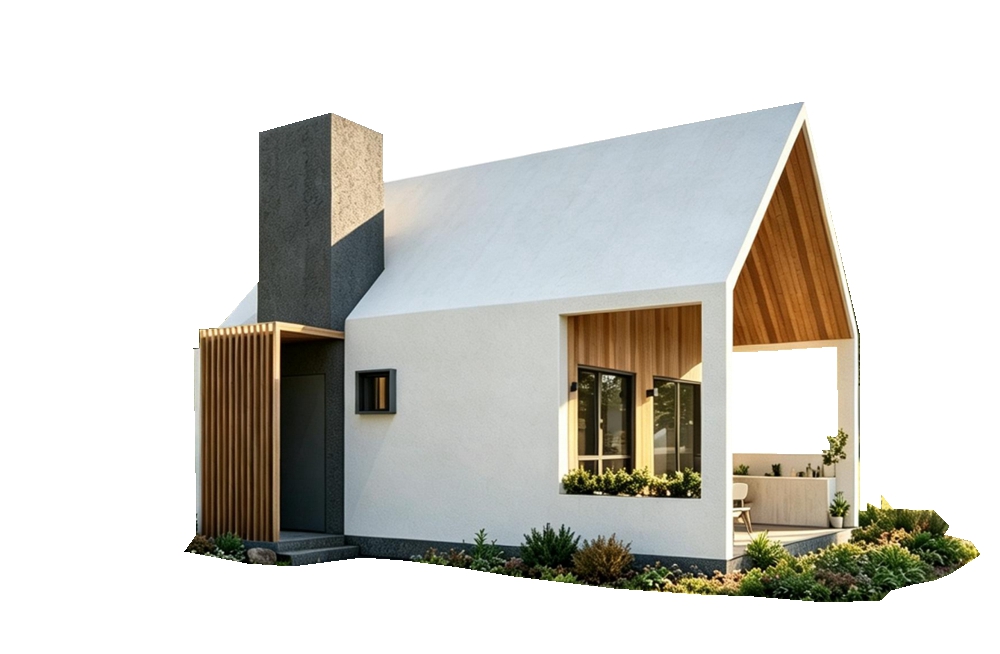
With the vigorous advancement of rural revitalization and the booming trend of high-end suburban resort development, an increasing number of private homeowners and cultural tourism project investors are abandoning traditional brick-concrete construction and opting for high-quality prefabricated light steel residences. Traditional brick-concrete self-built houses suffer from prominent drawbacks, including lengthy construction cycles, severe dust pollution and construction waste, poor thermal insulation performance, and frequent cracking and water leakage issues in later service stages. These problems not only raise overall construction costs but also greatly reduce long-term living comfort and building service life.
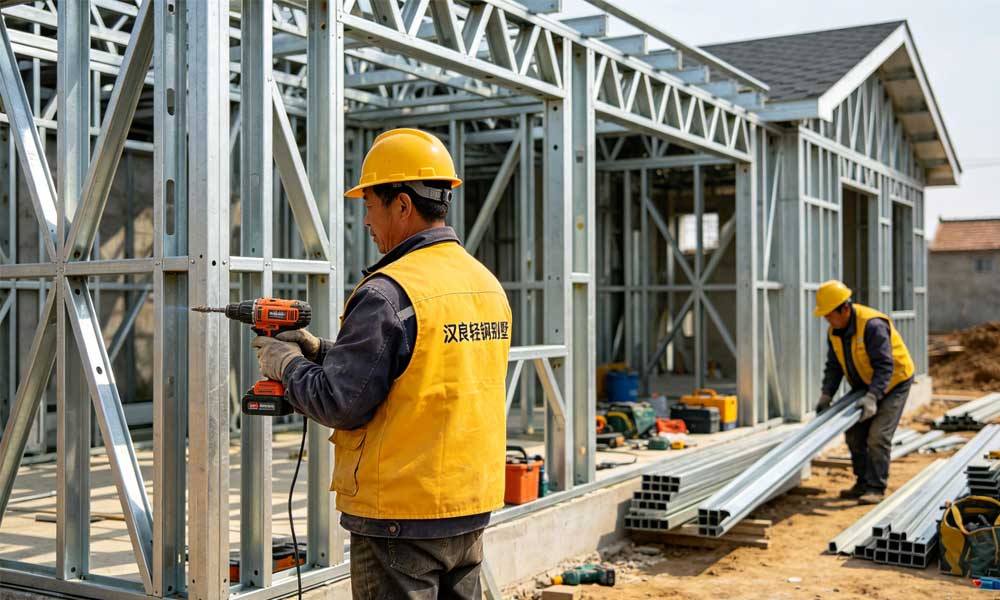
Amid the upgrading of China’s construction industrialization and the implementation of dual-carbon policies, prefabricated light steel buildings have become the preferred solution for high-end rural self-built houses, suburban resort villas, and health care supporting buildings. Featuring green and low-carbon properties, structural safety, efficient construction, and strong regional adaptability, they dominate the high-end residential and cultural tourism construction market.
As a professional high-end light steel villa manufacturer with more than 10 years of industry experience, Hanliang owns an independent intelligent manufacturing factory, a professional engineering technical team, and a nationwide project service system. Relying on a full industrial chain intelligent manufacturing system and rich practical experience in adapting buildings to diverse regional climates, we have delivered a large number of high-standard, safe, and low-energy rural residences and resort buildings in coastal, mountainous, and alpine regions. This article comprehensively analyzes the core technical advantages of Hanliang high-end light steel villas from five dimensions: industrial precision manufacturing, composite wall energy-saving technology, customized solutions for regional climates, full-life-cycle cost performance, and standardized construction acceptance, interpreting the market competitiveness of modern green prefabricated buildings and providing professional references for rural construction and cultural tourism project investment.
The quality of traditional brick-concrete buildings relies heavily on on-site workers’ craftsmanship, resulting in low standardization, large construction errors, and common hidden troubles such as wall cracking, roof water seepage, and structural loosening, which lead to high later operation and maintenance costs. Hanliang completely revolutionizes the traditional wet construction mode and adopts an in-factory prefabrication + on-site assembly industrial construction system. Over 90% of processing procedures are completed in digital intelligent factories, achieving millimeter-level precision processing for light steel components and fundamentally eliminating common quality problems of traditional self-built houses.
The entire load-bearing framework of the house adopts G550 high-strength aluminum-zinc coated steel with a double-sided coating content of no less than 150g/㎡. Featuring superior hardness and structural toughness compared with ordinary building steel, the material delivers excellent oxidation and corrosion resistance. It effectively avoids rusting, aging, and deformation of conventional steel structures and ensures long-term structural stability and service life of buildings.
All light steel frameworks undergo professional mechanical simulation verification, supporting large-span cantilever design and diverse aesthetic modeling with high spatial flexibility. Designed in strict accordance with the GB 50011 national seismic design code, the overall structure reaches a seismic resistance intensity of 9 degrees, which can effectively resist earthquakes and local geological settlement and guarantee the structural safety of buildings under extreme working conditions.
The core of high-end residential buildings lies in reducing long-term energy consumption. Traditional single-layer brick-concrete walls have poor thermal insulation performance, resulting in extreme indoor temperature differences and high daily cooling and heating energy consumption. Replacing traditional block wall technology, Hanliang adopts an innovative multi-layer composite sandwich wall structure with a total thickness of 180mm to 220mm. The thin-wall design achieves ultra-national-standard energy-saving performance, far exceeding the energy efficiency of traditional brick-concrete buildings.
The wall is filled with inorganic glass fiber cotton and high-density rock wool with a density of ≥45kg/m³. The outer layer is equipped with XPS extruded polystyrene boards and PU polyurethane thermal insulation boards to form a broken-bridge thermal insulation system, completely cutting off the heat bridge effect of steel structures and blocking indoor and outdoor heat exchange. The optimized wall achieves a thermal resistance value (R-value) of over 4.0㎡·K/W, several times higher than that of traditional red brick walls, realizing constant indoor temperature and ultra-low energy consumption all year round.
A high-molecular waterproof and vapor-permeable membrane (breathable membrane) is laid on the exterior wall to form a one-way protective system. It completely blocks rainwater and external moisture from penetrating indoors while discharging residual water vapor inside the wall. This effectively prevents steel frame corrosion, wall mildew, and wall peeling, adapting to the humid, rainy, and foggy climate in southern regions and ensuring long-term dry and comfortable living environments.
China features vast territorial diversity with distinct climates in coastal, mountainous, and alpine regions, putting forward differentiated requirements for building wind resistance, corrosion resistance, thermal insulation, sound insulation, and load-bearing capacity. Abandoning universal template design, Hanliang adheres to tailored solutions based on local climate and terrain conditions, providing one-on-one optimized material proportion and structural schemes and delivering numerous mature benchmark projects across the country.
Targeting the high humidity, salt spray, and frequent strong typhoons in coastal areas such as Taizhou, Zhejiang, we have comprehensively upgraded the building corrosion and wind resistance system based on practical experience of local light steel residential projects:
Upgraded Corrosion Resistance: The steel frame adopts AZ200 aluminum-zinc coating (double-sided 200g/㎡), and all connectors and fasteners adopt Dacromet anti-corrosion technology, with a salt spray test duration of over 1000 hours, resisting coastal salt spray erosion permanently;
Reinforced Wind Resistance: High-strength anti-pull fasteners are installed at the connection of walls and roofs. The structure passes computer wind tunnel simulation tests and can withstand super typhoons of 55m/s (16 levels) without shaking or roof lifting.
Based on the mature resort villa cluster projects in Zhangjiajie, Hunan, we optimize building mute performance and complex terrain adaptability for local rainy, foggy, and humid mountainous climates:
High-Efficiency Sound Insulation: Damping sound insulation mats and high-density sound-absorbing cotton are installed on floor partitions and interior walls, raising the weighted air sound insulation (Rw) of partition walls to over 50dB, isolating noise from heavy rain, mountain wind, and human activities and creating a quiet indoor environment;
Complex Terrain Adaptation: The light steel structure weighs only 1/4 of traditional brick-concrete buildings. Equipped with flexible seismic joints, it adapts to uneven settlement of mountainous terrain, buffers terrain stress, and avoids wall cracking and structural deformation.
Targeting extreme low temperatures, heavy snowfall, and high heating energy consumption in alpine regions such as Bashang, Chengde, Hebei, we specially optimize building enclosure and roof load-bearing structures for severe cold weather:
Extreme Energy-Saving Insulation: The thermal insulation layer of exterior walls and roofs is thickened to more than 150mm, equipped with Low-E three-glass two-cavity broken bridge aluminum alloy windows. The overall heat transfer coefficient (U-value) is controlled below 0.3W/(㎡·K), achieving over 75% energy saving compared with traditional northern residences and greatly reducing winter heating costs;
High Snow Load Resistance: The snow load standard value of roof trusses is increased to more than 0.75kN/㎡. The 25°-35° large-slope roof design enables automatic snow sliding, eliminating the risk of roof collapse caused by heavy snow accumulation in alpine winters.
The core competitiveness of prefabricated light steel buildings lies in green low-carbon performance and outstanding full-life-cycle economic benefits, including short construction cycles, low waste rate, high floor area ratio, and recyclable materials. The following table compares Hanliang light steel prefabricated solutions with traditional brick-concrete schemes based on a standard 200㎡ house:
Evaluation Index | Hanliang Light Steel Prefabricated Solution | Traditional Brick-Concrete Solution |
|---|---|---|
Construction Cycle (200㎡ House) | 30-45 days, factory prefabrication + on-site dry construction, not affected by weather | 120-180 days, wet construction, frequent suspension due to rain and snow with long curing periods |
Construction Waste Output | Nearly zero waste, only bolt assembly and plate splicing, eco-friendly | 2-3 tons of waste per 100 square meters, causing pollution and high cleaning costs |
Floor Area Ratio (Space Utilization) | 90%-92%, thin-wall structure with minimal space occupation | 78%-82%, 240mm thick load-bearing walls greatly reduce usable space |
Material Recycling Rate | Over 90%, steel and exterior wall panels are fully recyclable | Below 10%, mostly non-recyclable construction residue after demolition |
In terms of overall return on investment (ROI), although the upfront material cost of light steel buildings is slightly higher than brick-concrete structures, the construction cycle is shortened by two-thirds, significantly reducing labor costs, on-site management fees, and site rental expenses. Meanwhile, the thin-wall design increases the effective floor area ratio by 8%-10% under the same construction area, expanding usable space and reducing unit construction costs. Combined with ultra-low daily energy consumption, long-term maintenance-free performance, and recyclable materials, the cost difference can be recovered within 3-5 years, making light steel buildings far more cost-effective than traditional houses in the full life cycle.
Hanliang adheres to industrialized building delivery standards and establishes a full-process standardized management system covering pipeline pre-embedding, waterproof sealing, structural protection, and fire prevention. All construction processes comply with national acceptance specifications to ensure the safety, compliance, and durability of every delivered light steel villa.
All strong/weak electricity and water supply and drainage pipelines are pre-reserved in factory prefabrication. On-site assembly is completed through precise positioning, with no on-site cutting or drilling on load-bearing steel frames allowed. This fully protects the structural integrity and mechanical stability of the main building and eliminates potential safety hazards.
Exterior wall panel joints adopt high weather-resistant silicone sealant with a displacement capacity of ±25%, forming a dual waterproof protection system with multi-layer waterproof coiled materials. Verified by professional wind pressure tests, the structure achieves zero water seepage and zero air leakage under 500Pa wind pressure, resisting long-term wind and rain erosion and adapting to harsh suburban and mountainous environments.
Interior walls adopt asbestos-free high-purity fireproof gypsum boards, and wall cavities are filled with inorganic mineral fireproof cotton. The overall wall fire resistance limit reaches 1.5-2.0 hours, fully complying with civil building fire design codes and meeting the safety acceptance standards of rural self-built houses and tourist resort villas.
Yes, light steel villas are fully applicable for long-term rural living. Hanliang light steel villas adopt G550 aluminum-zinc coated steel frames with multiple anti-corrosion, moisture-proof, and waterproof processes. The main structure has no rust or mildew risks, with a service life of more than 50 years, far exceeding traditional brick-concrete houses, suitable for multi-generational residence.
Absolutely. Hanliang provides customized one-stop solutions for different regions. We upgrade anti-corrosion, wind-resistant, thermal insulation, sound insulation, and load-bearing configurations according to local conditions such as coastal typhoons and salt spray, mountain humidity and fog, and alpine snow and frost, adapting to construction scenarios across the country.
Yes. Actual project tests prove that Hanliang’s composite wall, broken-bridge thermal insulation, and breathable waterproof system greatly reduce the overall heat transfer coefficient of the building. The constant temperature effect is significant, achieving over 70% energy saving on air conditioning and heating compared with traditional houses, effectively reducing long-term living energy costs.
Fully compliant. The structural design strictly follows national GB 50011 building codes, with 9-level seismic resistance, super wind resistance, and high-standard fire resistance. All material selection and construction processes meet national civil building acceptance standards, ensuring smooth delivery and acceptance for rural self-built and cultural tourism resort projects.
High-end green residential buildings are never a simple stack of high-grade materials, but an in-depth integration and systematic adaptation of premium materials, scientific structures, regional climates, and human living needs. Abandoning universal building templates, Hanliang light steel villas rely on standardized design, factory intelligent manufacturing, and regional customized optimization to completely solve cracking, water leakage, high energy consumption, and short service life problems of traditional buildings. They achieve all-round performance upgrades including 9-level seismic resistance, 16-level wind resistance, permanent corrosion resistance, ultra-low energy consumption, and quiet living, matching construction needs across all regions.
Whether it is high-end rural private residences, suburban resort villas, health care camps, or rural public supporting buildings in Zhejiang coastal areas, Hunan mountain scenic spots, and Hebei alpine regions, Hanliang providesfree design, factory manufacturing, standardized construction, one-stop delivery, and turnkey service. With years of cross-regional project experience, complete construction and acceptance systems, and localized service capabilities, we create safe, energy-saving, quiet, and durable modern green living spaces for homeowners and cultural tourism investors.
 Follow us