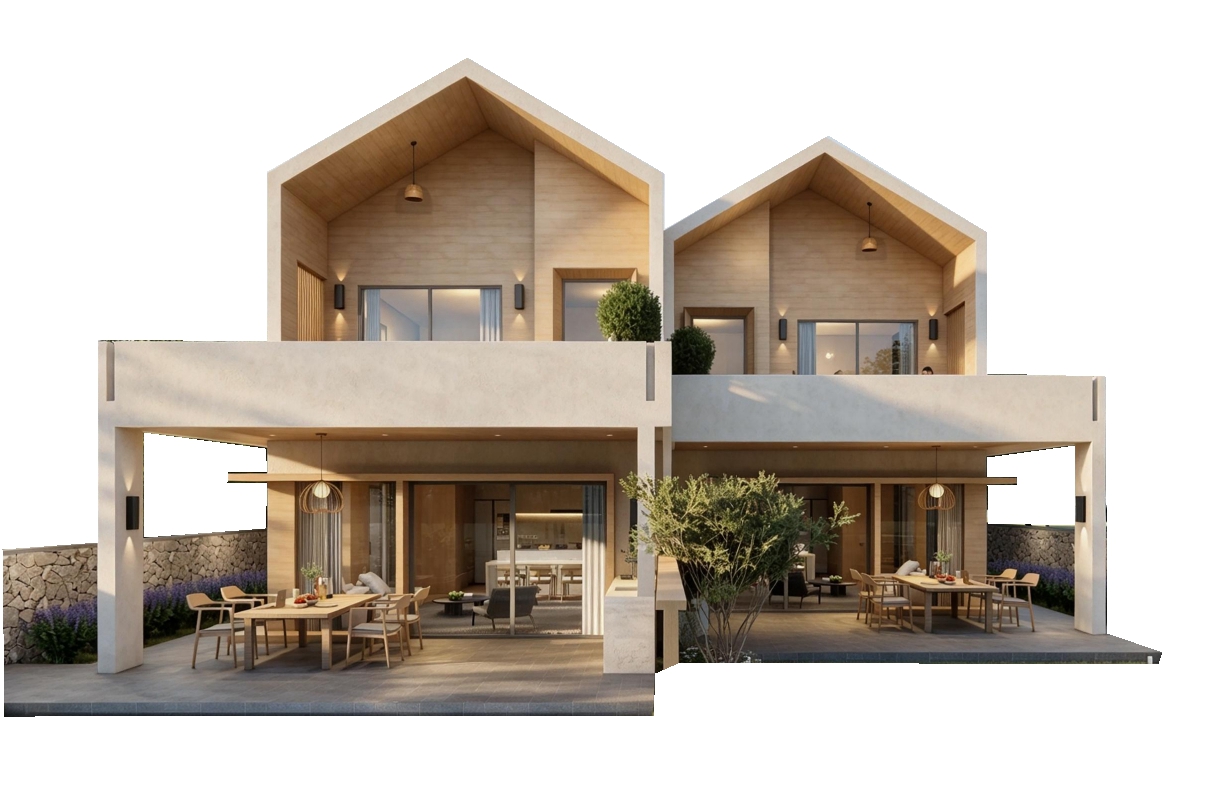
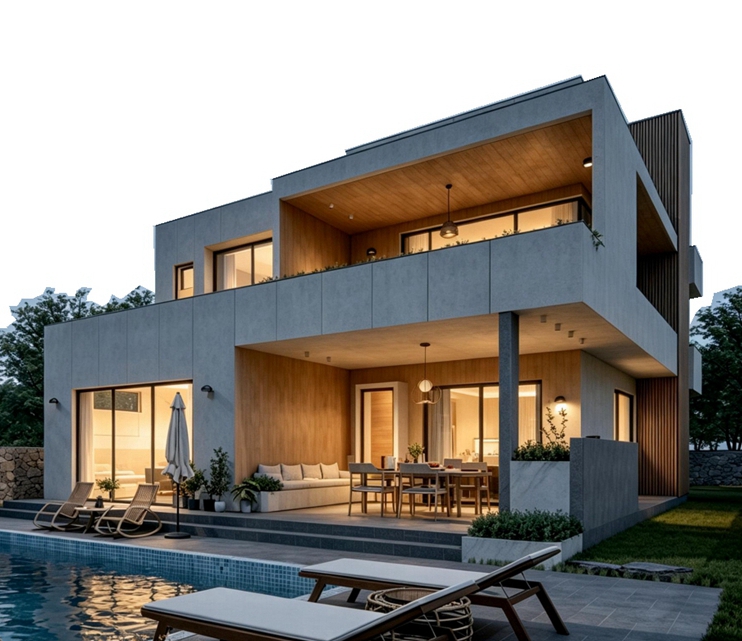
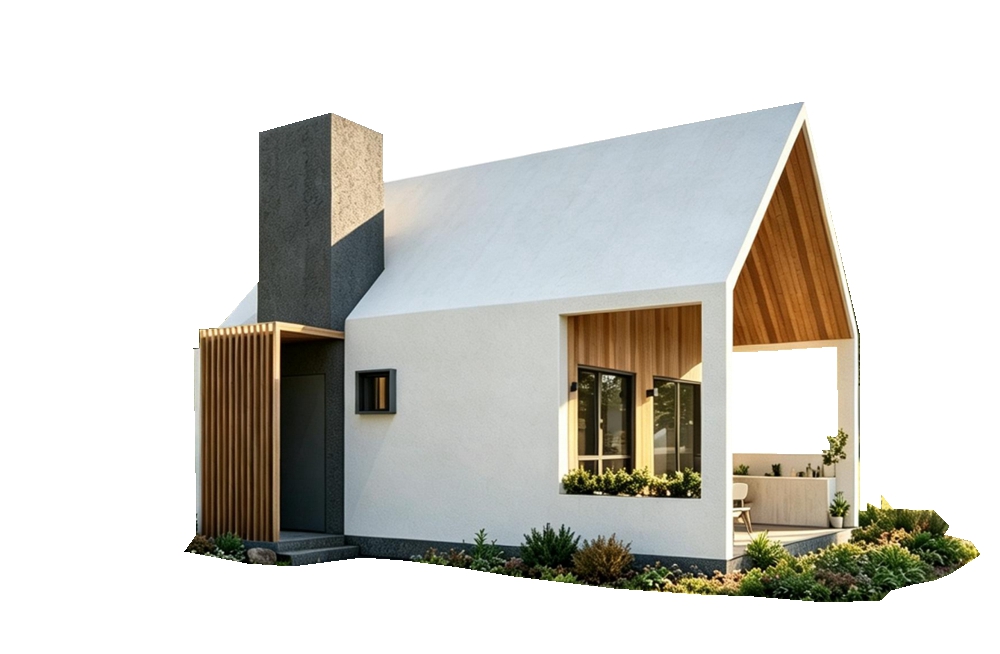
Rural house construction has remained a hot online topic in recent years. For countless people working and striving in cities, no matter how fast urban life pace is, their hometown is always the most reliable sanctuary. As people get older or adjust their life plans, building a spacious, comfortable retirement or vacation house in their hometown has become a core financial priority for many families.
When it comes to rural self-built houses, most people still associate them with traditional red brick, sand and concrete construction methods. However, anyone who has planned a rural house construction in recent years knows that traditional building modes have many obvious drawbacks. Labor costs have skyrocketed, construction schedules are frequently delayed, additional expenses for catering construction workers are unavoidable, and newly built houses often suffer from wall cracking, persistent dampness and other quality issues after occupancy.
These prevalent pain points have made light steel villas an increasingly popular choice for families building houses in their hometowns.
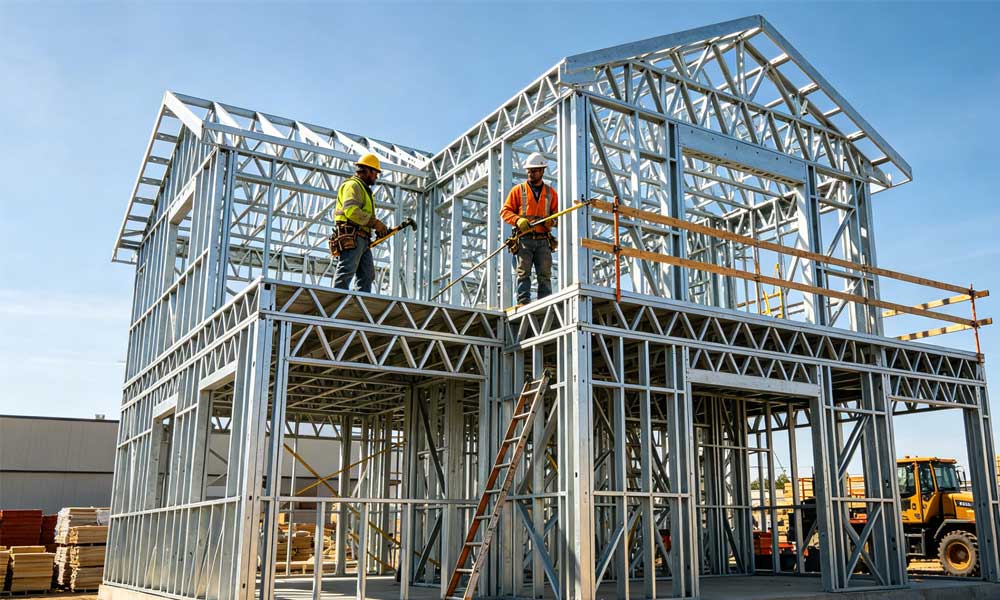
In the past, rural residents regarded steel structure houses as a novel, trendy but ultra-luxury option that was unaffordable for ordinary families. Yet in 2026, with the maturation of domestic factory production lines and the improvement of material supply chains, the construction cost of light steel houses in most regions is nearly equivalent to that of traditional buildings. When all hidden costs are taken into account, light steel villas deliver far better overall cost performance.
A decade ago, rural house construction benefited greatly from low labor costs. Homeowners could rely on help from neighbors and villagers with minimal labor expenses.
This is no longer the case. Wages for bricklayers, steel fixers, electricians and other construction workers have surged sharply. Many homeowners have encountered the same problem: the budget confirmed with contractors at the initial stage seems reasonable, but countless unplanned extra charges emerge once construction begins, leading to uncontrollable cost overruns.
A full review of these invisible hidden costs reveals major drawbacks of traditional construction:
Workers are still paid full wages while waiting for delayed building materials. Construction can be suspended for weeks due to rainy, snowy or windy weather, resulting in substantial time cost losses. On-site handling and storage of bricks and sand cause unexpected material wastage. Most risky of all, unprofessional temporary construction teams often leave defective work such as crooked walls and roof leaks, requiring costly rework.
For homeowners working full-time in cities who cannot supervise the construction site daily, these hidden costs bring both financial burden and mental stress. Light steel construction completely solves these problems. All beams, columns and wall panels are precision prefabricated in Hanliang’s factories and assembled on-site like building blocks. It eliminates material waste and massive on-site manual work. The total budget is fixed before construction starts, with no risk of arbitrary price increases during the project.
With rising living standards, rural homebuilders no longer settle for basic houses that merely provide shelter. They now focus on practical, high-quality living experience with comprehensive considerations:
Can the house retain heat in winter to reduce heating and electricity bills? Can the top floor stay cool in summer without frequent air conditioning? Is the structure earthquake-resistant and durable enough for decades of use with no water leakage? Will the exterior walls peel off years later and cause high maintenance costs? Does the modern and elegant appearance enhance the overall look of the rural residence?
This shift in consumer mindset has diversified the inquiries for Hanliang light steel villas, with distinct functional and regional customized demands. Popular requests include two-story rural light steel residential designs for multi-generational families, barrier-free light steel retirement house solutions for rural seniors, and courtyard-style light steel house construction plans with traditional Chinese corridors. Completed projects ranging from high-end three-story steel structure rural residences to minimalistmodern rural light steel house designs prove that rural house construction has evolved from a simple pursuit of larger area to a focus on superior quality.
Many people assume steel structure villas are exclusive to high-end luxury projects. However, a detailed cost analysis proves that standardized light steel housing solutions are highly cost-effective for ordinary families. The affordable pricing stems from three core advantages:
First, shortened construction cycles greatly reduce overall costs.
Traditional construction of a two or three-story rural house takes half a year or even a full year, including foundation work, bricklaying, concrete pouring, and long drying periods for walls and cement. In contrast, light steel house frames are fully prefabricated in factories. A 200–300 ㎡ house can complete main structure and exterior wall assembly in just one month with a small professional team. The condensed construction cycle cuts massive labor costs and eliminates extra expenses for catering construction crews.
Second, ultra-high material utilization eliminates unnecessary waste.
Our factory’s digital production lines cut steel and thermal insulation panels strictly according to design drawings with millimeter-level precision. Every screw and building material is fully utilized in the construction. Unlike traditional sites with massive waste of rusted steel, broken bricks and weathered cement, light steel construction ensures every penny spent on materials delivers tangible value.
Third, long-term cost savings and hassle-free maintenance.
With standardized design and construction, light steel houses excel in wall moisture resistance, structural anti-corrosion and thermal insulation. Traditional old houses require regular roof waterproofing repairs and consume extra electricity due to poor wall heat insulation. Equipped with multi-layer thermal insulation walls, light steel villas keep cool in summer and warm in winter. They greatly reduce long-term maintenance fees and annual energy consumption costs.
Rural landscapes across the country have undergone tremendous upgrades in recent years. Demand for high-quality upgraded residential buildings in suburban and rural areas has grown explosively.
We have delivered numerous representative regional projects across China:
Linyi rural courtyard housing projects in Shandong featuring layered layouts and sunrooms; Shaoyang rural upgraded residential projects in Hunan designed for elderly residents; Fuyang new rural housing renovation cases in Anhui integrated with rural environmental improvement; and Dezhou modern rural housing planning projects focused on environmental friendliness and fast occupancy.
These projects share a common trend: returning young professionals with urban living experience have higher standards for residential aesthetics and comfort. The outdated trend of blindly building oversized empty houses for vanity has faded. Modern homebuilders prefer rational budget allocation, pursuing exquisite spatial design and comfortable living quality rather than impractical large-scale structures.
Traditional rural house construction focused on external appearance, while modern homebuilding prioritizes internal living quality. At the design stage, homeowners pay close attention to daily living details:
Can floor-to-ceiling windows be installed for sufficient natural lighting? Can the first floor have spacious senior bedrooms with private bathrooms to avoid stair-climbing for the elderly? Are internal pipelines reserved for future renovation? Can the layout reserve courtyard space for leisure, outdoor dining and children’s activities?
This people-oriented mindset has spawned diverse customized solutions, including rural courtyard light steel house designs for family gatherings, rural vacation house plans for homestay and personal use, elderly-friendly residential solutions, and ecological rural houses integrated with natural scenery. For most families, a custom-built rural house is far more than a steel and concrete structure — it is a precious carrier of family memories and kinship for decades to come.
Anyone who has experienced traditional rural house construction knows it is an extremely time-consuming and energy-draining process.
For non-resident homeowners working in cities, frequent travel back and forth to supervise construction is exhausting. Project delays caused by material shortages, land boundary disputes and bad weather lead to unmeasurable time and energy losses.
Factory prefabricated modular construction completely solves this pain point for returning builders:
The entire construction schedule — frame erection, roofing and window installation — is confirmed in advance with precise timelines. Factory-standardized quality control minimizes weather impacts and ensures stable progress. Homeowners only need to confirm the design scheme upfront and can continue working in cities without daily site supervision.
For high-income professionals with high time costs, this hassle-free, efficient construction mode delivers tremendous implicit cost savings.
As an experienced brand in the prefabricated construction industry, Hanliang has witnessed a clear shift in market demands through frontline customer communication.
In the past, most customers only asked about the unit price per square meter. Today, customers focus more on core quality and performance details: What thermal insulation materials are used in the walls, and can they withstand sub-zero temperatures? What anti-corrosion treatments are applied to the steel frames, and what is the service life? Can the structure support custom designs such as large first-floor voids? Is exterior wall maintenance convenient for future renovations?
This shift in consultation focus reflects a mature, rational market. Customers are moving away from short-term price competition and pursuing long-term residential value that can last 20 to 30 years. As the global housing market rule suggests, a house is built for living — comfort and reliability are the ultimate value.
Looking ahead, rural residential construction will develop rapidly in four key directions in the next three years:
1. Energy Efficiency. As residents pay more attention to energy bills, thermal insulation and heat resistance will become core housing indicators. Energy-saving houses with constant indoor temperatures will become mainstream in rural areas.
2. Personalization. The era of uniform box-shaped rural houses is over. Customized house designs tailored to family size and living habits will gain popularity.
3. Prefabricated Construction. Factory-made, modular assembly construction — clean, efficient and quality-stable — will be widely accepted by young homebuilders.
4. High-Quality Construction. Hidden structural safety such as steel frame anti-corrosion performance, as well as visible quality including waterproofing, moisture resistance and spatial comfort, will become the core criteria for measuring housing value.
Many rural clients who once doubted the reliability of steel frame houses have changed their minds after witnessing our precise factory assembly, superior thermal insulation performance and transparent budgeting. They recognize that light steel construction is not a superficial trend, but a practical, modern housing solution that perfectly adapts to contemporary living needs. Its advantages are widely recognized in high-end upgraded residences and retirement housing projects.
For those planning to build a house in their hometown in 2026, the core consideration is not saving a small amount of upfront costs, but choosing a construction method that provides stable, comfortable and hassle-free living for decades.
Dropping the label of "niche and expensive", light steel villas have become a cost-effective, high-quality mainstream housing option with the advancement of construction industrialization. They deliver guaranteed budget control, worry-free construction and long-term energy-saving comfort, making them a top choice for rural home construction. Building a house is a lifelong investment. Avoid blind trends, make informed comparisons, and choose a high-quality, long-lasting comfortable home for your family — this is the wisest long-term decision.
 Follow us