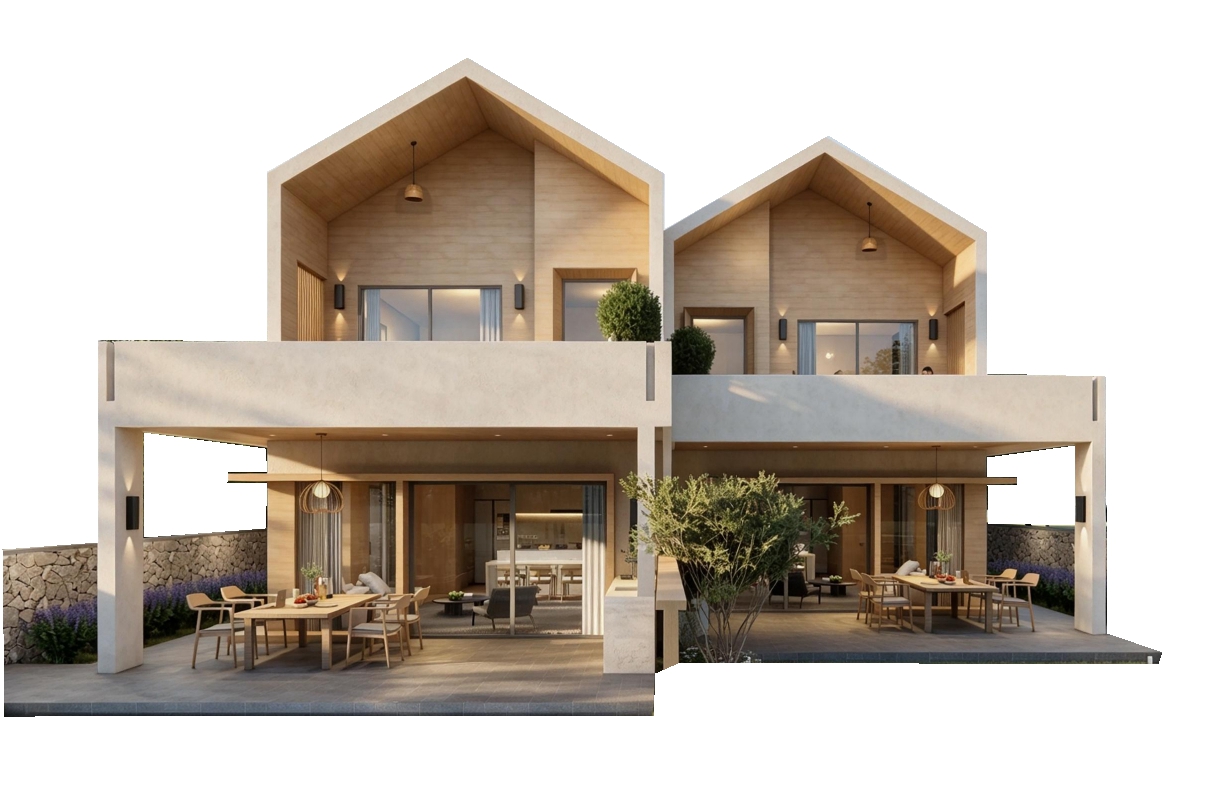
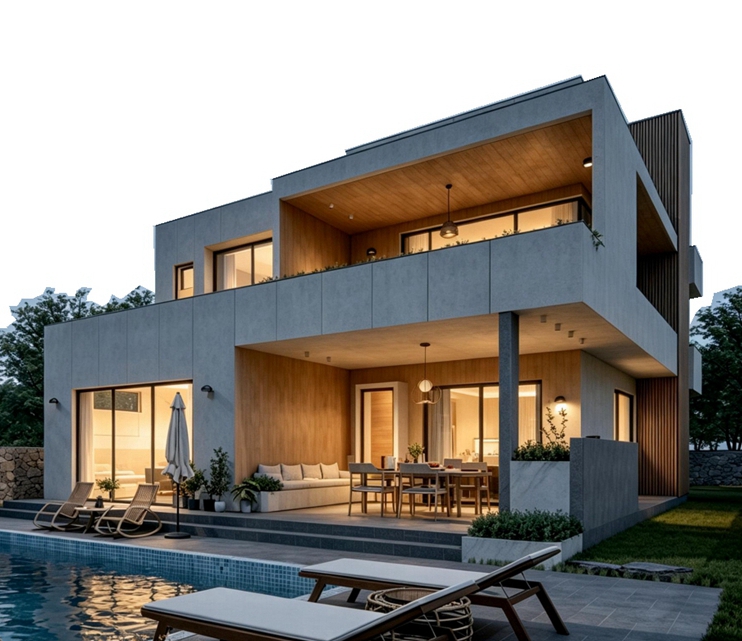
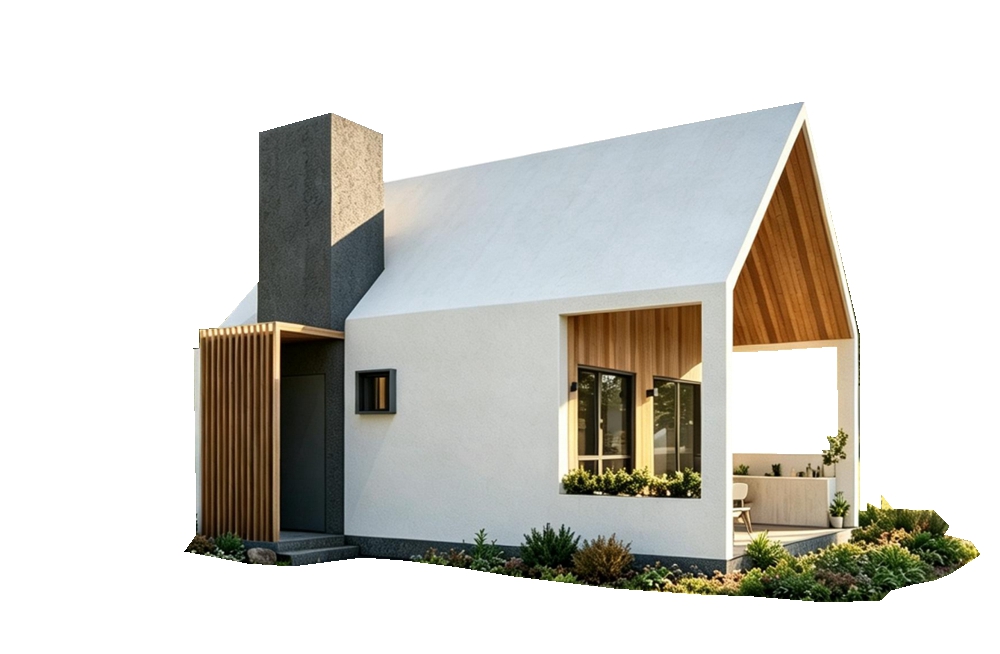
The southeast coast of the United States is one of the most hurricane-prone regions worldwide. Every hurricane season, strong winds, heavy rains, and flying debris pose severe challenges to the structural safety of local residential buildings. Coastal cities including Miami and Tampa in Florida, New Orleans in Louisiana, Houston in Texas, and Charleston in South Carolina witness frequent damage to traditional wooden and ordinary brick-concrete houses, such as roof overturning, wall damage, water leakage, and structural deformation, leading to high housing damage rates and long-term maintenance costs.
With the continuous upgrading of local building safety standards and growing awareness of safety among residents and developers, the inherent wind resistance weaknesses of traditional buildings have become increasingly prominent. Nowadays, homeowners and contractors in US coastal areas prioritize hurricane resistance, compliance qualifications, and long-term structural stability over mere comfort and appearance when selecting residential buildings. Based on years of export customization and overseas project experience, we have found that hurricane-resistant prefabricated light steel villas that fully comply with US official building and wind resistance codes have become the mainstream upgrade solution for hurricane zone residences, with outstanding advantages in structural strength, disaster resistance, and durability compared with traditional buildings.
Coastal areas along the US Atlantic and Southeast coasts are frequently hit by hurricanes and severe storms. Extreme weather causes five major types of damage to residential buildings: strong wind load tearing, flying debris impact, overall roof overturning, door and window collapse, and extensive rainwater infiltration. Traditional wooden houses feature poor toughness and deformation resistance. Under sustained strong wind impact, they are prone to wall cracking, frame loosening, roof shedding, and other problems, which not only threaten living safety but also result in high renovation and maintenance costs.
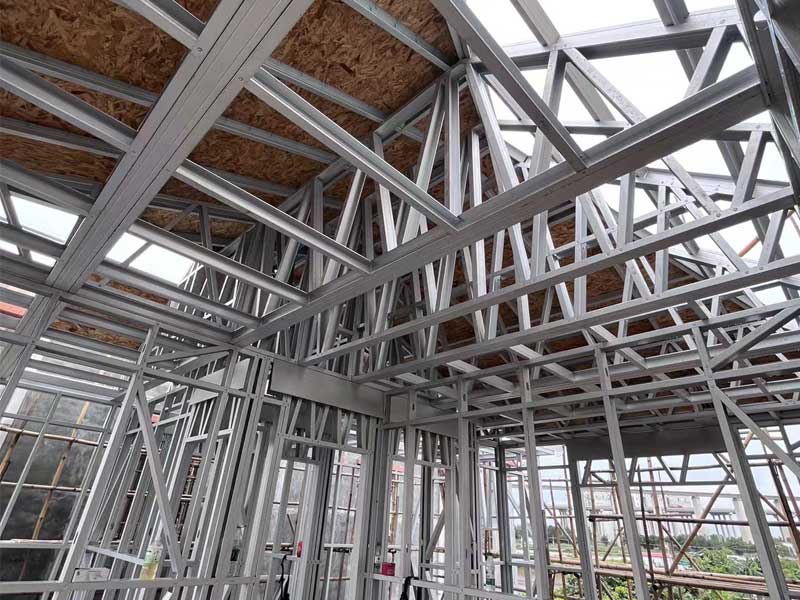
Modern hurricane-resistant prefabricated light steel villas feature hot-dip galvanized light steel keels and an integrated integral frame design, completely solving the structural defects of traditional buildings. The integral frame features uniform stress and high stability, which can effectively resist hurricane-level strong winds without deformation, loosening, or collapse. This is the core reason why light steel villas are increasingly replacing traditional residences and gaining explosive market demand in hurricane-prone coastal areas of the United States.
High-performance hurricane-resistant light steel villas exported to US hurricane zones cannot adopt generic universal building standards. They must be professionally calculated and customized in strict accordance with official US building codes based on local wind speed levels, terrain conditions, and safety requirements. Three authoritative standard systems serve as the core design basis:
As the core universal building standard across the United States, the IBC serves as the fundamental basis for construction approval and inspection in each state. For residences in hurricane zones, it stipulates strict and explicit provisions for wind load calculation standards, structural connection processes, building safety classification, and basic hurricane-resistant design requirements, which are mandatory compliance standards for all coastal construction projects.
ASCE 7 is the core technical standard for wind resistance and disaster-resistant structural design of US buildings, directly defining the maximum hurricane wind resistance level of prefabricated light steel villas. It accurately defines the basic wind speed, wind pressure calculation formula, wind load distribution rules, and building exposure categories for different regions. Core hurricane areas such as Florida and Texas feature site design wind speeds of 140mph, 150mph or even 170mph. The ultra-high wind pressure requires targeted individual modeling and calculation for structural strength, anchorage systems, and connecting parts to meet local construction standards.
Florida suffers from the most frequent and severe hurricane disasters in the United States and has independently formulated stringent building codes with higher requirements than national universal standards. Local housing authorities enforce strict mandatory regulations on the wind impact resistance of doors and windows, roof anti-overturning structures, integral anchorage systems, and exterior wall impact resistance. It is the most difficult US region for construction compliance, and high-end light steel residential projects fully adapt to FBC standards.
The hurricane resistance of light steel villas relies not only on material performance but also on systematic wind-resistant structural design. Based on numerous overseas project practices in hurricane zones, qualified hurricane-resistant light steel buildings must adopt four core structural configurations:
Professional hurricane-resistant light steel villas adopt premium G550 high-strength steel and Z275 high-galvanized cold-formed thin-wall steel components with an integral one-piece frame. Compared with traditional American wooden houses, the steel structure boasts significantly higher hardness, tensile resistance, and deformation resistance. It maintains complete structural integrity and stability under ultra-high wind pressure, avoiding hidden dangers such as frame loosening, wall tearing, and overall collapse, making it suitable for long-term extreme weather exposure.
Roofs are the most vulnerable and easily overturned part of buildings during hurricanes. To solve this pain point, US-compliant hurricane-resistant light steel villas adopt reinforced roof trusses, professional wind uplift resistant connectors, high-strength fastening bolts, and multi-point anchorage systems. The entire roof is firmly connected with the main frame and foundation to form an integrated stress structure, which effectively resists the upward tearing force of hurricanes and completely avoids roof overturning risks.
Even with a high-strength main structure, insufficient connection between the building and foundation will lead to overall displacement and overturning under strong winds. High-wind-resistance light steel villas tailored for US hurricane zones adopt a professional reinforced anchorage solution with chemical anchor bolts, high-strength foundation bolts, and thickened steel plate connectors. The rigid connection between the main house structure and foundation greatly improves overall anti-overturning and anti-displacement performance to meet safety standards for high wind pressure areas.
Flying gravel and debris during hurricanes may impact building exteriors at high speed and penetrate ordinary doors and windows, causing water ingress and structural damage. Therefore, projects in US coastal hurricane zones are fully equipped with double-layer hollow hurricane-grade impact-resistant doors and windows with thickened profiles and impact-resistant glass. They can resist high-speed debris impact, prevent door and window damage, wind pressure backflow, and rainwater leakage, achieving all-round building protection.
All hurricane-resistant light steel villas exported to US and Caribbean hurricane-prone zones adopt standardized high-end compliant configurations, with customizable adjustments according to local codes and wind speed levels. The core parameters are as follows:
Item | Configuration Parameters |
Main Structure | G550 High-strength Galvanized Light Steel |
Galvanized Layer | Z275 Standard Hot-dip Galvanized Layer |
Wind Resistance Level | Custom-designed for Level 12-14 Wind (Upgradable) |
Design Wind Speed | Above 60m/s, Adapted to Local Hurricane Wind Pressure Standards |
Wall System | High-density Thermal Insulation Sandwich Wall, Heat & Moisture Resistant |
Roof System | Waterproof & Thermal Insulation Composite Roof, Wind & Aging Resistant |
Door & Window System | Double-layer Hollow Broken Bridge Impact-resistant Doors & Windows |
Service Life | More Than 50 Years |
Earthquake Resistance Level | Above Level 8 Earthquake Resistance Standard |
Applicable Regions | Whole US, Canada, Caribbean High Hurricane-risk Areas |
In recent years, code-compliant hurricane-resistant prefabricated light steel villas have achieved steady sales growth across the US residential market, gradually replacing traditional wooden and brick-concrete residences. Their popularity stems not only from excellent hurricane resistance but also from comprehensive cost-performance and landing advantages tailored to the US market, mainly reflected in three aspects:
Higher Construction Efficiency: Light steel villas adopt full factory prefabrication. All components are standardized processed in advance and only require on-site assembly after delivery. The construction cycle is greatly shortened compared with traditional buildings, perfectly meeting the rapid delivery requirements of US projects.
Lower Long-term Operation & Maintenance Costs: Light steel materials are naturally corrosion-proof, moisture-proof, and termite-proof, avoiding decay, deformation, and insect infestation common in wooden houses. No frequent maintenance and renovation is required, delivering prominent cost advantages for self-occupied and long-term commercial residential projects.
Higher Pass Rate for Inspection & Insurance Approval: In the United States, building disaster resistance directly determines project approval results and housing insurance rates. Light steel villas fully compliant with IBC, ASCE 7, and FBC hurricane codes can smoothly pass local construction approval and gain priority recognition from insurance institutions, effectively reducing housing insurance costs, which is a key factor for bulk selection by developers.
In 2025, we completed the customization, delivery, and construction of a high-end coastal residential project in the Caribbean Sea. The region is a typical high-frequency hurricane area with high wind pressure and severe salt spray corrosion, imposing extremely strict requirements on building wind resistance, corrosion resistance, and waterproof performance.
Combining local site conditions and building codes, the client’s core demands focused on high wind resistance, strong corrosion resistance, and rapid construction. Targeting project pain points, we customized a complete solution, adopting a G550 high-strength light steel main structure, full hot-dip galvanized anti-rust connectors, hurricane-grade impact-resistant door and window systems, and high weather-resistant waterproof and thermal insulation roof structures to fully adapt to extreme weather conditions. The project successfully passed strict local structural inspection and safety assessment after completion, fully verifying the outstanding practical value and structural advantages of code-compliant hurricane-resistant light steel buildings in high-risk hurricane zones.
With the continuous tightening of building safety codes in US coastal cities, the shortcomings of traditional residences, such as insufficient disaster resistance, high maintenance costs, and difficult compliance, have been further amplified. Market demands for private residences, coastal vacation houses, and commercial real estate projects are shifting toward high-safety, high-efficiency, and long-lasting prefabricated light steel buildings.
The selection logic of American homebuyers and developers has undergone fundamental changes. They no longer only focus on short-term construction costs but prioritize structural disaster resistance, service life, and comprehensive cost performance. IBC, ASCE 7 and FBC compliant hurricane-resistant light steel villas perfectly fit current high-safety market demands and industry trends, and will continuously occupy market shares in coastal residences, post-disaster reconstruction housing, and rapid construction projects in the United States. We will continue to deepen the North American overseas market, iteratively upgrade structural design capabilities, optimize international standard adaptation, and customize targeted light steel residential solutions for working conditions in US hurricane zones, providing high-quality, high-safety, and compliant modular building services for more overseas projects.
Q1: Can light steel villas pass construction approval in US hurricane zones?
Yes. Professional hurricane-resistant light steel villas are never designed with generic universal standards. Targeted structural design and configuration upgrades based on the wind speed and wind pressure parameters of the specific city, in strict accordance with local IBC, ASCE 7, and FBC codes, can fully meet local housing approval and project acceptance standards.
Q2: What factors affect the price of light steel houses?
There is no fixed price standard. Core influencing factors include building area, light steel specification, thermal insulation system, hurricane-grade door and window configuration, interior decoration standards, as well as customized wind resistance and corrosion resistance requirements and local building codes for target regions. Prices vary rationally according to different customized project solutions.
Q3: Which US regions are suitable for prefabricated steel structures?
Prefabricated steel buildings have a wide range of applications. In addition to high-hurricane coastal areas such as Florida, Texas, and Louisiana, they are also highly suitable for California, Georgia, Alabama, and other regions. They are especially ideal for projects requiring high safety standards, rapid construction, and low long-term maintenance costs.
 Follow us