With the gradual maturity of prefabricated building technology, light steel houses have been widely adopted in rural self-built residences, scenic cultural tourism homestays, outdoor camps, overseas engineering supporting facilities and other scenarios due to their advantages of fast construction, strong plasticity and low carbon environmental protection. However, most customers encounter a common problem during price inquiry: the quotations of light steel houses vary greatly in the market, ranging from hundreds to two or three thousand yuan per square meter. Many customers cannot clarify the root cause of the price gap and simply take price as the selection standard, which is highly likely to result in inconsistent quality and rework costs in the later stage.
In fact, light steel houses are not standardized fast-moving consumer goods, but customized systematic engineering products. Buildings with similar appearances differ greatly in internal materials, structural craftsmanship, supporting standards, safety factors and service life. As an enterprise deeply engaged in the prefabricated light steel construction industry for many years, Hanliang Light Steel Villa has delivered a large number of residential, cultural tourism and overseas camp projects at home and abroad, accumulating rich front-line practical experience. This article deeply analyzes the fundamental reasons for the huge price difference of light steel houses from core dimensions, helping customers avoid risks and select cost-effective high-quality products suitable for their project needs.
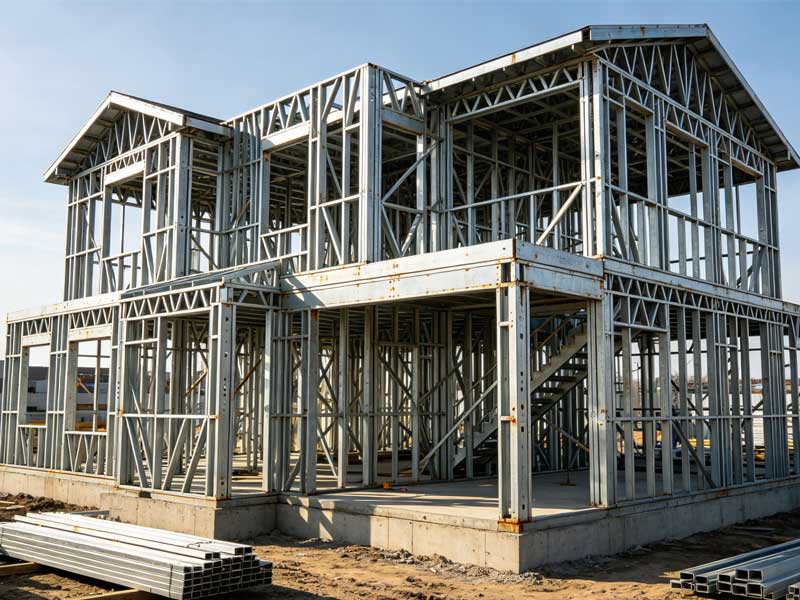
The steel structure keel is the load-bearing core of a light steel house, determining the overall structural safety and service life of the building, and it is the primary factor leading to market price differences. At present, the mainstream industrial materials include ordinary galvanized steel, high-strength aluminum-zinc coated steel, and hot-dip galvanized light steel keels. The three types of materials have completely different structural strength, anti-corrosion performance and weather resistance, resulting in significant cost differences.
Low-priced light steel products in the market generally reduce quotations by cutting material costs, adopting thin steel plates and reducing the thickness of galvanized or aluminum-zinc protective layers. Such houses show no obvious problems in short-term occupancy, but are prone to steel rust, structural deformation, wall cracking and sealing failure when exposed to complex outdoor environments for a long time. These problems will not only greatly shorten the service life of the building, but also bring irreversible potential safety hazards.
Formal brand manufacturers follow the principle of "selecting materials according to local conditions", and match corresponding steel standards based on the local climate, humidity and corrosive environment of the project. Coastal areas such as Xiamen and Sanya suffer from severe salt spray corrosion and require extremely high anti-rust and anti-corrosion grades for steel structures, which necessitates high-standard anti-corrosion steel and enhanced protection technologies, thus naturally increasing material costs. This is the core reason why the cost of coastal light steel projects is generally higher.
"How much is a light steel house per square meter?" is a frequently asked question, but there is no unified answer. Consistent with the pricing logic of refined decoration, light steel house prices depend on diversified configurations, including basic, mid-end and high-end grades with vastly different costs, which directly determine the overall project cost.
The basic configuration only retains rigid living needs, including main light steel frame, basic enclosure wall panels and ordinary doors and windows, with no additional functions. Focusing on cost performance and rapid delivery, such products are only suitable for temporary scenarios such as construction dormitories, short-term office buildings and simple camp houses, belonging to the lowest-priced light steel category in the market.
Mid-to-high-end light steel villas and cultural tourism homestays adopt an all-round upgraded supporting system, equipped with broken-bridge aluminum sound-insulated and heat-insulated doors and windows, multi-layer composite thermal insulation systems, intelligent electronic control systems, integrated bathrooms and high-end exterior wall decorative panels, balancing aesthetics, comfort and practicality. Scenic spot commercial homestays with higher requirements for spatial texture, sound insulation, heat preservation, moisture and waterproof performance have correspondingly higher overall supporting costs.
Taking the Anji homestay project in Zhejiang built by Hanliang Light Steel Villa as an example, located in a mountainous area with large temperature difference between day and night and humid air, the project has strict requirements for living experience. We specially installed a multi-layer wall thermal insulation structure and double-layer hollow sound-insulated glass to solve the problems of moisture return, stuffiness and poor sound insulation of mountain buildings. Although the initial cost increased slightly, it greatly optimized the living experience, reduced long-term energy consumption costs, and fully adapted to the needs of long-term commercial operation.
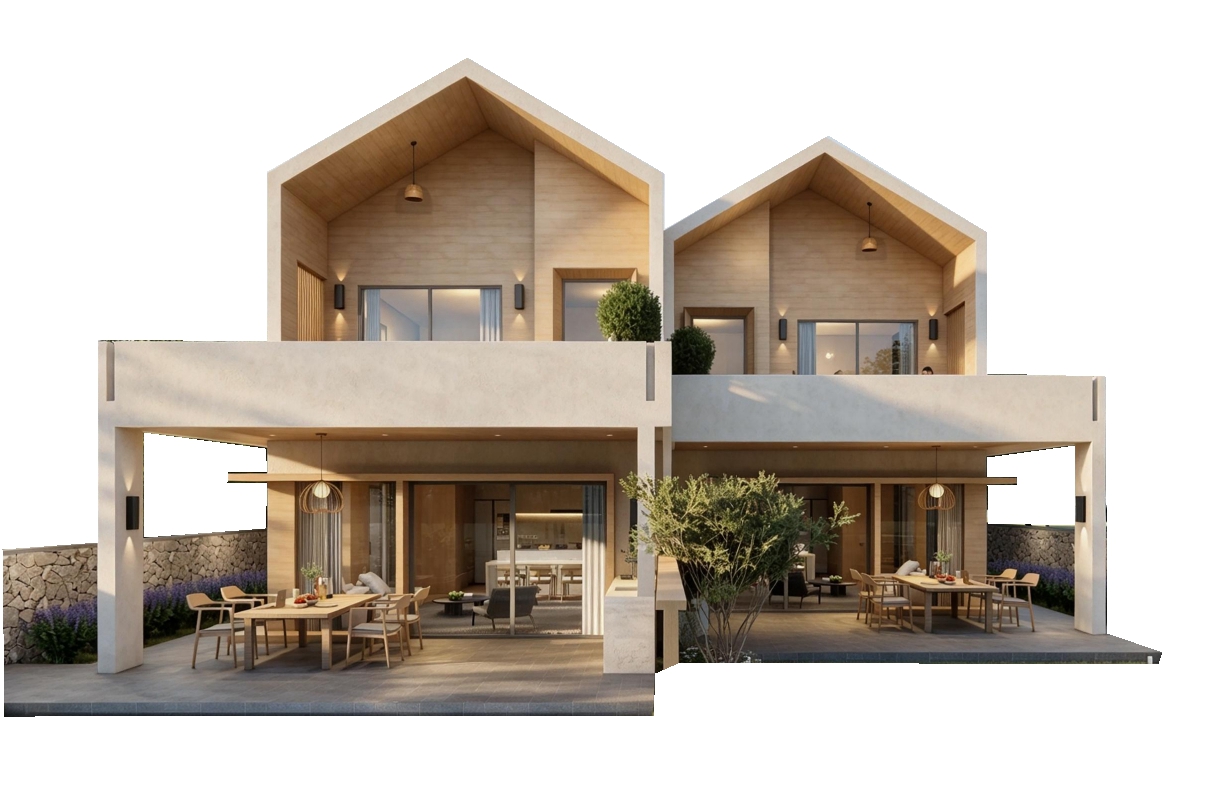
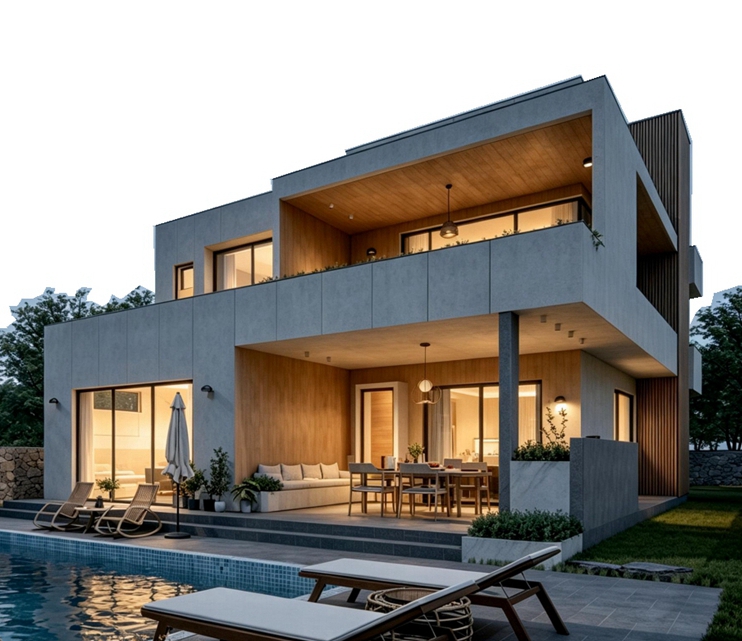
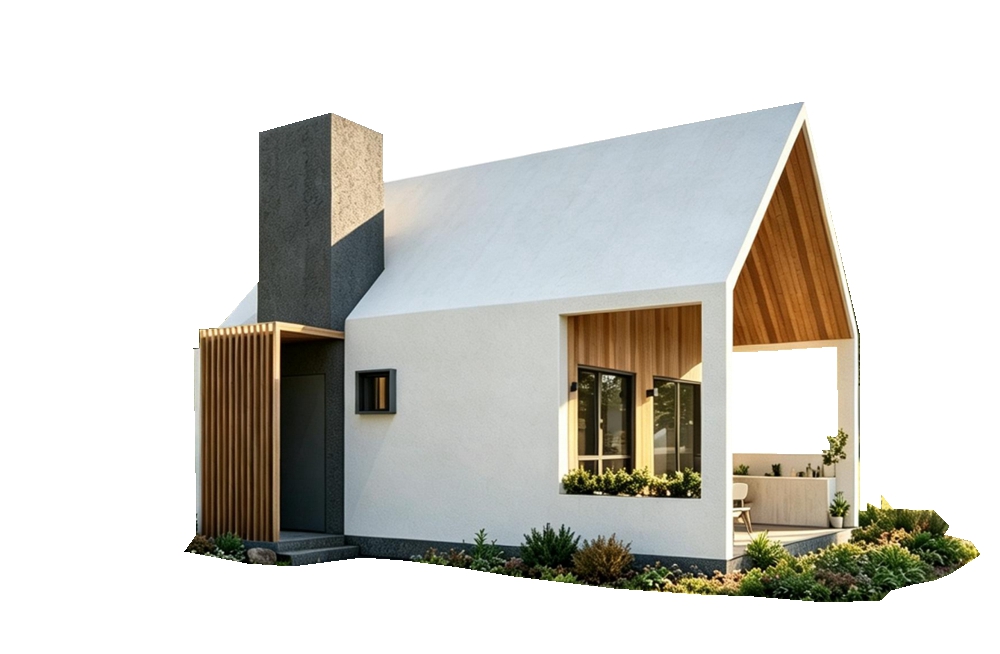
Many customers misunderstand that light steel houses are standardized finished buildings. In fact, most current light steel projects are personally customized. Modern villas, characteristic scenic homestays, large-span transparent residences and double-layer vacation houses have different modeling patterns and functional positioning, leading to distinct design difficulties and structural costs.
Simple and regular square house types have simple structures, convenient processing and low material consumption with lower prices. In contrast, personalized designs such as large-area floor-to-ceiling windows, special-shaped curved roofs, large-span spaces and double-layer duplex structures put forward higher requirements for the load-bearing capacity and structural stability of light steel frames. They require separate structural stress calculation and node reinforcement optimization, increasing processing difficulty, material consumption and working hours, thus raising the overall cost.
This puts forward strict requirements for manufacturers' technical strength. Professional light steel enterprises are capable of professional structural design, BIM drawing deepening and accurate engineering calculation, optimizing structural schemes according to house types and application scenarios, and controlling costs reasonably on the premise of ensuring building safety, which distinguishes them from small workshops that only provide simple processing.
Most customers only focus on the quotation of main products during price comparison, ignoring a series of hidden costs in project delivery. The total cost of a complete light steel project covers main material production, foundation construction, customized transportation, on-site hoisting, whole-house water and electricity layout, interior fine decoration and on-site construction labor, every link of which affects the final quotation.
Especially in overseas countries such as Australia and Canada, labor costs remain high, and the on-site construction cycle directly determines the overall delivery cost. Therefore, overseas purchasers attach great importance to manufacturers' factory prefabrication rate, modular maturity and installation efficiency. More than 90% of the procedures of high-prefabrication light steel houses are completed in the factory, requiring only rapid assembly and docking on site, which can greatly shorten the construction cycle and save labor costs. This is the key reason why modular customization solutions are preferred for exported light steel projects.
In the early stage of the industry's barbaric growth, a large number of low-priced products occupied the market by cutting materials and simplifying craftsmanship. With the standardized development of the industry and the upgrading of customers' consumption cognition, customers no longer blindly pursue low prices, but pay more attention to building service life, living comfort, waterproof and thermal insulation performance and long-term operation and maintenance costs.
In areas with huge temperature differences between day and night and severe cold winters such as Northeast China and Inner Mongolia, the drawbacks of low-quality light steel houses are fully exposed, including invalid thermal insulation, wall water seepage, structural corrosion and indoor condensation, resulting in extremely high later maintenance and renovation costs. At present, formal light steel brands have completely abandoned low-price involution, focused on upgrading product stability and durability, and provided high-quality products suitable for long-term self-occupation and commercial operation.
Driven by the global prefabricated construction boom, the overseas export demand for light steel houses continues to grow, widely applied in Australian camping bases, Philippine coastal homestays, Saudi temporary office areas, New Zealand vacation residences and other scenarios. Different from domestic projects, overseas customers adopt stricter procurement standards, prioritizing comprehensive product quality over low prices.
Overseas purchasers focus on reviewing structural safety certification, fire resistance rating, wind and earthquake resistance, weathering and anti-corrosion performance, and long-term maintenance-free effect, fully complying with local building codes. When undertaking overseas projects, Hanliang Light Steel Villa optimizes the steel structure materials, anti-corrosion protection systems and thermal insulation schemes according to local climatic characteristics and working conditions, fully adapting to overseas extreme climates and long-term outdoor use to ensure long-term stable operation of buildings.
The light steel construction industry has completely bid farewell to the era of low-price competition and entered a stage of comprehensive competition in quality, safety and service. The core value of a light steel house is never determined by the unit price, but by stable structural safety, long service life, comfortable living experience, energy-saving performance, as well as the manufacturer's mature project delivery capability and complete after-sales support system.
Under the general trend of global green and low-carbon construction, high-quality modular, lightweight and energy-saving light steel houses continue to replace traditional buildings, with steadily improving market recognition in urban and rural self-built houses, cultural tourism development and overseas engineering fields.
In essence, the price gap of light steel houses stems from the overall differences in material quality, process standards, design capability and delivery services. Instead of blindly pursuing low or high prices, customers shall select products based on project purposes, service life, local climate environment and long-term operation and maintenance costs, focusing on verifying manufacturers' production strength, process standards and project cases to avoid low-price and low-quality traps. In the future, Hanliang Light Steel Villa will continue to deepen its layout in the prefabricated light steel field, iterate product craftsmanship, optimize structural safety and spatial design, accurately meet the needs of various domestic and foreign projects, and support the efficient delivery and long-term stable operation of global light steel projects with cost-effective and high-quality modular building solutions.
 Follow us