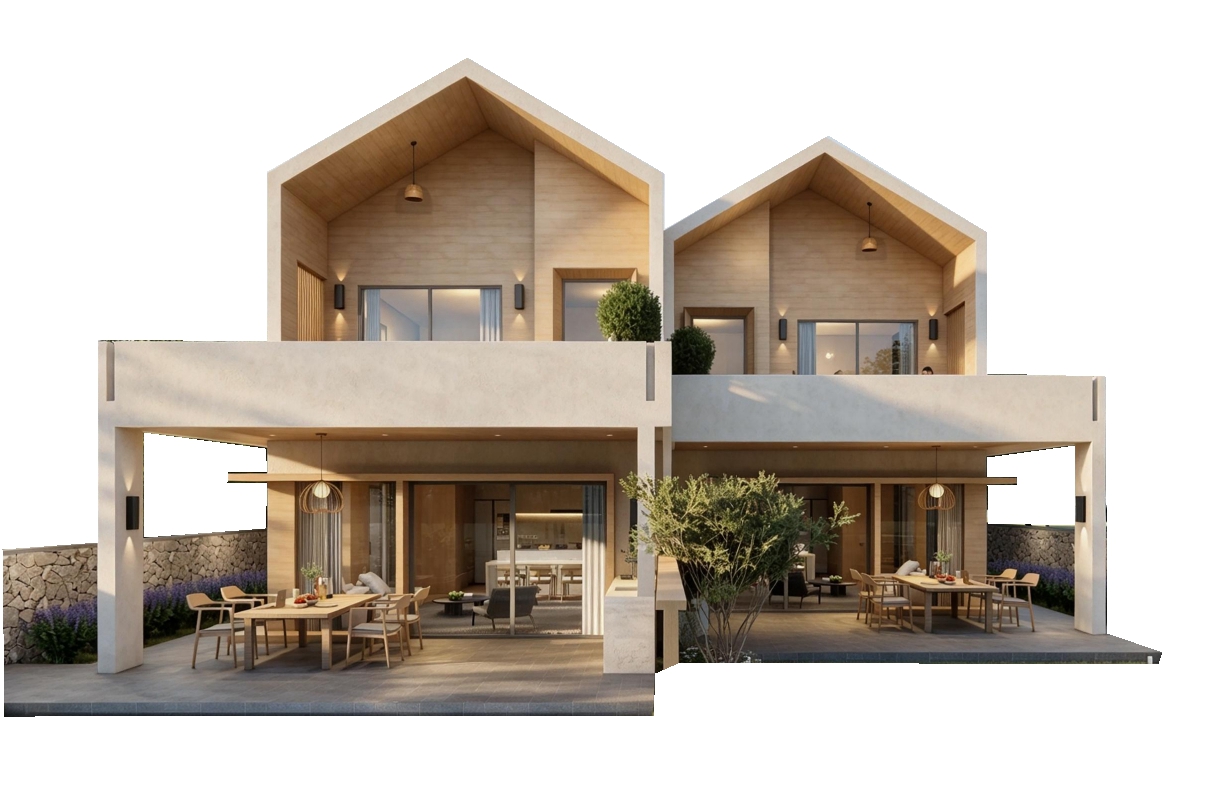
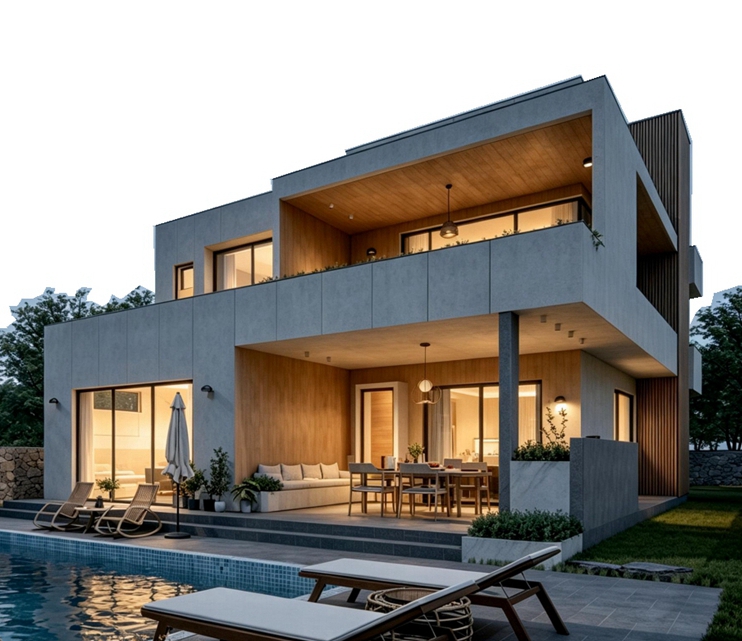
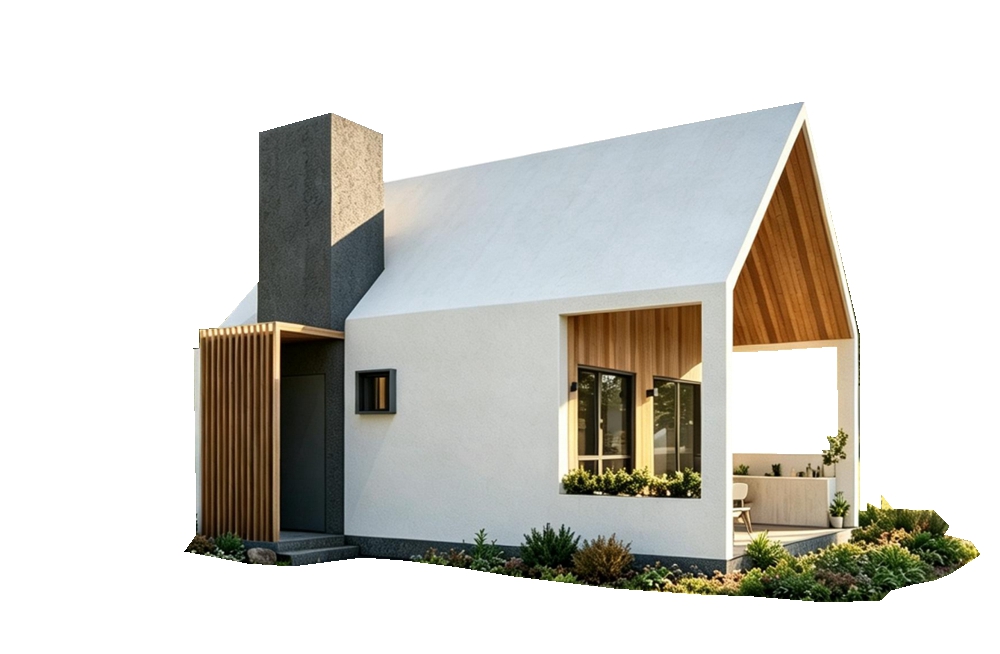
Self-build homeowners have generally noticed that the quotation range of light steel houses on the market is extremely wide, with the unit price per square meter ranging from ¥800 to ¥2000, and the total price of the same house type can even double. From the practical perspective of factory engineers, the huge price gap of light steel houses has nothing to do with appearance and house type. It mainly depends on four core dimensions: main material grade (G550 high-strength galvanized aluminum zinc vs non-standard Q235), production process accuracy, structural wind and snow resistance verification standards, as well as hydropower and waterproof delivery standards. Low-price packages generally cut corners on concealed projects, while the cost of regular high-priced products is locked in durable craftsmanship and long-term safety technology.
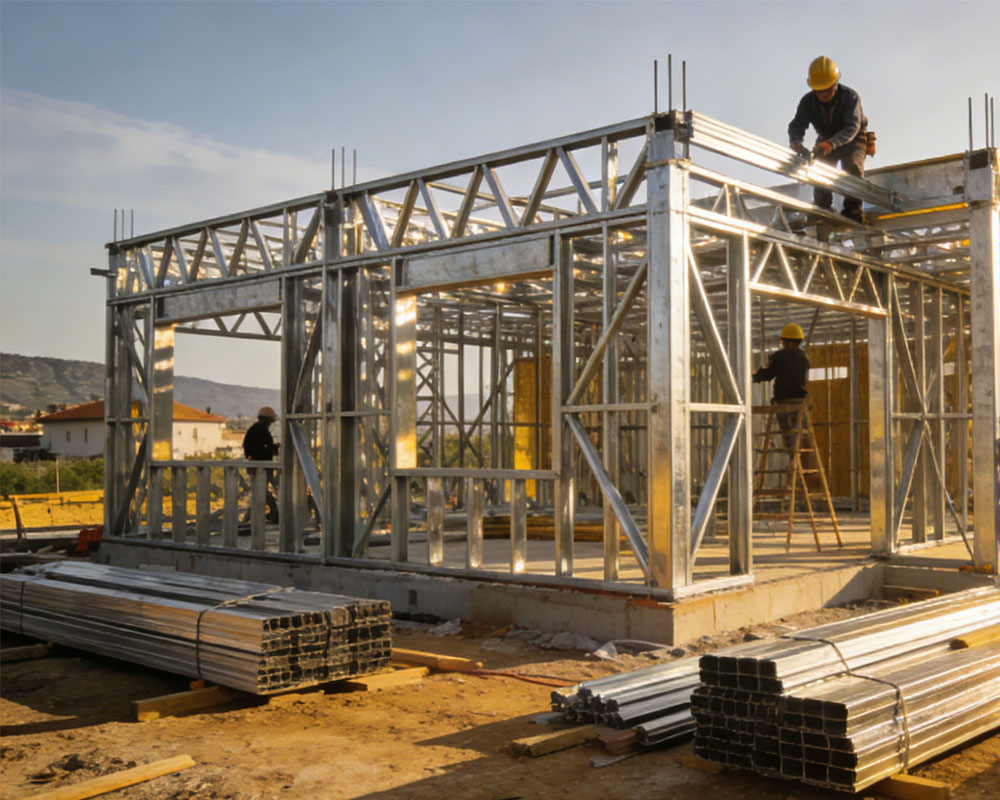
To avoid the traps of "low price with inferior quality and high price with excessive premium", purchasers can directly refer to the following quantitatively disassembled core configuration and material list sorted by the source factory:
Comparison Dimension | Low-end Engineering/Gimmick Model (¥800-1100/㎡) | High-end Self-occupied/National Standard Model (¥1300-2000/㎡) | Underlying Logic of Cost and Service Life Gap |
Main Steel Frame Material | Non-standard Q235 ordinary steel, low strength, prone to moisture deformation | G550 high-strength double-sided galvalume light steel keel | The yield strength is more than 2 times different, directly determining the service life of the house |
Anti-corrosion Coating Specification | Galvanizing weight only 40g-60g/㎡, extremely rusty when exposed outdoors | Galvalume weight ≥150g/㎡ (AZ150 Standard) | Low-end models start to rust in 3-5 years, while high-end models have an outdoor service life of more than 50 years |
Wall Insulation Base Material | Low-density ordinary glass wool (12-16kg/m³), easy to sink | High-density flame-retardant rock wool/polyurethane (≥45kg/m³) | Determines seasonal temperature comfort; low-end materials are prone to moisture and mildew |
Mass Production Process | Simple manual cutting and extensive welding with centimeter-level errors | Full-process CNC cold roll forming (FrameCAD system) | Component error controlled within 0.5mm, seamless assembly to prevent water leakage |
Structural Adaptation Standard | General simple structure without regional wind and snow mechanical verification | Level 12 wind resistance & Level 8 earthquake resistance customized structural reinforcement | Technical optimization based on local climate to avoid structural collapse risks |
Hydropower & Delivery Standard | Bare house delivery with exposed wires and no composite waterproof construction | Standard concealed pre-buried hydropower & three-layer composite waterproof process | Low-end models incur extremely high hidden costs for secondary renovation and leakage maintenance |
Material cost accounts for more than 50% of the total cost of light steel houses. Most low-priced light steel houses priced at about ¥900/㎡ adopt non-standard Q235 steel with an ultra-thin galvanized layer (less than 50g/㎡), featuring poor anti-corrosion performance. They are only suitable for short-term temporary workshops and prone to frame corrosion and structural deformation within 3-5 years in humid coastal areas or damp northern regions.
Qualified high-quality light steel houses uniformly adoptG550 high-strength double-sided galvalume keels (yield strength up to 550Mpa) and strictly implement the AZ150 coating standard. The high-quality keel has a strong "notch self-healing anti-corrosion" ability to resist long-term erosion from acid rain and air. Equipped with high-density flame-retardant waterproof base materials and 100mm thick high-density environmental protection rock wool, the material cost is more than 40% higher than low-end configurations. It ensures a service life of over 50 years, with excellent fire resistance, sound insulation and constant temperature insulation performance.
In addition to raw materials, processing equipment and technical standards are invisible factors leading to price differences. Low-cost light steel houses rely on simple manual equipment for extensive cutting and welding without standardized technical control, resulting in centimeter-level assembly errors of keels. This process defect directly causes wall cracks, large assembly gaps, poor airtightness and severe wall water seepage in rainy weather.
Formal manufacturers are fully equipped with industrial-grade CNC cold roll forming technology (linked with Vertex BD design software and automated hardware). All punching, edge cutting and coding of light steel components are precisely integrated by digital systems, controlling assembly errors within 0.5mm. Meanwhile, regular factories conduct multi-pass passivation anti-corrosion treatment and integrated airtight sealing for keels before delivery. Although refined processes increase upfront equipment depreciation and management costs, they ensure structural stability and reduce subsequent maintenance and rework rates by more than 98%.
Many homeowners mistakenly believe that houses with the same appearance and layout have the same cost, ignoring the reasonable premium brought by regional special technical upgrades. Low-priced light steel houses adopt a universal design applicable nationwide without distinguishing regional terrain and climate differences.
Customized high-quality light steel houses are equipped with professional mechanical verification technology to implement targeted structural adaptation according to local extreme climates:
In extremely cold northern regions (Heilongjiang, Inner Mongolia, etc.): The insulation layer is upgraded to ≥75mm high-density polyurethane sandwich panels, paired with insulated triple-glazed tempered glass windows to prevent indoor condensation and heat loss.
In typhoon-prone coastal areas (Guangdong, Fujian coast, etc.): Key stress-bearing joints of the frame adopt bidirectional anti-typhoon reinforcement technology to ensure the house can resist Level 12 extreme typhoons.
Such targeted safety parameter upgrades and structural design investments are the bottom line to ensure structural safety under extreme weather conditions and the core support for high-standard quotations.
The final quotation of light steel houses depends on the included construction scope. Low-price packages attract customers with bare house delivery, excluding foundation waterproofing, concealed hydropower pre-embedding and wall noise reduction sealing. Homeowners often face poor sound insulation and frequent water leakage after occupancy, and the total secondary renovation cost is far higher than that of standard high-quality products.
The high-quality full-house delivery system integrates integrated concealed pre-buried hydropower technology and multi-layer composite waterproof and moisture-proof technology into standard production processes. All pipelines adopt national standard flame-retardant threading pipes, and wall joints are equipped with EPDM high-strength sealing strips and polymer waterproof breathable membranes. One-time forming construction eliminates hidden subsequent renovation costs.
Scenario A (Humid and high salt-fog coastal areas in southern China): Facing high humidity and strong salt erosion, the structure is upgraded with special anti-corrosion treatment, and the outer frame is replaced with salt-fog resistant fluorocarbon paint aluminum alloy, completely eliminating long-term maintenance risks caused by sea breeze erosion.
Scenario B (High-latitude cold and snowy areas): In view of roof snow pressure in winter, engineers recalculate the force of the main frame through BIM systems, densify the keel spacing from conventional 600mm to 400mm, and thicken roof trusses to avoid structural sinking under heavy snow pressure.
Q1: What is the core reason for the thousand-yuan price gap per square meter for light steel houses of the same area?
A: The core differences lie in main material grade, production accuracy and regional structural safety standards. Low-cost products cut expenses by adopting inferior materials (non-standard Q235, thin galvanized layers) and rough manual processes. High-standard products adopt premium G550 AZ150 galvalume materials, high-precision CNC production and customized wind & snow resistance reinforcement, forming a generational gap in service life and structural safety.
Q2: Which option is better for rural self-build or commercial camps, low-price packages or standard compliant configurations?
A: Standard compliant configurations are mandatory for long-term residential or commercial use. Although low-price bare houses have attractive upfront quotations, they are prone to water leakage, rust and poor sound insulation after occupancy. The subsequent wall breaking and rework costs are extremely high, and unqualified houses cannot pass local construction acceptance, bringing huge safety and policy risks.
Q3: Which price increases for light steel house configurations are reasonable technical costs?
A: The following upgrades are reasonable investments in safety and comfort: regional wind and snow resistance structural reinforcement, AZ150 high anti-corrosion keel upgrade, high-density flame-retardant thermal insulation rock wool/polyurethane, multi-layer concealed waterproof sealing technology, and national standard integrated pre-buried hydropower systems. These upgrades greatly extend the service life and value retention of light steel houses.
 Follow us