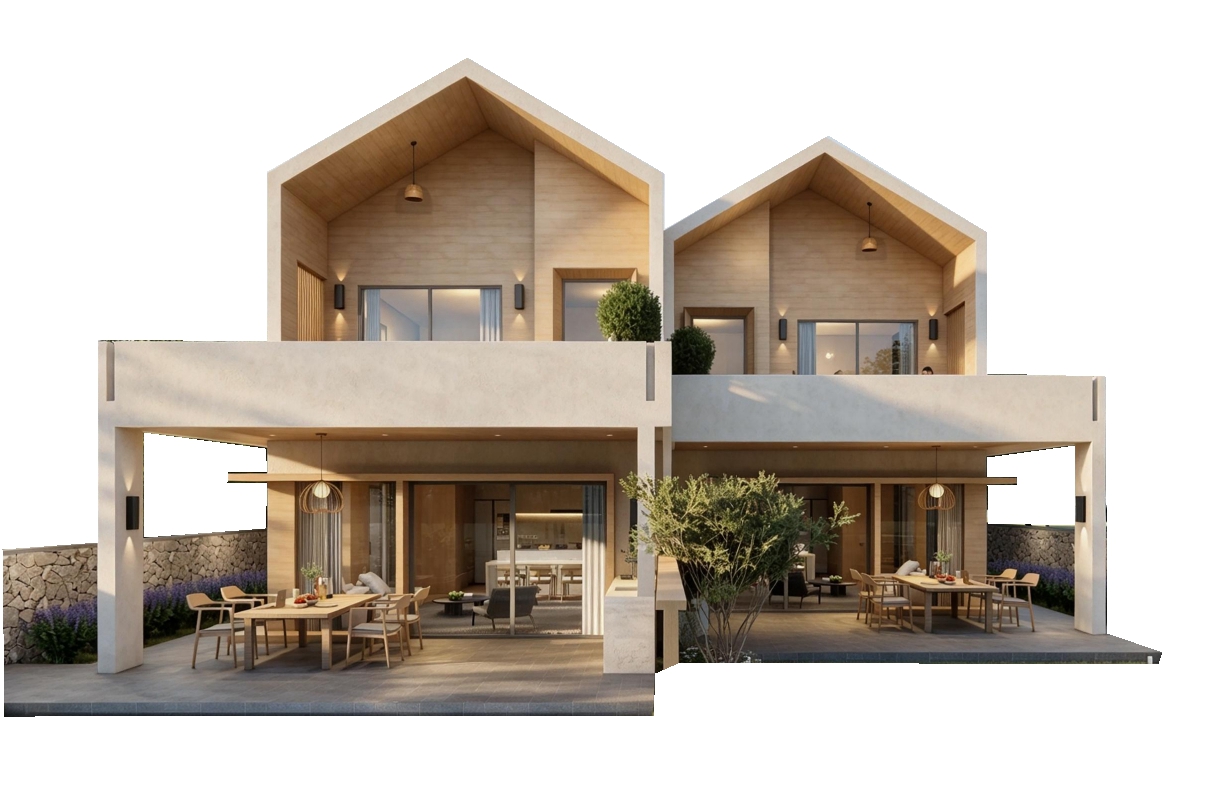
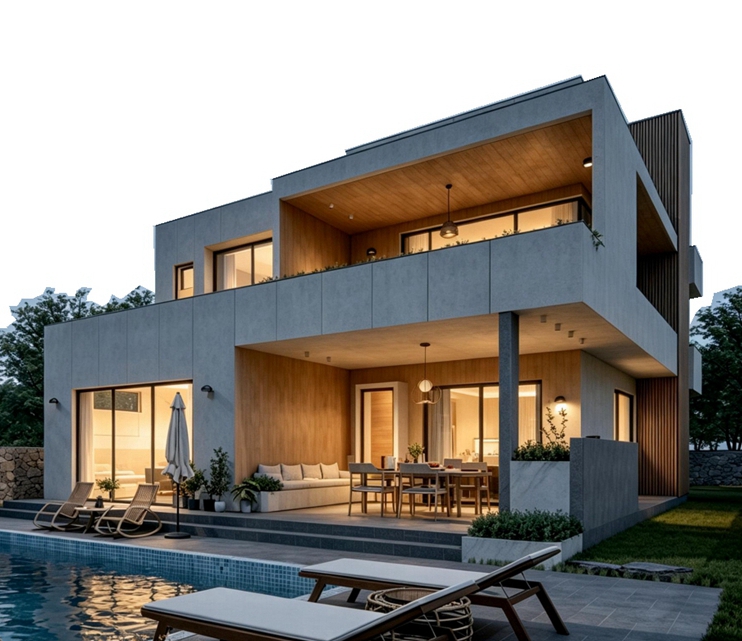
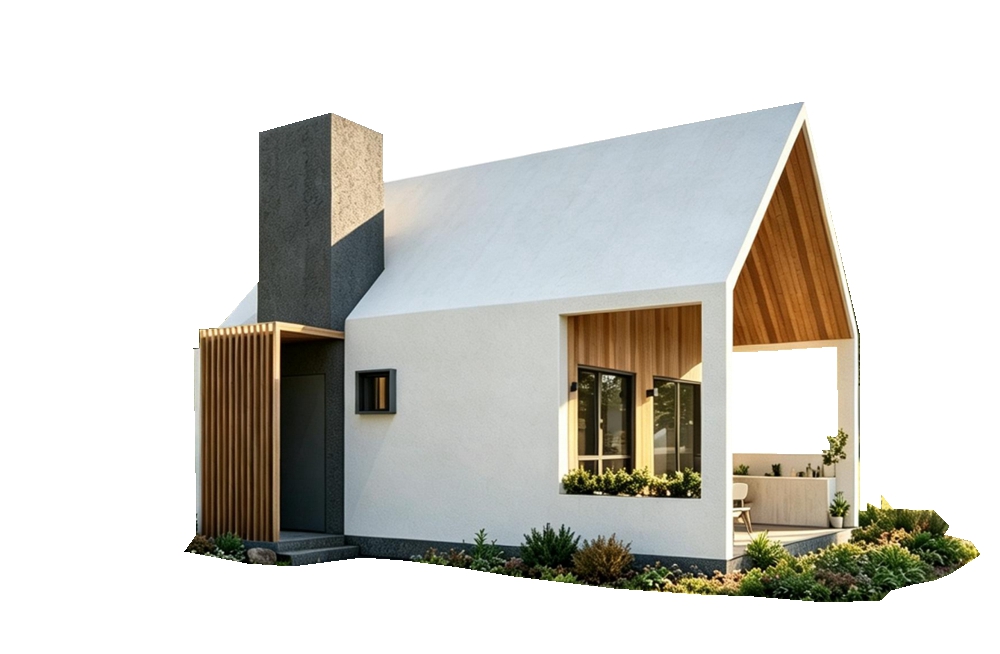
In recent years, China’s cultural tourism consumption has undergone a significant shift. Modern travelers prefer relaxing short-distance micro-vacations and outdoor glamping over tiring long-distance travel, focusing on immersive natural experiences and stress relief. This changing consumer trend has driven scenic spots and outdoor camps nationwide to upgrade their accommodation facilities rapidly.
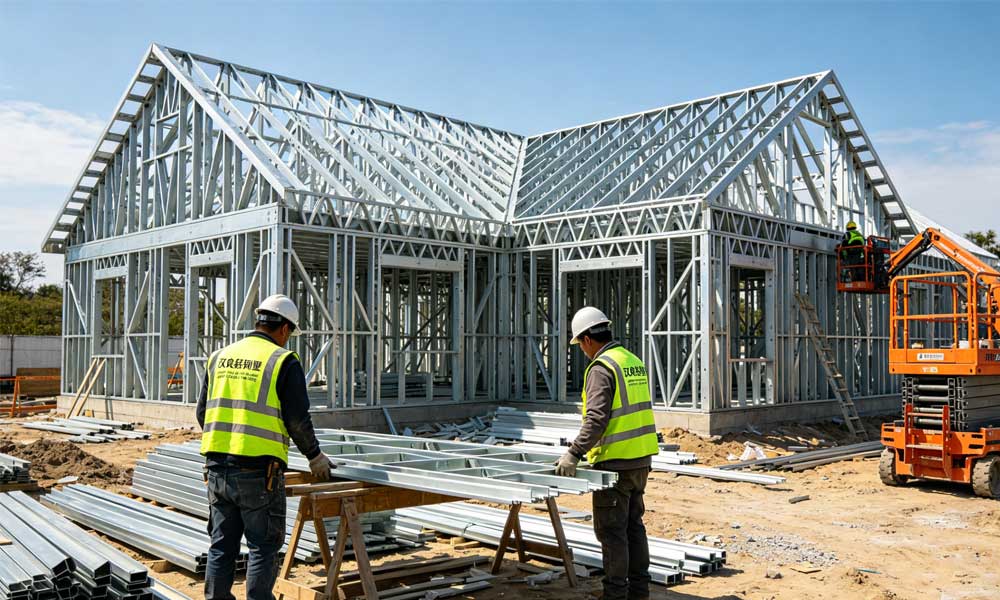
From grassland camps in Xinjiang and mountain homestays in Sichuan, to coastal resorts in Singapore and eco-tourism projects in Malaysia, one industry trend stands out clearly: traditional brick-concrete and wooden homestays are gradually being replaced by highly adaptable, cost-effective modular light steel houses.
In the past, scenic spots mostly adopted brick-concrete or wooden structures for homestay construction due to their traditional recognition. However, these conventional building methods show obvious drawbacks in today’s fast-updating tourism industry: long construction cycles, complicated ecological approval procedures, severe damage to natural landscapes, and high renovation & maintenance costs. They can no longer meet the needs of scenic spots for asset-light operation, rapid delivery and flexible layout adjustment.
As a professional manufacturer specializing in prefabricated steel buildings for cultural tourism, Hanliang Light Steel Villa has delivered hundreds of successful camp and homestay projects at home and abroad. Based on rich on-site project experience, this article comprehensively analyzes why light steel homestays have become the top choice for modern mobile tourism accommodation.
Tourism operators have clearly realized that building permanent accommodation in scenic reserves, mountainous areas, lakeside zones and grassland regions has become increasingly difficult. Unlike ordinary residential buildings, tourism projects are subject to strict ecological protection rules, standardized construction requirements and rigorous environmental regulations. Traditional civil engineering methods expose numerous flaws and fail to adapt to the lightweight, high-efficiency operation mode of modern cultural tourism.
Outdoor tourism construction commonly encounters various difficulties, including tedious approval processes, complex foundation treatment, inaccessible sites for large construction machinery, and rising labor costs. Especially in high-altitude and terrain-complex areas such as Shangri-La, Yunnan, material transportation is difficult and costly, and construction progress is highly restricted by weather and seasons. Missing the optimal construction window will delay project delivery and cause huge losses by missing peak tourism seasons.
In the cultural tourism industry, construction speed determines business opportunities and profits. Traditional buildings feature heavy investment, long lead times and fixed layouts, which cannot keep up with the rapid iteration and flexible layout demands of modern tourism. This is why more and more scenic spot operators are switching to efficient, eco-friendly and low-risk light steel construction solutions.
The core advantage of light steel houses for mobile homestays lies in their highly modular manufacturing and assembly mode. Completely different from traditional cast-in-place construction with long on-site working cycles, all core components including steel frames, wall panels and interior frameworks are prefabricated in factories under standardized production systems. After being transported to the construction site, the houses can be quickly assembled and connected with water and electricity systems, greatly shortening the on-site construction period.
This lightweight, low-equipment-dependent construction method performs exceptionally well in mountainous, lakeside, grassland and coastal restricted areas. Most wild scenic roads are narrow and rugged, making large construction vehicles inaccessible for traditional building projects. In contrast, light steel houses can be disassembled for packaged transportation and manually assembled without heavy machinery, adapting to almost all complex outdoor terrains.
Taking Hanliang’s mountain camp project in Guangxi as an example, the deep mountain location had extremely poor road conditions with no access for large construction equipment. We adopted a full modular light steel solution, with all building components prefabricated in the factory and transported in batches for on-site assembly. Complicated foundation work and large machinery operations were eliminated, cutting the overall construction period by more than half. The project was completed in time for the peak tourism season, helping the client maximize passenger flow and avoid operational losses caused by site limitations.
Young people dominate the current cultural tourism consumption market. Their accommodation demands are no longer limited to basic lodging functions. Travelers now pay more attention to exterior aesthetics, atmospheric design, landscape views and personalized experiences. Unique, photogenic and comfortable homestays are key to attracting social media exposure, customer revisits and word-of-mouth communication — areas where traditional buildings are extremely disadvantaged.
Brick-concrete and wooden buildings feature fixed shapes and rigid layouts, making it hard to create differentiated landscape experiences. Light steel structures, however, are lightweight and flexible in structural stress, supporting diverse creative designs such as full-size panoramic floor-to-ceiling windows, curved roofs, cantilevered viewing platforms and staggered module combinations. They can perfectly integrate with mountain, lake and sea landscapes to build immersive scenic camps, vacation houses and internet-famous homestays.
With transparent lighting layout, minimalist and high-end appearance, and immersive panoramic views, light steel homestays greatly improve living comfort and possess strong social media communication attributes. They easily gain popularity on Instagram, TikTok and other platforms, bringing free traffic and brand exposure to scenic spots. This is the core reason why most new tourism homestay and camp projects prefer light steel architecture.
A common misconception is that light steel buildings are temporary structures unsuitable for long-term commercial use. In fact, mature commercial-grade light steel homestays have achieved comprehensive performance upgrades, with structural stability, outdoor weather resistance and living comfort meeting high-end commercial standards, fully adapting to high-frequency, high-traffic operation in scenic spots.
Professional tourism-specific light steel homestays are optimized for complex outdoor environments, equipped with complete thermal insulation, waterproof moisture-proof and sound insulation systems. Combined with high anti-corrosion steel structures and weather-resistant exterior materials, they fundamentally solve common outdoor building problems such as overheating, dampness, poor sound insulation, steel corrosion and facade aging. Compared with wooden homestays that require frequent renovation and maintenance, light steel buildings feature higher stability and longer service life, effectively reducing long-term operation costs with outstanding cost performance.
Especially in coastal areas like Hainan with year-round high temperature, high humidity and severe salt spray corrosion, traditional buildings are prone to mildew, damage and rust, leading to heavy maintenance pressure. Light steel houses with hot-dip galvanized steel structures and fluorocarbon spray exterior finishes can strongly resist erosion from high temperature, heavy rain and salt spray, significantly extending building lifespan. For coastal tourism projects, Hanliang customizes exclusive protection solutions according to local climate and site conditions to ensure stable long-term operation.
Beyond the domestic market, the global boom in micro-vacations and eco-glamping has driven the rapid popularity of modular light steel homestays worldwide. Light steel construction is widely adopted in numerous high-end overseas tourism projects, including Jeju Island camping bases in South Korea, eco-homestay clusters in Malaysia, and mountain resorts in Turkey. Overseas tourism operators favor asset-light development models and prioritize environmental performance, construction efficiency and cost control — all core strengths of light steel buildings.
When selecting construction solutions, international clients focus on construction efficiency, environmental compliance, transportation flexibility and long-term maintenance costs. Light steel construction produces almost no construction waste and causes no damage to original ecological landscapes. Featuring fast installation and short delivery cycles, the modules can be flexibly disassembled, expanded and adjusted according to operational needs without large-scale reconstruction. Relying on strong adaptability, low maintenance and high cost performance, Hanliang, as an experienced light steel manufacturer with rich overseas project expertise, has obtained increasing international tourism cooperation opportunities.
Competition in the cultural tourism industry no longer focuses on the number of accommodation beds. Homogeneous traditional homestays can hardly attract modern travelers. The key to retaining customers, improving revisit rates and increasing revenue lies in unique scene atmospheres and immersive vacation experiences. Enterprises that create differentiated, high-quality and aesthetic tourism scenarios will occupy a dominant market position.
With strong plasticity and versatile design styles, light steel houses adapt perfectly to forests, lakes, grasslands, coasts and other natural landscapes, realizing seamless integration between architecture and nature. Modern light steel homestays have evolved from scattered single buildings into integrated vacation ecosystems, covering luxury glamping zones, themed camp communities, mountain leisure spaces and micro-vacation complexes. The one-stop immersive experience effectively improves scenic spot brand quality and comprehensive revenue.
The widespread popularity of light steel homestays is not a blind industry trend, but an inevitable result of tourism market upgrading, consumer demand iteration and construction innovation. Modern travelers pursue relaxing, aesthetic and immersive short-distance vacations, making traditional high-investment, slow-cycle and rigid buildings incompatible with the development of modern cultural tourism. Light steel houses excel in rapid construction, flexible layout, environmental friendliness, high aesthetics and low maintenance, perfectly solving various pain points in scenic accommodation construction. With years of in-depth experience in tourism prefabricated architecture, Hanliang Light Steel Villa fully considers regional climate characteristics, site conditions and commercial operation needs, continuously optimizing product structure, safety performance, energy-saving systems and spatial aesthetics to provide one-stop customized light steel solutions for global tourism projects. In the future, with the continuous prosperity of eco-tourism and asset-light cultural tourism, modular light steel homestays will become the industry mainstream, empowering the high-quality, sustainable and asset-light development of the global cultural tourism industry.
Q1: Are light steel homestay houses suitable for long-term residence?
Yes, they are completely suitable for long-term residence and commercial operation. Different from simple temporary prefab houses, high-quality commercial light steel homestays undergo comprehensive upgrades in structural reinforcement, anti-corrosion treatment, thermal insulation, moisture resistance and sound insulation. With stable structure and excellent comfort, they have been widely used in scenic commercial homestays, resort camps and long-term residential projects, and can last for decades with standard construction and qualified materials.
Q2: How long does it take to build a scenic light steel homestay?
The construction cycle depends on project scale and site conditions, with far higher efficiency than traditional buildings. A single independent light steel homestay can complete main construction within several weeks through factory prefabrication and on-site assembly. For large-scale camp clusters, the overall construction period is only one-third of that of traditional civil engineering projects, enabling scenic spots to open quickly and seize peak tourism traffic.
Q3: Do light steel villas require high maintenance costs?
Compared with traditional wooden and brick-concrete homestays, standard light steel villas have lower long-term maintenance costs and simpler daily upkeep. The high anti-corrosion steel main structure resists rust, deformation and cracking. Equipped with professional weather-resistant exterior walls and full-house moisture-proof systems, it adapts to complex outdoor environments without frequent renovation. Only basic daily maintenance is required, greatly reducing long-term labor and capital operation costs for scenic spots.
 Follow us