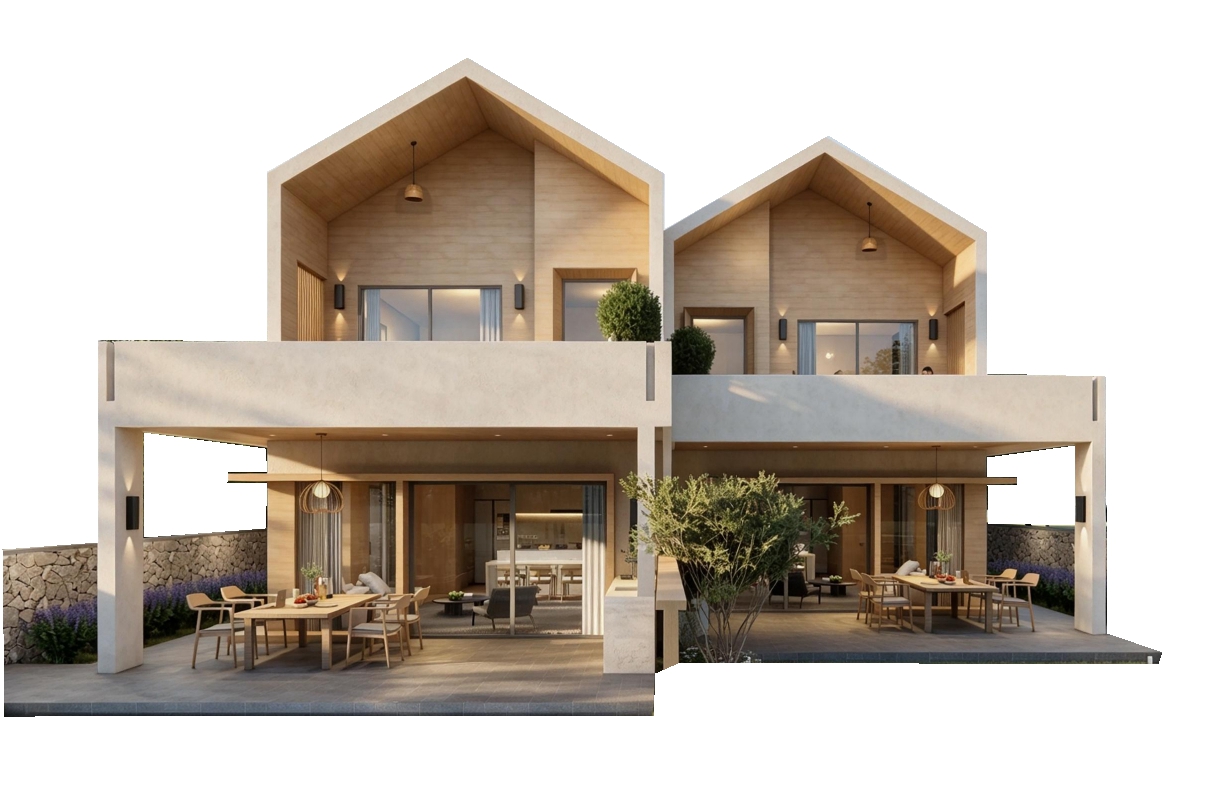
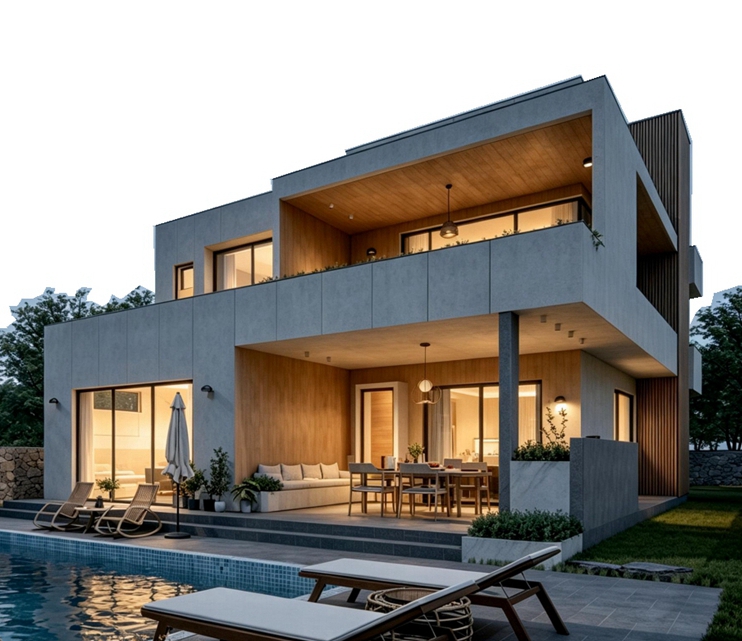
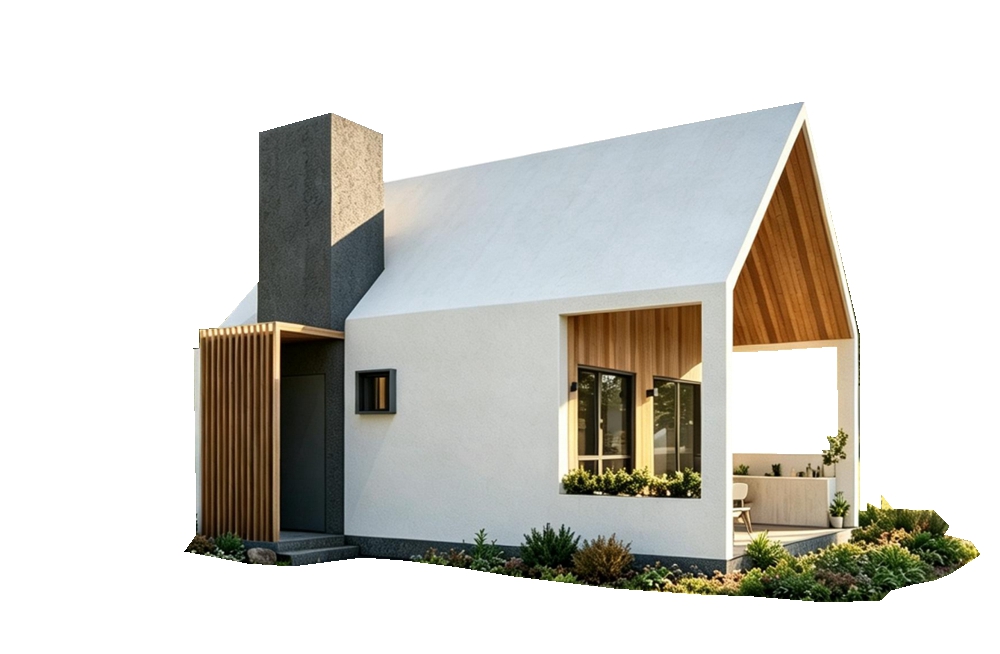
Cold regions in North America, including northern United States, all of Canada, and Alaska, feature long and harsh winters with temperatures often dropping below -30℃. These areas also experience extreme weather conditions such as heavy snowfall and alternating freeze-thaw cycles, which place extremely high demands on the structural strength, thermal insulation, snow resistance, and frost resistance of residential roofs. Without targeted optimization, roofs of ordinary light steel villas are prone to issues like snow-induced collapse, inadequate insulation, joint freezing and cracking, and water leakage. With years of experience in the export of light steel buildings, backed by ICC-ES international authoritative certification and rich overseas project experience, Hanliang Ruijie has specially customized reinforced roof light steel villas for cold regions in North America. These villas accurately adapt to local climate and building codes, balancing safety, energy efficiency, and durability, making Hanliang Ruijie the preferred partner for overseas clients in North America’s cold regions.
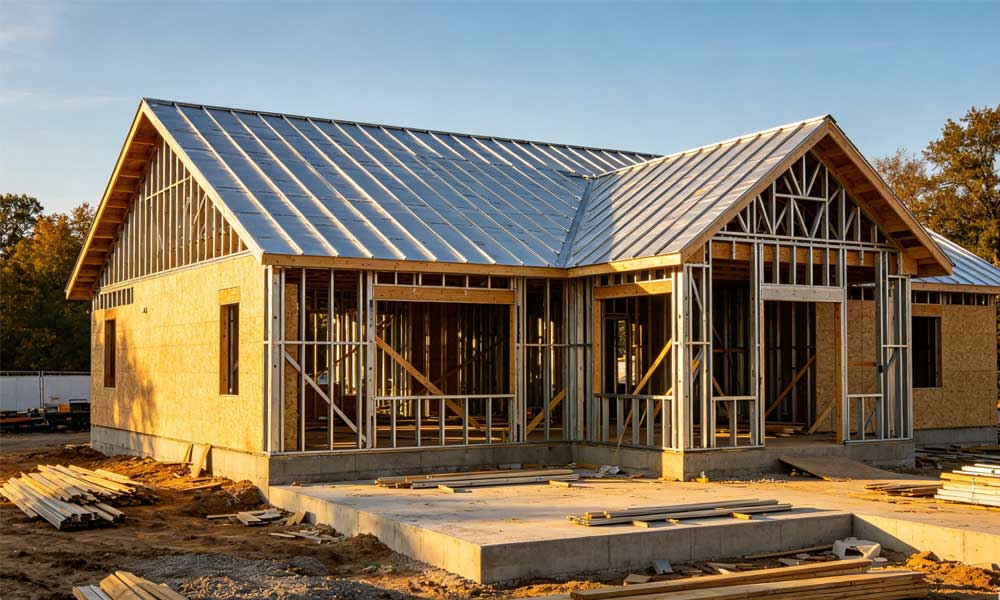
The climatic characteristics of North America’s cold regions pose multiple challenges to residential roofs, which is why ordinary light steel villas struggle to adapt. First, there is the pressure of snow load. According to the ASCE 7-16 standard, the ground snow load in cold regions of North America generally reaches 40-60 psf, and even exceeds 90 psf in some mountainous areas. Without reinforcement, ordinary light steel roofs are prone to safety hazards such as keel deformation and roof collapse. Second, the erosion of freeze-thaw cycles: alternating snow and rain in winter causes repeated freeze-thaw of roof joints, which easily leads to seal failure and component corrosion, and then water leakage. In addition, the demand for thermal insulation in severe cold weather is prominent. The insulation design of ordinary roofs cannot meet North American energy efficiency standards, which will lead to a surge in indoor heating energy consumption and increased living costs.
To address the core pain points in North America’s cold regions, Hanliang Ruijie has customized an exclusive reinforced roof solution from three dimensions: structural reinforcement, insulation optimization, and joint protection, comprehensively improving the cold resistance, snow resistance, and thermal insulation performance of villa roofs. In terms of structural reinforcement, G550 grade high-strength cold-formed thin-walled steel is used as the roof keel, with the wall thickness upgraded to 1.2mm and the keel spacing reduced to 400mm. At the same time, horizontal and diagonal supports are added to form a stable dense beam force-bearing system, which can easily withstand snow loads within 90 psf, far exceeding local code requirements.
For thermal insulation, a composite insulation system is adopted, using high-density rock wool insulation material with a thermal conductivity of ≤0.03W/(m·K) and an insulation layer thickness of no less than 130mm. It is paired with a waterproof and breathable membrane and an aluminum foil reflective layer to effectively block heat transfer between indoor and outdoor spaces, avoid thermal bridge effects, and prevent condensation and mold caused by moisture penetration, complying with North America’s Calgreen Green Building Standard. For joint protection, double waterproof underlayment and sealant are used for multiple sealing at vulnerable parts such as roof ridges, eaves, and gutters. Snow guards and electric tracing devices are added at the eaves to prevent falling melting ice and snow and blockage of drainage outlets due to freezing. All metal components are coated with AZ50 grade hot-dip aluminized zinc to enhance frost and corrosion resistance.
Hanliang Ruijie’s customized reinforced roof light steel villas fully comply with North American building codes to ensure product compliance and reliability. The products have passed ICC-ES certification and strictly meet core North American standards such as ASTM A653 and NBCC 2025. Each batch of roof components undergoes third-party testing to ensure that structural strength, insulation performance, and corrosion resistance meet the standards. In the production process, relying on the ISO9001 quality management system, strict control is implemented over processes such as keel processing, insulation layer laying, and joint sealing to avoid production errors affecting roof performance.
At the same time, personalized adjustments are made based on differences in different cold regions of North America: for the extremely cold regions in northern Canada, the insulation layer is further thickened to 150mm, and the roof slope is optimized to 30° to promote natural snow sliding; for the windy and snowy regions in the central and western United States, the roof wind resistance design is strengthened to adapt to local strong wind load requirements, ensuring that the villas remain stable and durable even in extreme weather. Currently, this customized solution has been implemented in multiple projects in Vancouver, Canada, Minnesota, USA, and other regions, gaining high recognition from local clients.
Q1: What is the maximum snow load that the customized reinforced roof by Hanliang Ruijie can withstand for cold regions in North America?
A1: Based on the North American ASCE 7-16 standard and local meteorological data, the customized reinforced roof can withstand a snow load of 40-90 psf. For high snow load areas such as mountainous regions, the structural design can be further strengthened according to requirements to ensure compliance with local building codes and eliminate the hidden danger of snow-induced collapse.
Q2: Can the insulation design of the reinforced roof meet the energy efficiency requirements of cold regions in North America?
A2: Yes. The solution adopts a composite insulation system with an insulation layer thickness of no less than 130mm and a thermal conductivity of ≤0.03W/(m·K). Combined with a waterproof and breathable membrane and an aluminum foil reflective layer, it effectively reduces indoor heating energy consumption, complies with North America’s Calgreen Green Building Standard and local energy efficiency codes, and can significantly reduce winter heating costs.
Q3: Can the customized reinforced roof light steel villa pass local building inspections in North America?
A3: Yes. The products have passed ICC-ES international authoritative certification and strictly follow core North American building codes such as ASTM A653 and NBCC 2025. The production process is fully controllable, and each batch of products is provided with complete test reports and certification documents, which can smoothly pass local building inspections and ensure compliant construction and use.
 Follow us