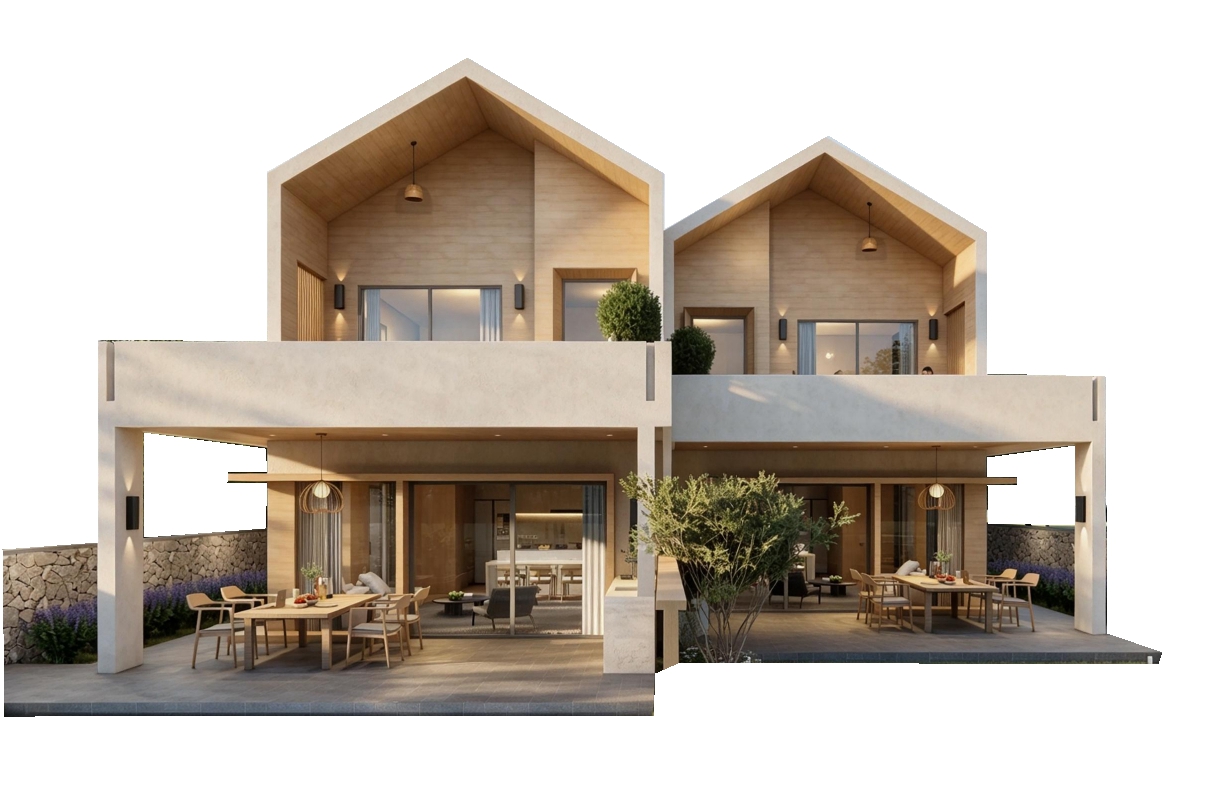
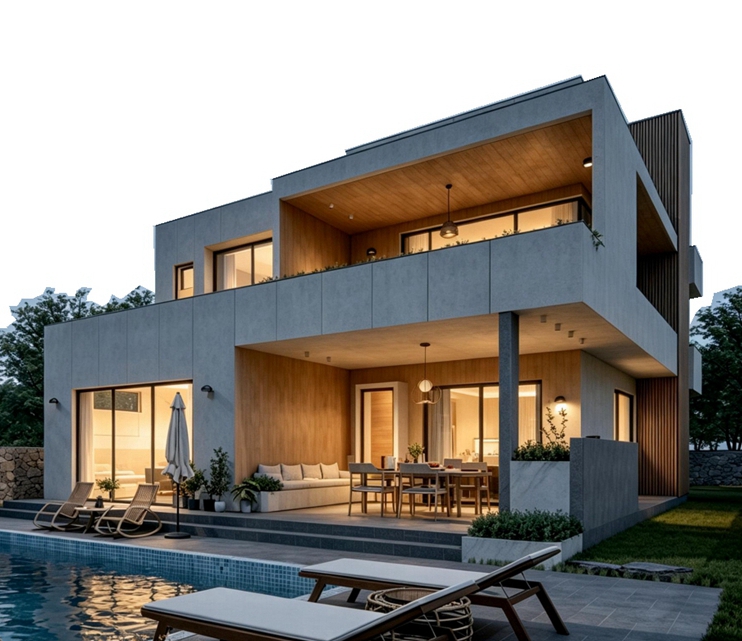
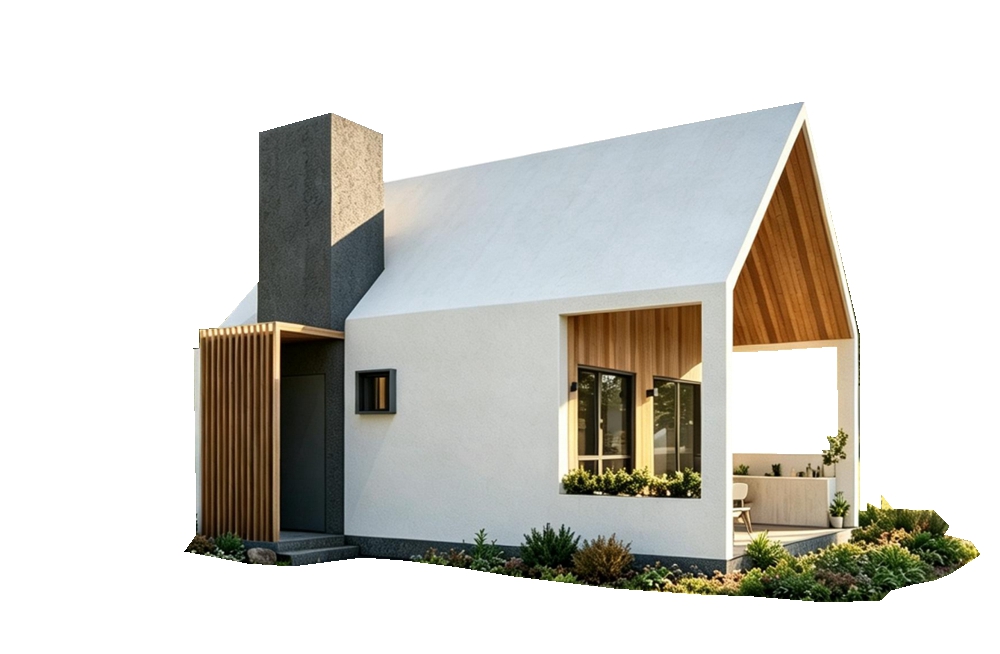
In the vast area of sub-Saharan Africa, stable power supply has long been the "last mile" problem for improving living quality and promoting local economic development. In 2026, through technological iteration at its intelligent manufacturing base, Hanliang Ruijie successfully integrated high-efficiency photovoltaic systems with modular light steel buildings. The first batch of "PV-storage-direct-flexible" integrated light steel villas developed for the African market officially rolled off the production line in batches, providing African customers with a systematic solution from "having a roof over their heads" to "self-sufficiency in electricity".
Africa is endowed with excellent solar energy resources, but due to weak power grid infrastructure, many high-end residences or resort camps, even after completion, face frequent power outages or even complete lack of electricity. During on-site investigations, Hanliang Ruijie found that simply adding photovoltaic systems later is not only costly, but also often damages the building's service life due to structural load-bearing and waterproof issues.
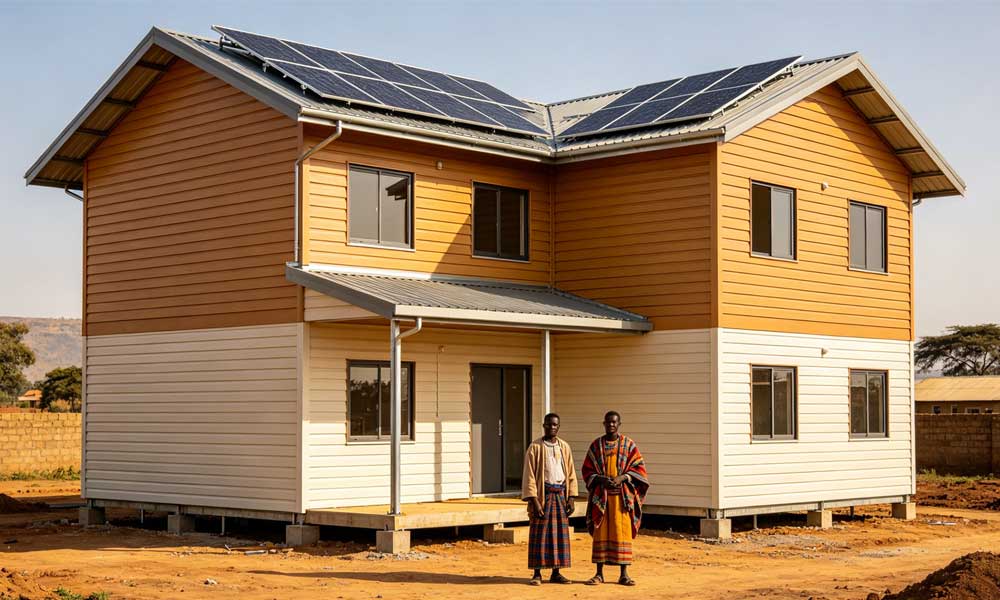
To address this, Hanliang Ruijie's design team regarded photovoltaic modules as the "skin" of the building rather than attachments during the structural R&D stage of the light steel villas. Through prestressed structural calculations, the light steel framework can perfectly bear large-area high-efficiency monocrystalline silicon modules, with built-in wire troughs and inverter positions reserved. This means that every light steel villa shipped to Africa is essentially a small independent power plant.
Africa has a complex and diverse climate, ranging from extreme high temperatures in West Africa to high ultraviolet radiation on the East African Plateau. Targeting these environmental factors, Hanliang Ruijie has carried out targeted performance reinforcement for export products:
Intelligent Energy Storage System: Standard configuration of lithium iron phosphate (LiFePO4) battery packs with high cycle life. On sunny days with strong sunlight, the system not only meets the electricity demand for air conditioning and daily life, but also stores surplus electricity to support continuous power load for at least 12 hours at night.
Physical Thermal Insulation and Passive Cooling: To reduce photovoltaic power consumption, the building adopts a double-layer reflective thermal insulation layer. Under extreme high temperatures of 40℃, through the adjustment of the thermal resistance coefficient of the composite wall, the indoor temperature can be naturally 8-10℃ lower than the outdoor temperature, greatly alleviating the power pressure.
Aluminum-Zinc Alloy Salt Spray Resistant Structure: For coastal countries such as Nigeria and Kenya, the surface of the steel structure is treated with AZ150 aluminum-zinc alloy plating, ensuring that the main building structure and photovoltaic brackets can maintain structural stability for more than 50 years in a humid and salt-spray environment.
The following is a comparison of the operation data between Hanliang Ruijie's "PV-storage integrated" villas and ordinary villas in the African market:
Key Indicators | Hanliang Ruijie PV-Storage Integrated Villa | Traditional Off-Grid Buildings (Fuel Power Generation) |
|---|---|---|
Power Stability | 24-hour continuous power supply (intelligent switching) | Dependent on fuel, limited by logistics supply |
Operating Cost | Zero electricity cost, low maintenance cost | Extremely high fuel cost, high mechanical wear |
Delivery Efficiency | Synchronous delivery of house + energy (45 days) | Separate construction and energy system, long construction period |
Carbon Emission | Nearly zero emission | High emission with continuous noise |
For developers or private homeowners in Africa, technical thresholds and post-maintenance are the biggest concerns. Hanliang Ruijie has achieved "integrated delivery" through the industrial advantages of being a source manufacturer.
In Hanliang Ruijie's production workshop, the photovoltaic control box, inverter and circuit protection system have completed modular pre-installation and full-load pressure testing before leaving the factory. Each set of villas is shipped with a dedicated digital code along with the container. The local construction team only needs to complete the framework construction like building blocks according to the 3D assembly animation provided by Hanliang Ruijie and connect the pre-installed plugs to realize power supply. This "dimension-reducing" installation experience solves the problem of the shortage of professional electricians in Africa.
This innovative attempt by Hanliang Ruijie has been verified in the eco-tourism projects in Ethiopia and the supporting residential buildings in mining areas in Zambia. It not only improves the living conditions of local residents, but also provides a replicable Chinese solution for the green building transformation in Africa.
The recovery rate of the light steel structure itself is as high as 90% or more. Combined with zero-emission photovoltaic energy, Hanliang Ruijie is transforming buildings from simple "consumers" to energy "producers". In the context of global response to climate change, light steel villas made in China are becoming bright green coordinates on the African continent.
Q: With photovoltaic panels installed on the roof, will strong winds in Africa pose potential safety hazards?
A: Hanliang Ruijie's light steel villas have considered wind load at the initial design stage. The photovoltaic brackets are directly connected to the main structural framework through high-strength self-tapping bolts, rather than simple counterweight ballast. The entire system has passed simulation tests of strong winds above level 12, and is combined with the streamlined wind guide design of the roof to ensure absolute safety under extreme weather conditions.
Q: Will the service life of energy storage batteries be shortened in the high-temperature environment of Africa? How to maintain them?
A: We use an intelligent temperature-controlled energy storage cabinet, which is usually installed in the coolest shaded area of the villa and equipped with an independent heat dissipation air duct. The Battery Management System (BMS) has a remote monitoring function, allowing engineers at Hanliang Ruijie's domestic headquarters to monitor the operation status of every system around the world through the cloud. If an abnormality occurs, the system will automatically issue an early warning and guide customers to perform simple module replacement.
Q: If the local rainy season in Africa lasts for a long time, can the photovoltaic system still ensure power supply?
A: Our PV-storage solution is redundantly designed based on local historical meteorological data. By configuring high-efficiency low-light capture modules and larger-capacity battery packs, even in continuous rainy weather, the system can ensure the operation of core loads such as lighting, communication and refrigeration through energy-saving mode. At the same time, the system supports access to external emergency generators as backup input.
 Follow us