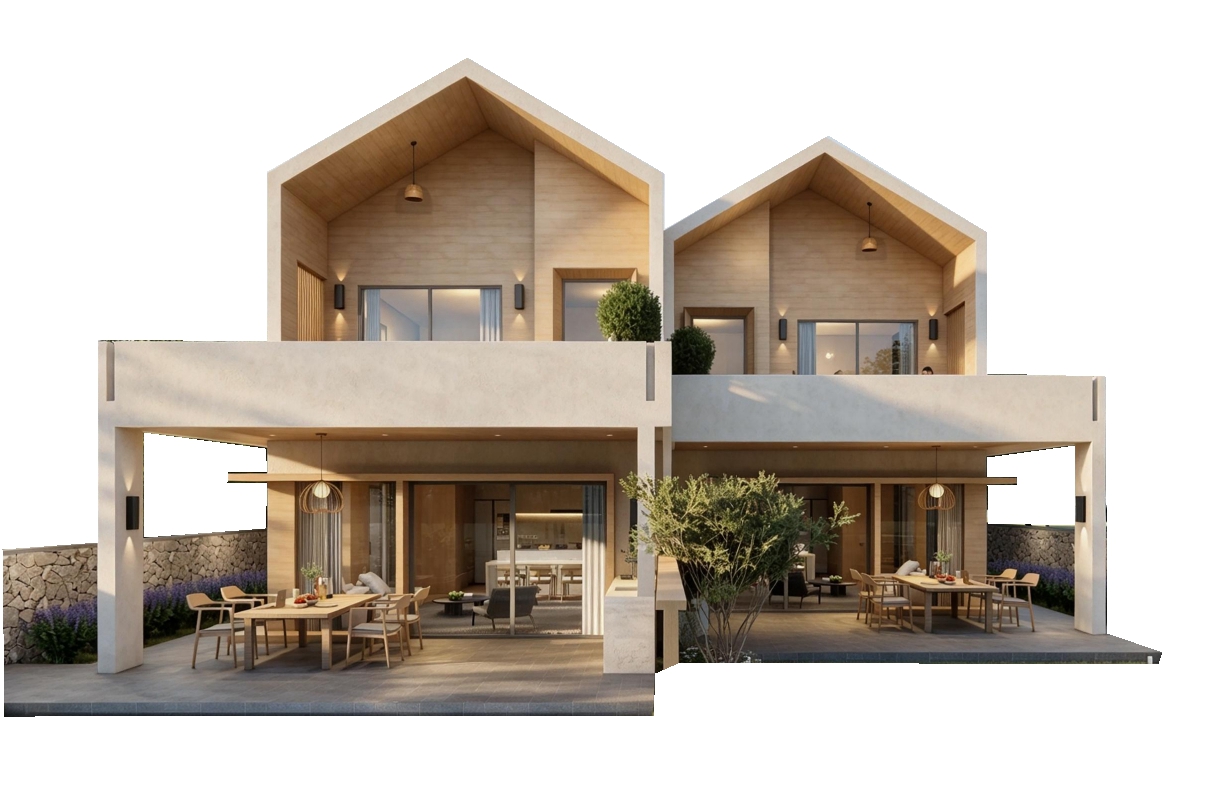
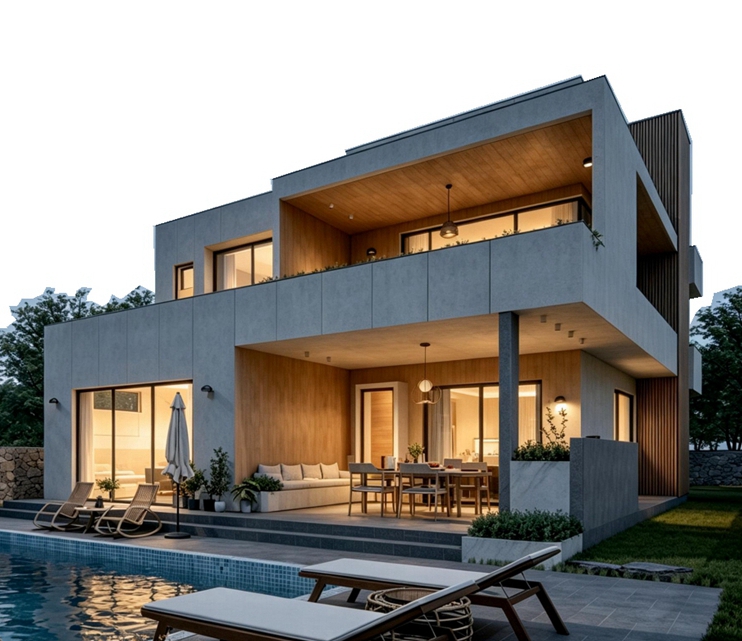
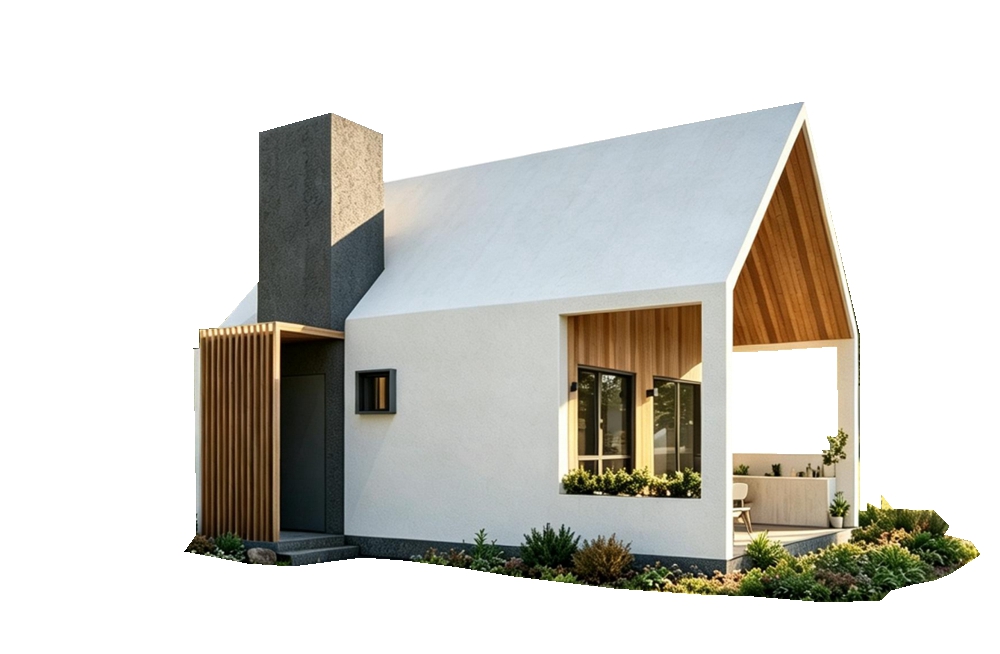
In recent years, Egypt has been fully promoting the "Egypt Vision 2030" infrastructure plan, with a plan to build more than 2 million affordable housing units in 2026. At the same time, it has implemented tax reduction policies on imported environmentally friendly building materials, providing broad market opportunities for overseas green building enterprises. Relying on years of overseas export experience and mature light steel villa technology, we Hanliang Ruijie have successfully undertaken the affordable housing project in the suburbs of Cairo, Egypt, providing 150 high-quality light steel villas for the local area. We have accurately adapted to Egypt's desert climate and building compliance requirements, efficiently promoted the construction and implementation throughout the process, successfully created a benchmark case of Chinese light steel villas exported to Egypt, and demonstrated the overseas competitiveness of China's green building technology.
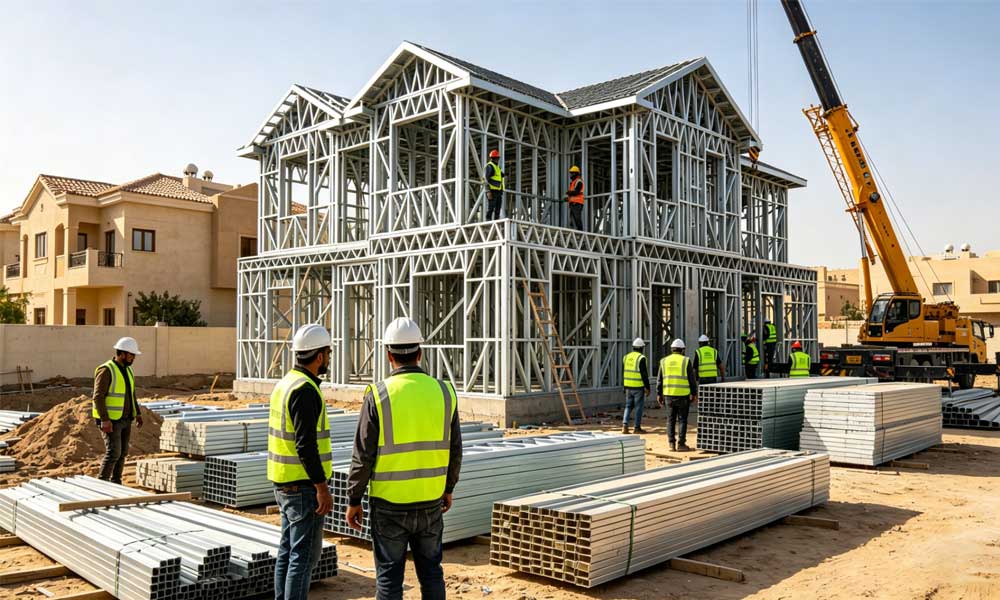
This Hanliang Ruijie light steel villa export project to Egypt is located in the suburbs of Cairo, adjacent to the planned area of Egypt's new administrative capital. The partner is a well-known local real estate developer in Egypt. The core positioning of the project is affordable housing, which balances living comfort and cost controllability, and is mainly used to alleviate the contradiction between supply and demand of housing in the local area. The total construction area of the project is 12,000 square meters, with 150 light steel villas built, each with an area of 80 square meters, covering a standard two-bedroom and one-living room unit, adapting to the living needs of Egyptian families.
In line with the requirements of Egypt's "Building Law" (Law No. 119 of 2008), the project strictly follows local building codes, with the total building height controlled within 36 meters. Each villa is equipped with standard parking space and fire-fighting facilities. At the same time, in line with Egypt's tax reduction policy on imported environmentally friendly building materials, it adopts green building materials that meet LEED standards, greatly reducing project costs. Hanliang Ruijie has set up a professional project team to connect with local approval departments in advance, complete ECTN customs clearance documents and building compliance certification, and ensure the smooth start of the project.
The suburbs of Cairo, Egypt belong to a desert climate, with the highest summer temperature reaching 45℃, accompanied by strong winds and sand, and little precipitation. At the same time, there is a shortage of skilled local construction workers and limited construction equipment, bringing many challenges to project construction, which is also the core pain point for most overseas construction enterprises to construct in Egypt. Combining the local climate and construction conditions, Hanliang Ruijie has formulated targeted solutions to break through the construction difficulties one by one.
In response to the high-temperature and dry climate, the project team adjusted the construction time to avoid the high-temperature period at noon, used local Egyptian MASTER SEAL 481 curing agent to maintain the components, and refrigerated the water used for concrete mixing to control the water temperature at 5℃, reducing the impact of high temperature on construction quality. Faced with windy and sandy weather, temporary dust-proof sheds were built, additional filter layers were added to precision construction equipment to avoid sand and dust damaging the equipment, and construction was suspended during the frequent sandstorm period to ensure construction safety. To address the shortage of local skilled workers, Hanliang Ruijie arranged professional technical personnel to carry out on-site training, completing the skill training of 40 local workers in only 7 days, ensuring construction efficiency and quality. In addition, combined with the characteristics of local gravel foundations, the foundation treatment plan was optimized, and high-strength steel bars were used for reinforcement to improve building stability and adapt to local geological conditions.
This project adheres to the core model of "factory prefabrication and on-site assembly", highlighting the advantages of efficient construction of light steel villas, and at the same time deeply integrates localized services to achieve dual improvement in efficiency and quality. Hanliang Ruijie completed the precise cutting, standardized processing and numbering of all light steel components in domestic factories, and transported them to the Egyptian construction site via cross-border container transportation. The transportation loss rate was controlled within 5%, which greatly saved logistics costs and time compared with traditional building material transportation.
During the on-site construction phase, relying on modular design, 4-5 trained local workers, together with 1 Chinese technical guide, could complete the assembly of a single villa. The construction period of a single set was only 28 days. The entire project was completed in only 120 days from the arrival of components to full completion, which was 60% shorter than the construction period of local traditional brick-concrete buildings. At the same time, the project adopted green construction technology. The walls were made of high-density rock wool sandwich panels with a sun protection reflective layer, which could control the indoor temperature below 28℃ in high-temperature environments, not only improving living comfort but also reducing long-term energy consumption. The roof reserved a photovoltaic installation interface, which was in line with Egypt's abundant solar energy resources and reserved space for subsequent energy upgrades.
After 4 months of efficient construction, Hanliang Ruijie's Egyptian light steel villa project was successfully completed and passed the comprehensive acceptance of the local Egyptian construction department. All indicators met Egypt's "Building Law" and relevant green building standards, and passed the compliance approval at one time. After the project was delivered, 150 light steel villas were quickly put into use. With excellent performance of earthquake resistance (Grade 8) and wind resistance (Grade 12), as well as environmentally friendly, energy-saving and comfortable living experience, it has been highly recognized by local residents and partners.
This project has not only laid a solid foundation for us Hanliang Ruijie to expand the Egyptian market, but also become a typical case of Chinese light steel villas adapting to Egypt's desert climate and compliance requirements, providing valuable experience for the subsequent export of Chinese green buildings to Egypt. Relying on the localized construction and compliance service experience accumulated in this project, we have reached an intention of cooperation with Egyptian developers for 300 additional light steel villas. In the future, we will continue to help Egypt's affordable housing construction, promote in-depth cooperation between China and Egypt in the field of green buildings, and deepen our presence in the Egyptian market and empower local development with professional technology and high-quality services.
 Follow us