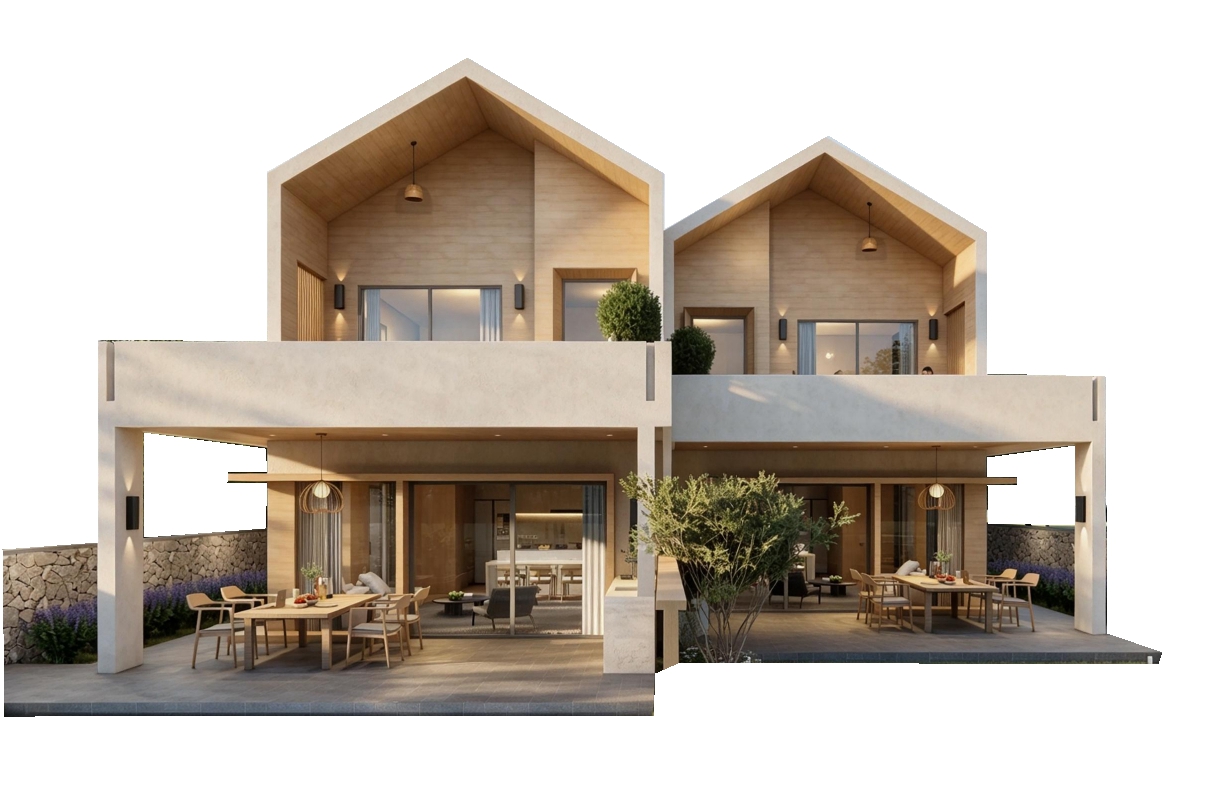
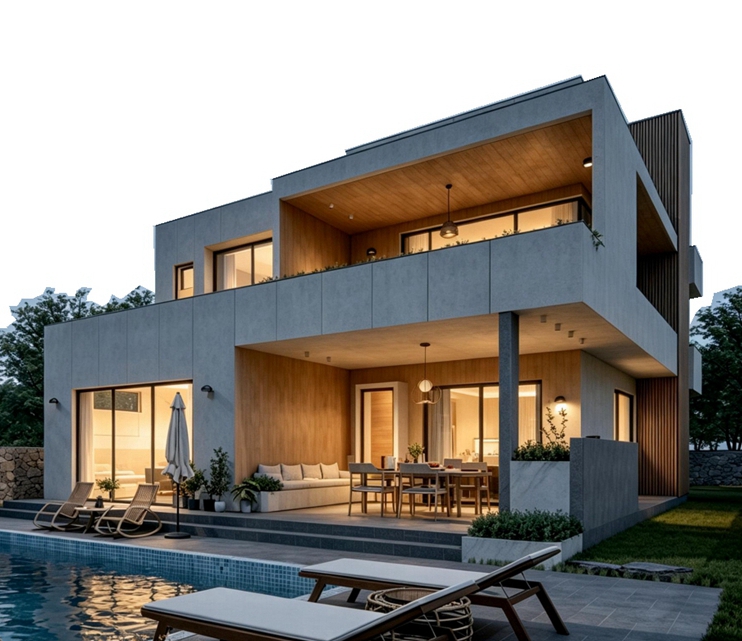
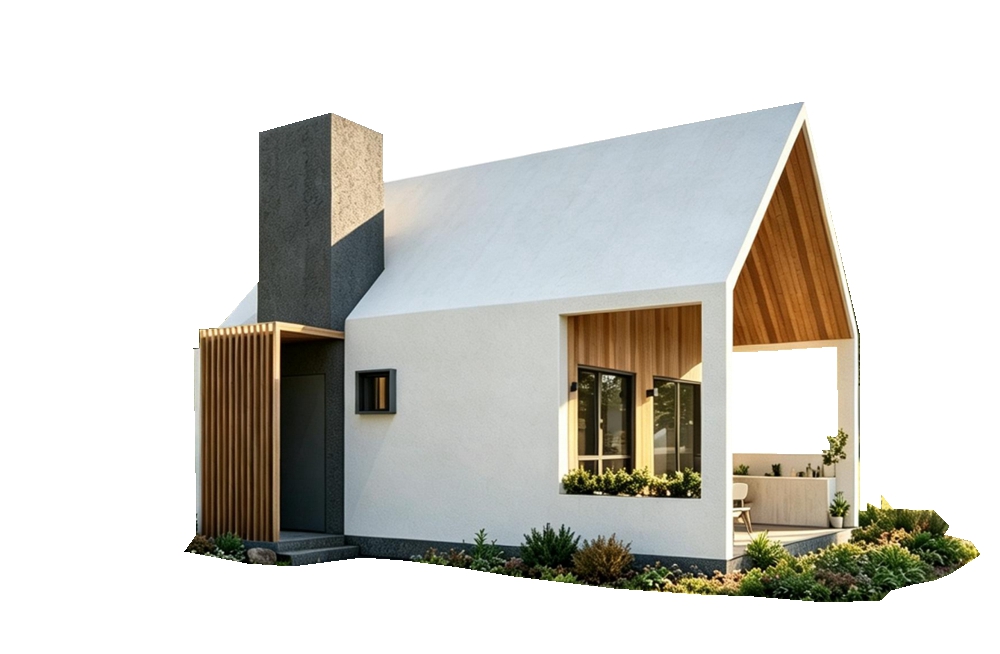
With the continuous upgrading of the rural living environment, light steel villas have become one of the mainstream choices for rural self-built houses due to their core advantages of environmental protection, high efficiency, and strong adaptability. The construction of self-built light steel villas in rural areas cannot be carried out arbitrarily; it is necessary to strictly abide by the legal principle of "approval before construction and one household, one house site", and fully complete the approval process and relevant procedures to ensure that the construction is legal and compliant, and effectively avoid legal risks such as demolition and inability to confirm rights in the later stage. Combining the latest relevant policies on rural housing construction and industry practical experience, this article details the approval process and core procedures for self-built light steel villas in rural areas, focuses on key practical nodes, and provides professional and rigorous reference for rural self-built house owners, taking into account the practicality and standardization of the content.
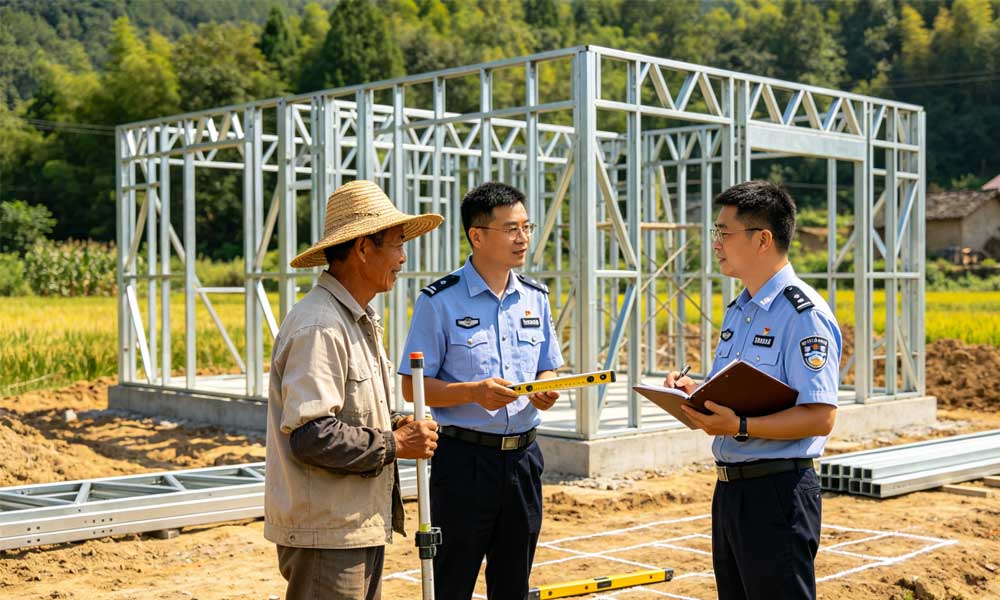
The conduct of approval work for self-built light steel villas in rural areas must be based on meeting the application conditions and completing relevant materials, which is the foundation for ensuring the efficient progress of the approval work. The applicant must be a registered member of the village collective economic organization and strictly abide by the legal principle of "one household, one house site", that is, a household of villagers can only have one house site. The area of the house site must strictly comply with the current local control standards (the area of a single house site in most areas does not exceed 200 square meters). It is strictly prohibited to occupy permanent basic farmland, ecological protection red lines, and forbidden construction areas such as river courses and public road control red lines.
Relevant approval materials must be prepared in advance to avoid delaying the approval process due to missing materials. The core materials mainly include four categories: first, identity and ownership certificates, including the householder's ID card, household registration booklet, and house site use right certificate (or other legal ownership certification documents); second, application-related documents, including the "Application Form for Rural House Site and Construction (Planning Permission)" and the construction commitment letter, which must clearly commit to complying with relevant policy requirements such as village planning and building new houses and demolishing old ones; third, design-related materials, which need to provide complete design drawings of the light steel villa, including floor plans, elevations, and structural calculation reports, specifying that the seismic fortification intensity is not less than 7 degrees to ensure compliance with relevant rural building safety standards; fourth, special certification materials for light steel, which need to provide light steel keel material certificates, galvanized layer test reports, etc., to ensure that the materials used meet relevant national quality standards.
The approval process for self-built light steel villas in rural areas must strictly follow the core logic of "village-level review - town-level joint review - construction supervision - completion acceptance", with each link closely connected and indispensable. Village-level review is the first link of approval. After the householder submits a written application and a complete set of approval materials to the village committee, the village committee must first verify the applicant's qualification and the completeness of the materials, organize village representatives to conduct an evaluation, and confirm that there is no ownership dispute over the four boundaries of the house site. After passing the review, it will be publicized in the village for 7 days. The publicity content includes key information such as the construction location, floor area, and number of building floors. If there is no objection to the publicity, the review opinion will be signed and reported to the town people's government.
Town-level joint review is the core link of approval. The town people's government will carry out joint approval work in conjunction with relevant departments such as agriculture and rural areas, natural resources, and housing and urban-rural construction, mainly completing two core tasks: first, on-site investigation to verify whether the construction location meets the requirements of village planning and whether the distance from the road meets the control standards (usually not less than 5 meters from the road); second, technical review to verify relevant materials such as the design drawings of the light steel villa and material test reports to confirm that they meet the relevant standards for building safety. After passing the review, the "Rural House Site Approval Certificate" and "Rural Construction Planning Permit" will be issued in accordance with the law. The entire approval process takes about 20 working days. If the review fails, the specific rectification direction and requirements will be informed in writing.
During the construction period, it is necessary to accept the supervision and management of relevant departments and strictly implement the "four on-site" supervision system, that is, the staff of the town's housing and urban-rural construction department will conduct on-site setting out and positioning before the start of construction, verify whether the foundation depth meets the standards after the foundation trench excavation, spot-check the connection strength of light steel nodes during the main structure construction, and conduct a comprehensive safety inspection before completion. Within 6 months after the completion of the project, the householder must submit a completion acceptance application to the town people's government and submit relevant materials such as construction records and material certificates. After passing the acceptance, the relevant department will issue an "Acceptance Opinion Form", and the householder can go through the follow-up real estate registration procedures with this opinion form.
Compared with traditional brick-concrete self-built houses, the approval work for light steel villas has its own core points that need to be focused on and implemented. As prefabricated green buildings, the approval links for light steel villas have been gradually simplified, but it is still necessary to additionally provide structural safety test reports and material compliance certificates to ensure that the quality of light steel components and construction safety meet the standards. In some areas, relevant energy-saving subsidy policy support can be applied for by virtue of their green building attributes. At the same time, it is necessary to strictly abide by the control standards for rural self-built houses. Most areas clearly stipulate that the number of floors of rural self-built houses shall not exceed 3 floors, the eave height shall not exceed 9 meters, and it is strictly prohibited to arbitrarily change the approved design drawings.
Common misunderstandings need to be avoided in the approval process: first, it is strictly prohibited to "carry out construction without approval". Some villagers mistakenly believe that "they can build houses arbitrarily on their own house sites", ignoring the legality of the approval process, which is likely to be identified as an illegal building and face the risk of being demolished in accordance with the law; second, material fraud must be eliminated. Submitting false test reports, ownership certificates and other relevant materials will be rejected in accordance with the law, and may affect the subsequent approval qualification; third, attention should be paid to the rights and interests of neighbors. When there is an ownership dispute between the four neighbors of the house site, it is necessary to first reach an agreement through negotiation and form a written agreement, otherwise the approval work will be suspended.
Q1: What is the specific approval cycle for self-built light steel villas in rural areas?
A1: The entire approval cycle is about 30-40 working days, of which the village-level review and publicity link takes about 10 working days, and the town-level joint review link takes about 20 working days; if the approval materials are complete and there is no ownership dispute or other objections, the approval cycle can be shortened to less than 30 working days. Completion acceptance and real estate registration will take an additional 2-3 months, and the specific processing time limit shall be subject to the processing efficiency of the local town people's government and relevant departments.
Q2: Is there any difference in the approval process between light steel villas and traditional brick-concrete self-built houses?
A2: The core approval process remains the same, and both need to go through the links of village-level review, town-level joint review, construction supervision, and completion acceptance in turn. The core difference between the two lies in the material review link. Light steel villas need to additionally provide special materials such as light steel component test reports and structural calculation reports to prove their structural safety and material compliance, while traditional brick-concrete self-built houses do not need to provide such special certification materials.
Q3: Can the approval procedures be supplemented later for light steel villas built without approval?
A3: It needs to be determined according to the actual situation. If the building location meets the village planning, does not occupy the forbidden construction area, and the building materials and construction quality meet the relevant standards, you can apply to the local town people's government for supplementary approval procedures, but you need to pay the relevant fines in accordance with the law; if the building construction violates the village planning, occupies permanent basic farmland and other forbidden areas, the approval procedures cannot be supplemented, and it needs to be demolished in accordance with the law. Therefore, it is recommended that house-building owners strictly follow the principle of "approval before construction" to avoid relevant legal risks.
The core of the approval process for self-built light steel villas in rural areas is to achieve "legality and compliance, and closed-loop process". Every link from the preliminary material preparation to the later completion acceptance must strictly follow the relevant national and local policy requirements.
 Follow us