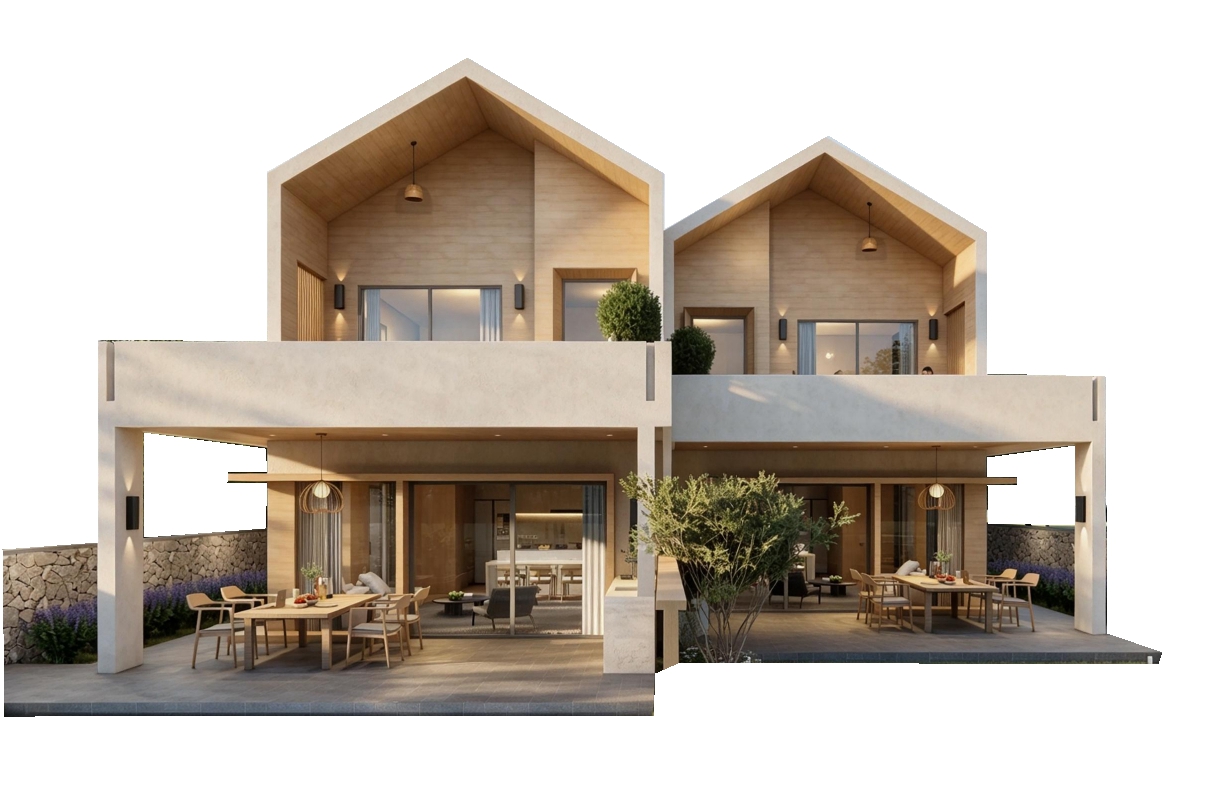
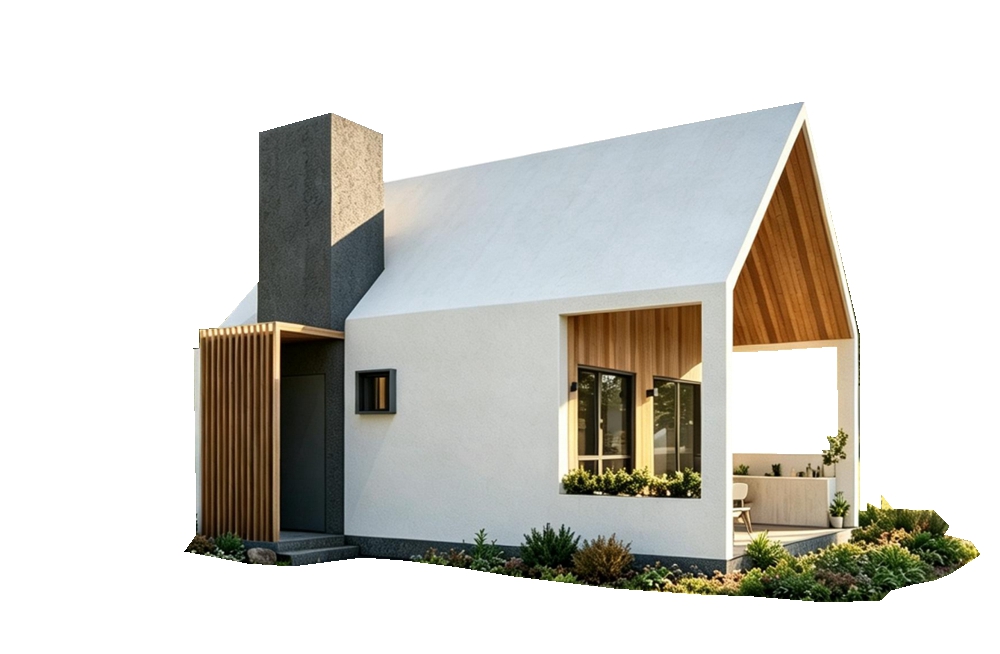
The roof is a core component of light steel villas, bearing the dual functions of waterproofing and thermal insulation. Its construction quality directly affects the service life of the building, indoor comfort and energy conservation effect. Scientific and standardized construction technology is the key to ensuring the stability and durability of roof waterproofing and insulation systems. This article focuses on the construction technology of light steel villa roofs, elaborates on the key links, operation points and quality control requirements of waterproofing and insulation construction, providing practical technical guidance for relevant construction personnel and practitioners.
The core goal of light steel villa roof waterproofing construction is to form a continuous, dense and durable waterproof barrier, effectively preventing rainwater penetration and avoiding structural damage and indoor water seepage caused by leakage. The construction process needs to be strictly controlled from base treatment, node reinforcement to waterproof layer laying and acceptance inspection.

First of all, the base treatment is the foundation of waterproof construction. Before laying the waterproof layer, it is necessary to thoroughly inspect the steel structure of the roof to ensure that the roof purlins are firmly installed without deformation or looseness, and all connecting parts are tightly fixed. The surface of the base should be cleaned thoroughly to remove dust, debris, oil stains and other impurities, ensuring that the base is flat, clean and dry. For local protrusions or depressions, cement mortar should be used for leveling, and the flatness error should be controlled within ±5mm to avoid hollowing and wrinkling of the waterproof layer caused by uneven base.
Node parts such as roof internal and external corners, gutters, eaves and downspouts are weak links of waterproofing and need special reinforcement treatment. At the internal and external corners, the base should be made into an arc with a radius of not less than 50mm to enhance the adhesion of the waterproof membrane; at the gutters and eaves, additional waterproof layers should be laid in advance, using the same material as the main waterproof layer, with a width of not less than 500mm to ensure the waterproof effect of these water-prone areas. After the base treatment is completed, a compatible base treatment agent should be evenly applied to improve the bonding force between the waterproof layer and the base.

In terms of waterproof layer laying, SBS modified asphalt waterproof membrane and polymer waterproof membrane are commonly used in light steel villa roofs. When constructing with SBS modified asphalt waterproof membrane by hot-melt method, the membrane should be cut and pre-laid according to the roof size first, ensuring the correct laying direction. The lap width of the long side should not be less than 100mm, and the lap width of the short side should not be less than 150mm. The bottom surface of the membrane and the base surface should be evenly heated with a hot-melt spray gun. When the asphalt on the bottom surface of the membrane melts into a bright black color with slight bubbles, the membrane should be quickly rolled and laid on the base, and compacted with a pressure roller to discharge the air between the membrane and the base. After the waterproof layer is laid, a closed water test should be carried out. The water storage height should not be less than 20mm, and the water storage time should not be less than 24 hours. Only after passing the test can the next construction be carried out.
The roof insulation construction of light steel villas aims to reduce indoor heat loss in winter and heat gain in summer, improve indoor thermal comfort and reduce energy consumption. The selection of insulation materials and scientific construction methods are the key to ensuring the insulation effect. The construction needs to fully consider the thermal conductivity, fire resistance and compatibility of materials, and achieve close combination with the waterproof layer.
Fiberglass wool and rock wool are the preferred insulation materials for light steel villa roofs, which have the advantages of low thermal conductivity, light weight, non-combustibility and good sound insulation performance. The thermal conductivity of fiberglass wool is usually around 0.038W/(m·K), which can effectively block heat transfer. When selecting materials, it is necessary to determine the thickness and density of the insulation layer according to the local climate conditions and energy conservation requirements. For areas with large temperature differences, insulation materials with higher density should be selected to ensure the insulation effect.
There are various construction methods for roof insulation, among which the blanket method and spray foam method are widely used. The blanket method uses pre-cut fiberglass insulation blankets or batts, which are directly placed between the roof purlins, aligned correctly and covered the entire roof area, and fixed with metal clips to ensure no gaps. The spray foam method sprays foam insulation directly on the steel roof surface. The foam expands and adheres closely to the steel structure, forming a seamless insulation layer, which can effectively seal gaps and joints and improve the insulation effect.
It should be noted that a vapor barrier must be installed during insulation construction to prevent moisture accumulation. The vapor barrier should be installed on the warm side of the insulation layer, facing the interior of the building, to avoid condensation caused by temperature difference, which affects the insulation effect and the service life of the steel structure. At the same time, the connection between the insulation layer and the waterproof layer should be handled properly to ensure that the insulation layer is closely combined with the waterproof layer without damaging the waterproof membrane, so as to achieve the dual effects of waterproofing and insulation.
Q1: What are the key points to avoid leakage in light steel villa roof waterproofing construction?
A1: The key points to avoid leakage include three aspects: first, do a good job in base treatment to ensure the base is flat, clean and dry, and handle the node parts with arc and additional waterproof layer; second, select qualified waterproof materials that meet the relevant standards and ensure the lap width and hot-melt bonding effect during laying; third, carry out a strict closed water test after construction, and timely repair any leakage points found.
Q2: How to select suitable insulation materials for light steel villa roofs?
A2: The selection should be based on local climate conditions, energy conservation requirements and fire safety standards. Priority should be given to Class A non-combustible materials such as fiberglass wool and rock wool with low thermal conductivity and light weight. For cold areas, materials with higher density and thickness should be selected to enhance thermal insulation; for hot areas, reflective insulation materials can be combined to improve heat insulation effect.
Q3: What should be paid attention to in the connection between the roof insulation layer and the waterproof layer?
A3: It is necessary to ensure that the construction of the insulation layer does not damage the waterproof membrane. When laying the insulation layer, avoid sharp objects scratching the waterproof layer; the vapor barrier should be closely connected with the waterproof layer to prevent moisture from entering the insulation layer. For the joint parts, sealant should be used for sealing treatment to ensure the integrity and tightness of the whole system.
The roof waterproofing and insulation construction of light steel villas is a systematic project, which requires strict control of every link from material selection to construction operation and acceptance inspection. Only by following scientific construction technology and standardized operation can we ensure the stability and durability of the roof system, improve the indoor comfort of light steel villas and extend the service life of the building.
 Follow us