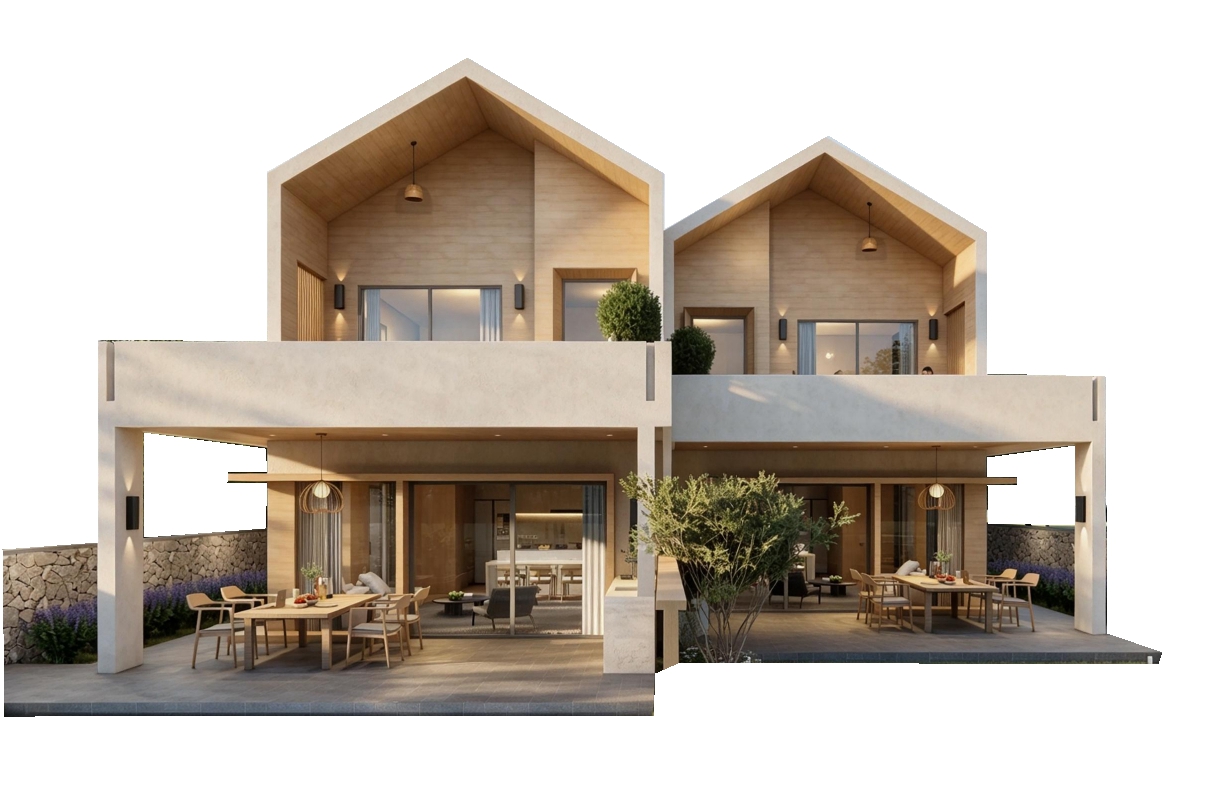
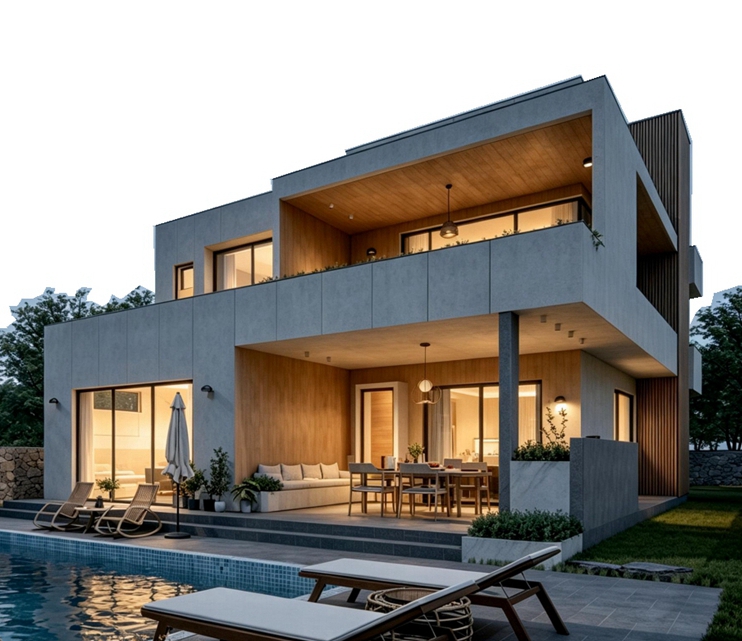
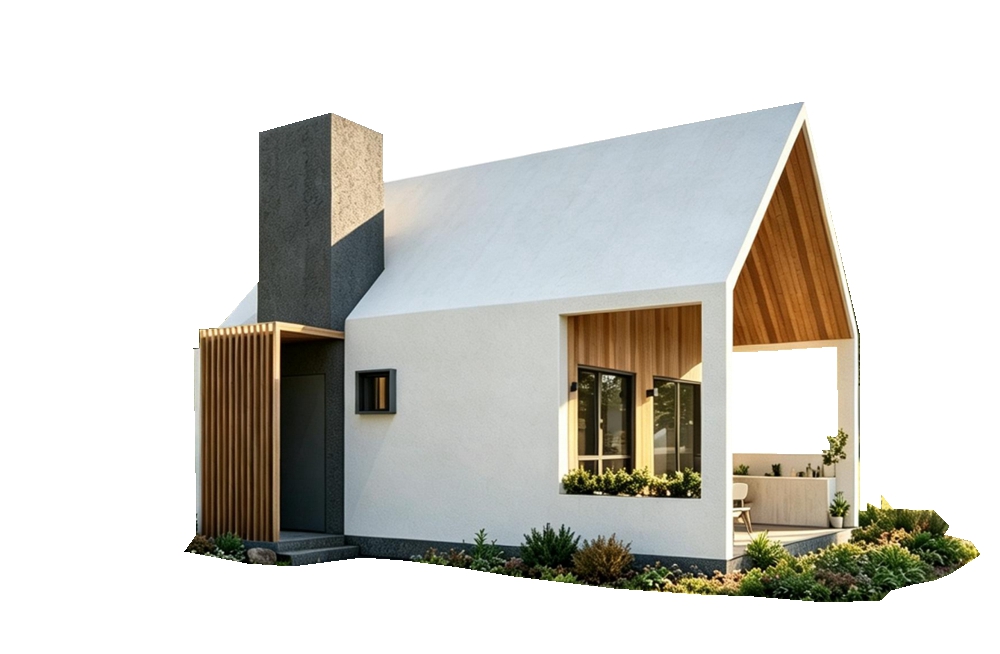
Nowadays, light steel villas have become a mainstream choice for rural self-built houses and cultural tourism residential properties due to their advantages of fast construction, strong earthquake resistance, energy conservation and environmental protection. However, various ultra-low-priced light steel villa products have emerged in the market, attracting a large number of consumers with low-cost packages. Nevertheless, many owners have encountered problems such as wall rusting, steel structure keel corrosion and plate mold growth within just two or three years of moving in, which not only damages the overall appearance of the house, but also directly weakens the structural stability, laying hidden dangers for long-term residential safety.
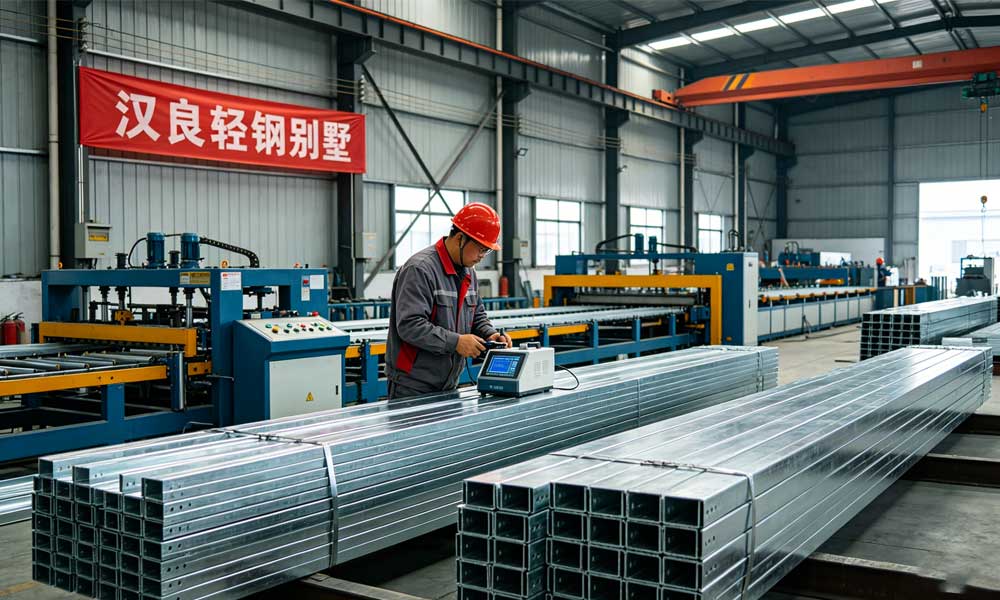
As a professional brand deeply engaged in the field of prefabricated light steel buildings, Hanliang faces up to the chaos of ultra-low prices in the industry, analyzes the underlying truth of rusting in ultra-low-priced light steel villas, helps consumers see through the cost traps, and safeguard the bottom line of residential quality and safety.
The core root cause of rusting in ultra-low-priced light steel villas lies in cutting corners in the raw material link, which completely loses the anti-corrosion foundation. Regular light steel villas adopt high-strength aluminum-zinc plated/hot-dip galvanized steel above Q550, and the national standard requires that the double-sided galvanizing amount be ≥150g/㎡. The zinc layer has strong adhesion and excellent corrosion resistance, which can ensure no rusting for decades. In order to reduce costs, low-cost manufacturers directly use ordinary cold-rolled steel of Q235, and even reduce the national standard 1.2mm thick keel to less than 0.8mm, resulting in a significant decline in the strength and corrosion resistance of the steel itself.
Furthermore, some manufacturers replace the hot-dip galvanizing process with the electro-galvanizing process, only performing simple zinc layer spraying on the steel surface. The thickness of the zinc layer is less than half of the national standard, and its adhesion is extremely poor, which will fall off with a slight collision. Some unscrupulous manufacturers even use recycled waste steel to process keels. The steel contains impurities inside and has an uneven surface, which cannot form a complete anti-corrosion layer. Such inherently inferior raw materials have already laid hidden dangers of rapid rusting even before being put into use. After being put into use, when exposed to moisture and water, the rusting speed will double.
The anti-corrosion effect of light steel villas relies on a complete closed-loop production process. In order to shorten the construction period and reduce labor costs, low-cost manufacturers directly omit the core anti-corrosion processes, further accelerating steel corrosion. After cutting and welding the keels, regular manufacturers will perform targeted zinc replenishment and passivation treatment to repair the damaged zinc layer during the process, and at the same time perform sealed anti-corrosion on the steel cuts and joints to block the contact between water vapor and air. However, low-cost manufacturers completely omit this step, and the sharp cuts after cutting and the high-temperature burned parts after welding are directly exposed to the external environment, becoming the starting point of rusting.
In addition, low-cost products are also perfunctory in the wall assembly and gap treatment links, without performing sealed waterproof treatment. A closed and humid space is formed inside the wall, where water vapor cannot be discharged and accumulates around the steel structure keel for a long time, continuously eroding the weak anti-corrosion layer on the steel surface. Without the support of a complete process, even the light steel keels that seem intact in the early stage will have point rusting in a short time, which gradually spreads to the entire area.
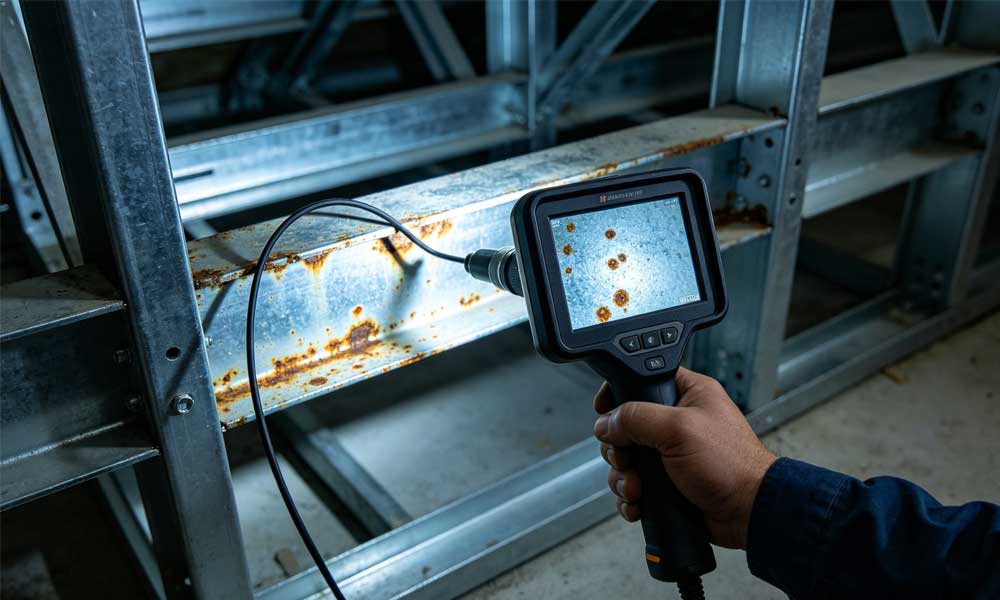
Non-standard operations in the construction link are an important driving force for the rapid rusting of ultra-low-priced light steel villas, and also a detail that most consumers easily overlook. In the construction of regular light steel villas, full steel protection is carried out throughout the process to avoid damaging the zinc layer during construction, and at the same time, strict foundation moisture-proof, roof and wall waterproofing are done to prevent external water vapor from seeping in. The construction teams of low-cost manufacturers are mostly unqualified temporary workers, and the construction process is rude. They drag and collide with the keels at will, greatly damaging the surface anti-corrosion zinc layer and exposing the steel directly.
At the same time, low-cost projects generally omit the foundation moisture-proof layer and external wall waterproofing processes, and the roof drainage design is unreasonable, which is prone to water accumulation and water seepage problems. Rainwater and moisture seep into the interior along the wall gaps, and quickly cause corrosion when contacting the exposed steel. In addition, the node splicing is not tight during construction, and the inferior sealant falls off, leading to continuous intrusion of water vapor, forming a vicious cycle of "water seepage - corrosion - gap expansion - more serious water seepage", which accelerates the overall corrosion and aging of the house.
Most ultra-low-priced light steel villas come from small workshops without qualifications and fixed factories. Such merchants only do one-time business, and the anti-corrosion quality assurance and after-sales maintenance promised in the early stage are all empty words. After the house has rust problems, consumers often have no way to protect their rights. Regular light steel building brands will provide complete material reports and anti-corrosion quality assurance services. If the anti-corrosion layer is damaged in the later stage, they can timely send personnel to repair it to curb the spread of corrosion. However, low-cost manufacturers directly lose contact after delivery, without after-sales teams or maintenance plans. Minor rust spots gradually expand, eventually leading to keel corrosion and deformation and house structure damage.
Such low-cost products also do not have a complete acceptance process. The house seems intact when delivered, but in fact, there are many hidden dangers in internal anti-corrosion and waterproofing. When the owner finds the rust problem, the corrosion has spread to the main structure. The maintenance cost is not only extremely high, but even irreparable, eventually turning the early low-price discount into a huge loss in the later stage.
Q1: What is the core difference in steel anti-corrosion between national standard light steel villas and ultra-low-priced light steel villas?
A1: National standard products adopt high-strength hot-dip galvanized/aluminum-zinc plated steel with up-to-standard galvanizing amount and complete processes, forming a tight anti-corrosion closed-loop. Ultra-low-priced products mostly use inferior thin steel and electro-galvanizing process, omitting anti-corrosion processes, and both the anti-corrosion foundation and later processes are not up to standard, which is the core difference in rust resistance between the two.
Q2: Can minor rust spots on light steel villas be effectively remedied?
A2: Minor rust spots can be remedied through professional derusting, re-coating of anti-corrosion coatings and proper sealed waterproofing. However, the corrosion of ultra-low-priced light steel villas is mostly overall corrosion of internal keels, and the surface rust spots are only a superficial phenomenon, which is often difficult to completely repair. Selecting high-quality products in the early stage is the key.
Q3: How to avoid rust traps when selecting light steel villas?
A3: Refuse to blindly pursue low prices, require manufacturers to provide steel material reports and galvanized layer test reports, check the factory production processes and construction standards, and give priority to regular brands with complete quality assurance and after-sales systems, controlling the anti-corrosion quality from the entire process of raw materials, processes and construction.
The rust resistance of light steel villas never relies on low-price stacking, but on strict control of the entire process of raw materials, production, construction and after-sales. Consumers should not be misled by superficial low prices and ignore long-term residential safety and house service life. Hanliang has always adhered to national standard production guidelines, strictly controlled raw material quality and construction processes throughout the process, and built a full-process anti-corrosion system, ensuring that each light steel villa has both structural safety and durability, away from rust troubles.
 Follow us