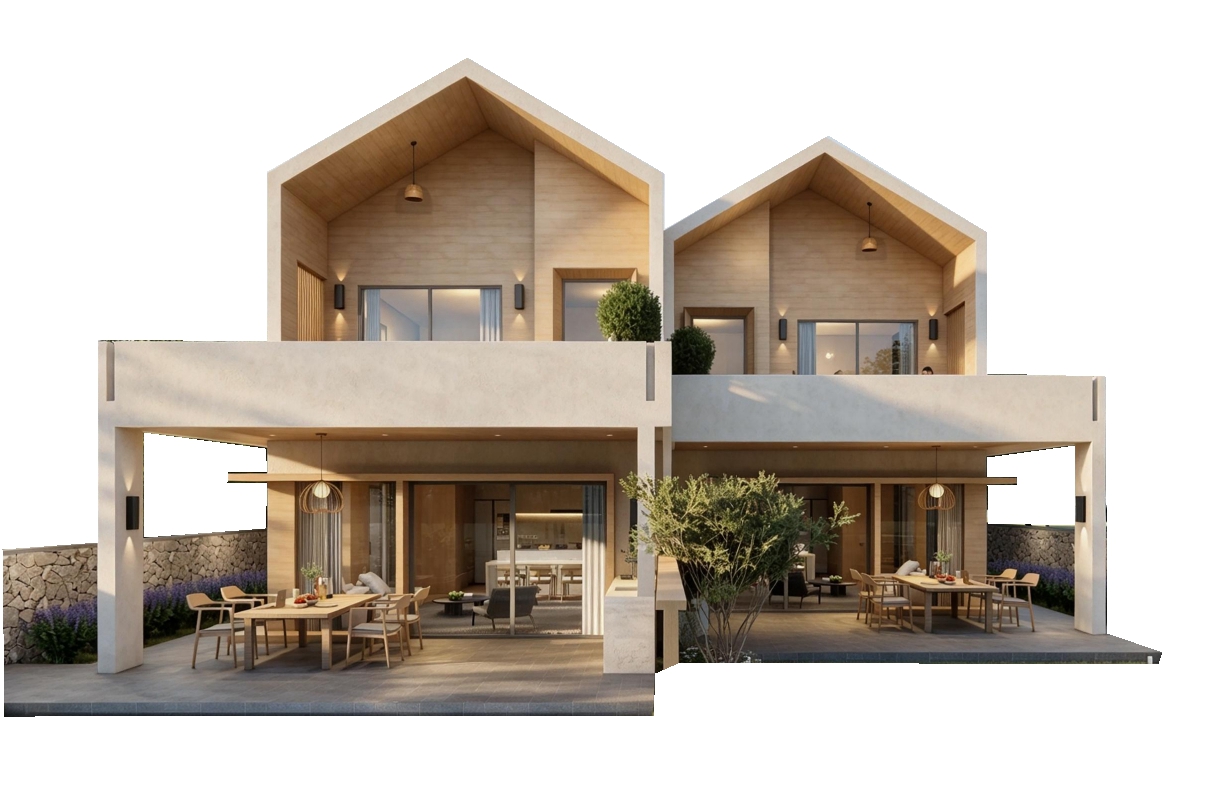
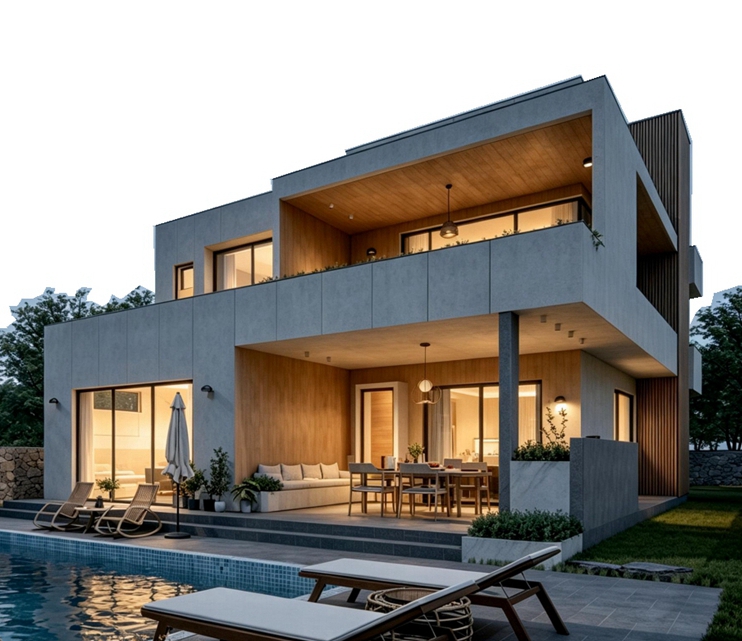
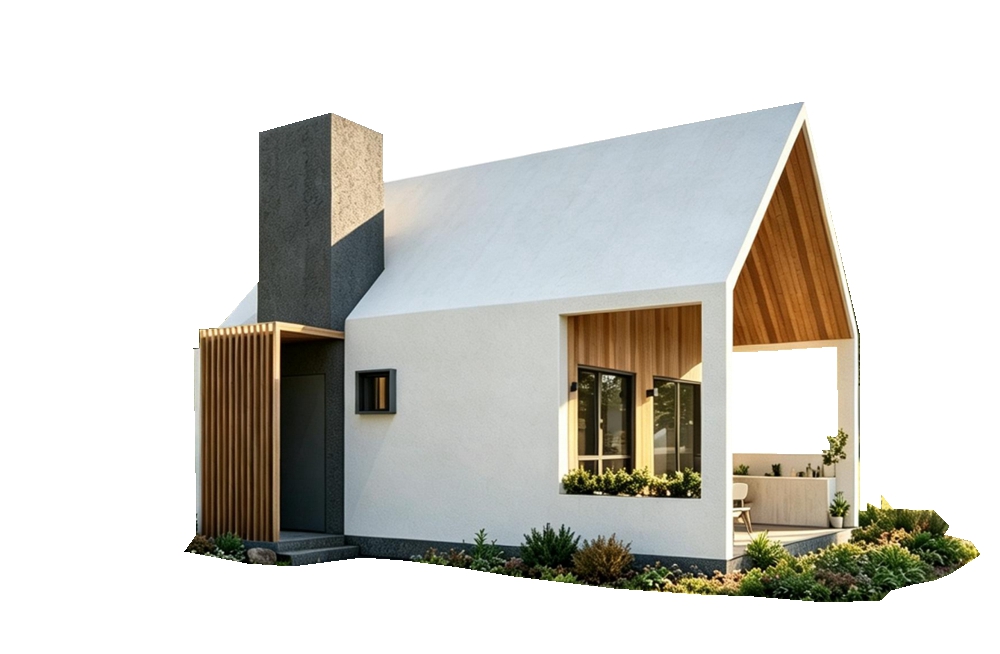
As the global emphasis on sustainable, efficient, and durable construction continues to strengthen, light steel villas have become a preferred option for residential, rural, and tourism-related development projects. In 2026, the construction cost of light steel villas is determined by a combination of material price fluctuations, labor cost variations, regional supply chain maturity, and project customization requirements. This analysis systematically breaks down the cost structure, key influencing factors, and practical cost references, based on 2026 market data and industry best practices, to provide clear and actionable insights for investors, developers, and homeowners planning light steel villa projects.
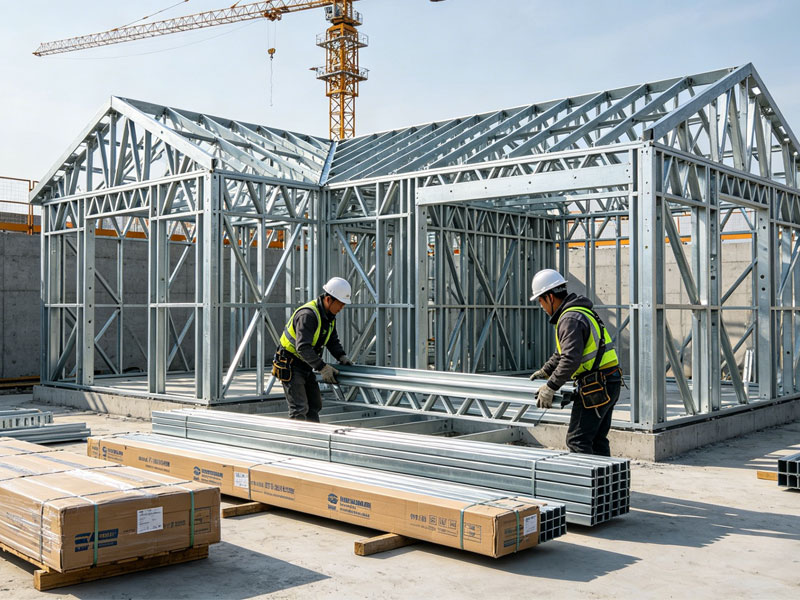
The total construction cost of a light steel villa in 2026 is primarily composed of four core components: structural materials, labor expenses, auxiliary costs, and customization fees. Unlike traditional brick-concrete structures, light steel villas rely on prefabricated components, which effectively reduce on-site waste and shorten construction cycles. However, strict attention to material quality and specification matching is required to avoid potential hidden costs during the construction process.
Structural materials account for 60% to 65% of the total construction cost, with cold-formed thin-walled steel profiles (the core framework of the villa) constituting the largest share of expenses. In 2026, the price of hot-dip galvanized light steel keels (Q355B grade, 0.8-1.2mm thickness) ranges from $550 to $700 per ton, representing a 5% to 8% increase compared to 2025, primarily driven by global steel market volatility. Other key structural materials include OSB (Oriented Strand Board) at $18 to $25 per square meter, thermal insulation materials (glass wool or extruded board) at $12 to $18 per square meter, and exterior wall panels (cement fiberboard or metal carved board) at $20 to $35 per square meter.
Labor expenses account for 18% to 22% of the total construction cost, varying substantially based on regional factors and the professionalism of the construction team. The prefabricated nature of light steel villa construction significantly reduces labor demand: a 100-square-meter light steel villa requires 5 to 8 workers for 30 to 40 days of on-site assembly, in contrast to 15 to 20 workers needed for 6 months of construction for traditional brick-concrete houses. In 2026, the global average labor cost per square meter for light steel villa construction ranges from $25 to $45.
Villa Specification | Area (㎡) | Material Cost ($) | Labor Cost ($) | Auxiliary Cost ($) | Total Cost ($) | Cost per ㎡ ($) |
|---|---|---|---|---|---|---|
Single-Story Economic Type | 100 | 12,000-14,000 | 2,500-3,500 | 1,500-2,500 | 16,000-20,000 | 160-200 |
Two-Story Comfort Type | 200 | 28,000-32,000 | 8,000-10,000 | 4,000-6,000 | 40,000-48,000 | 200-240 |
Three-Story High-End Type | 300 | 48,000-55,000 | 15,000-18,000 | 8,000-12,000 | 71,000-85,000 | 237-283 |
Note: The costs outlined above correspond to basic configurations, including the main structure, exterior decoration, and simple interior decoration. High-end customization, land acquisition fees, and regional policy subsidies are not included. Auxiliary costs encompass transportation, foundation treatment, and water-electricity pre-embedding works.
Regional supply chain maturity, labor cost gaps, and transportation expenses are the primary factors contributing to cost discrepancies for light steel villas in 2026. In developed regions such as North America and Europe, where the supply chain is highly mature, the cost per square meter ranges from $220 to $280, characterized by higher labor costs but lower material transportation fees. In Southeast Asia and Africa, the cost per square meter is $150 to $200, attributed to lower labor costs; however, transportation expenses may increase by 10% to 15% in remote areas due to logistical constraints.
Coastal regions require additional anti-corrosion treatments for light steel components, which increases the total construction cost by 8% to 12%. For instance, a 100-square-meter single-story light steel villa in a coastal area of Australia has a total cost of $18,000 to $22,000, while the same villa in an inland area costs $16,000 to $20,000. Conversely, cold regions necessitate thicker insulation materials, which add 5% to 8% to the total material cost.
Material quality serves as a critical determinant of construction costs. Utilizing hot-dip galvanized steel (with a zinc layer thickness of ≥80μm) instead of cold-galvanized steel increases material costs by 30% but extends the villa’s service life to 70 years and reduces long-term maintenance expenses. In contrast, low-quality cold-galvanized steel may corrode within three years, resulting in additional repair costs and potential structural risks.
Design complexity also exerts a significant impact on construction costs. Customized designs, such as irregular shapes, large-span spaces, or high-end interior decoration, can increase total costs by 20% to 30%. For example, a light steel villa equipped with a custom curved roof and high-end intelligent systems incurs a 25% higher cost than a standard model. Additionally, foundation costs vary based on geological conditions: light steel villas require shallower foundations (400-600mm) compared to brick-concrete structures, reducing foundation costs by 30% to 50%.
Q1: Does the 2026 construction cost of light steel villas include foundation expenses?A1: Yes, the auxiliary cost outlined in the above analysis includes basic foundation treatment, including concrete pouring and compaction. However, if the construction site features complex geological conditions (e.g., soft soil or mountainous terrain), additional foundation reinforcement is required, which will increase costs by $2,000 to $5,000, depending on the specific area and geological complexity.
Q2: Why is there a significant cost difference between different regions for light steel villa construction in 2026?A2: The primary reasons include regional labor cost gaps, supply chain maturity, and environmental requirements. Developed regions typically have higher labor costs but benefit from more stable material supply and lower transportation fees. In contrast, remote or developing regions have lower labor costs but face higher transportation expenses and may require additional material treatments (e.g., anti-corrosion measures in coastal areas) to adapt to local environmental conditions.
Q3: How can construction costs of light steel villas be controlled in 2026 without compromising quality?A3: First, select standardized prefabricated components to minimize material waste—light steel components have a waste rate of 2% to 3%, significantly lower than that of traditional construction materials. Second, choose cost-effective materials based on project usage scenarios (e.g., cement fiberboard for exterior walls instead of metal carved board). Third, collaborate with professional construction teams to shorten the construction period and avoid rework costs. Additionally, inquire about local policy subsidies for prefabricated buildings to alleviate investment pressure.
 Follow us