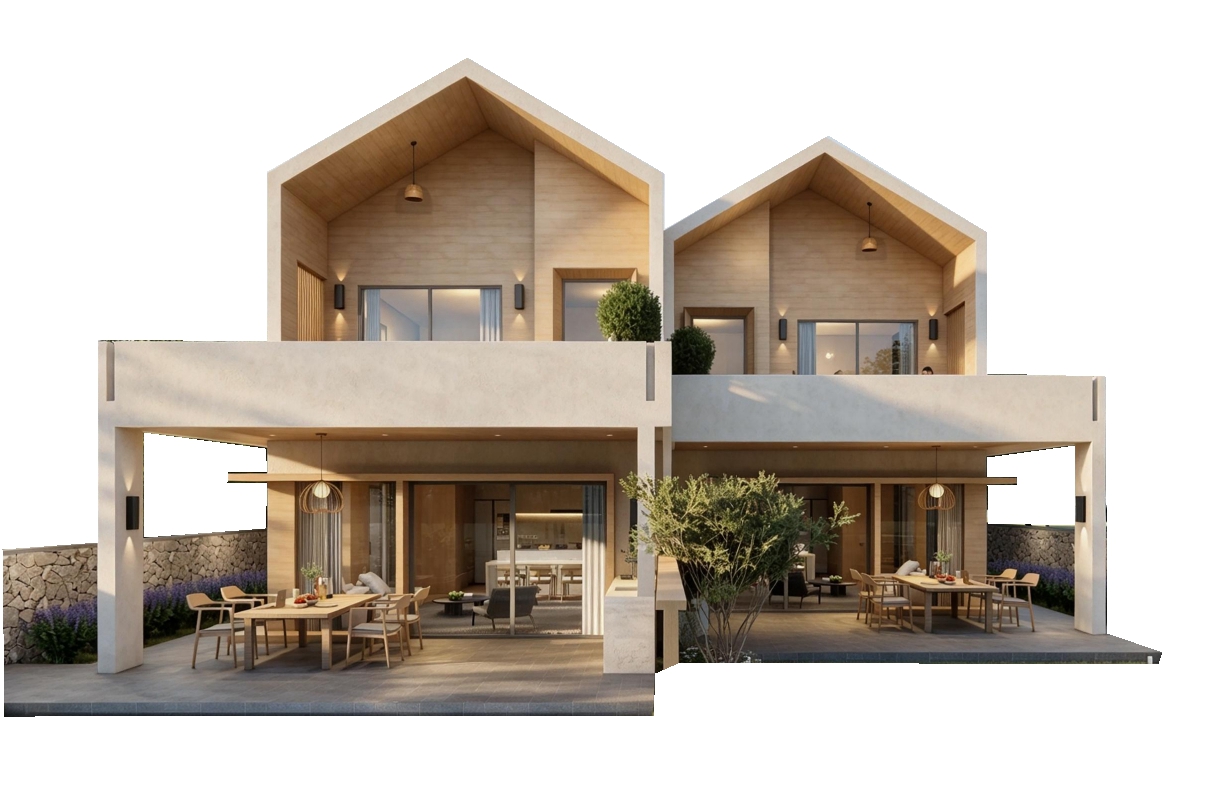
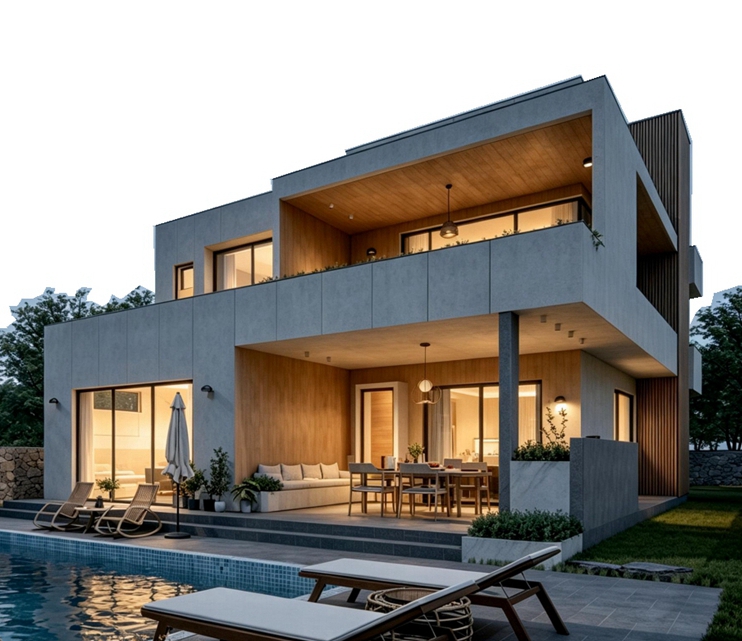
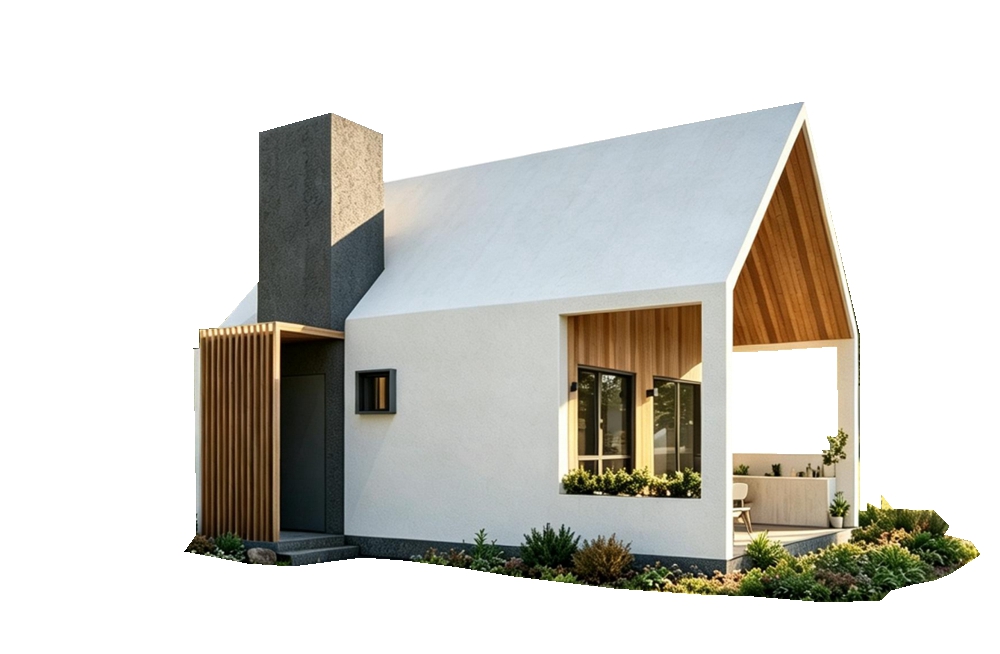
Against the backdrop of global carbon neutrality and the advancement of green building development, prefabricated light steel villas have emerged as a core representative of environmentally sustainable construction, characterized by their low-carbon, energy-saving, and sustainable properties. Distinct from traditional construction methods that rely on extensive resource consumption, the green construction technology of prefabricated light steel villas integrates standardized prefabrication, eco-friendly material application, and efficient on-site assembly, thereby establishing a full-life-cycle green construction system. This article elaborates in detail on the core links, technical characteristics, and environmental advantages of the green construction technology for prefabricated light steel villas, and presents a comparative parameter table with traditional brick-concrete buildings. It provides professional references for global industry practitioners and builders, while demonstrating the technological value of prefabricated light steel villas in advancing the transformation of green construction.
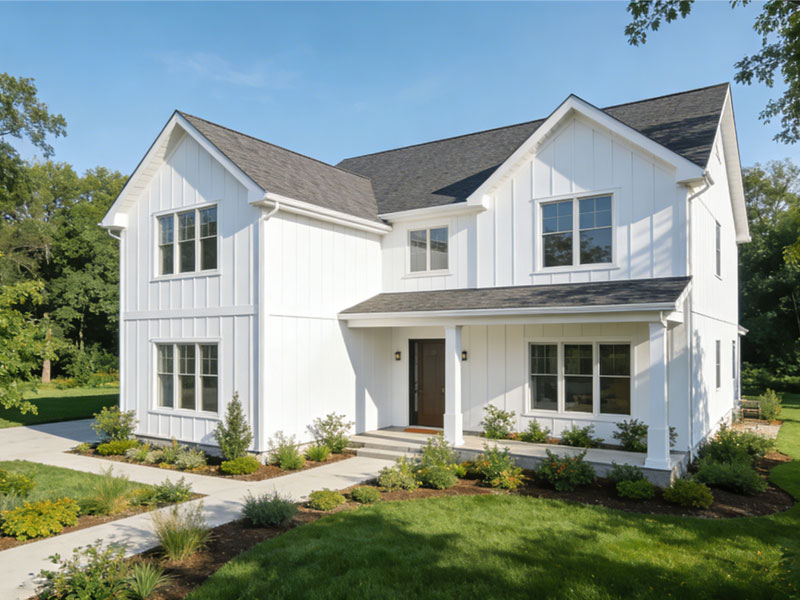
The green construction of prefabricated light steel villas adheres to the concept of "low-carbon, energy-saving, environmental protection, and efficiency", covering four core links from design and prefabrication to on-site assembly and post-maintenance. Each link strictly complies with international green building standards and industry norms, ensuring the overall environmental performance and construction quality of the project.
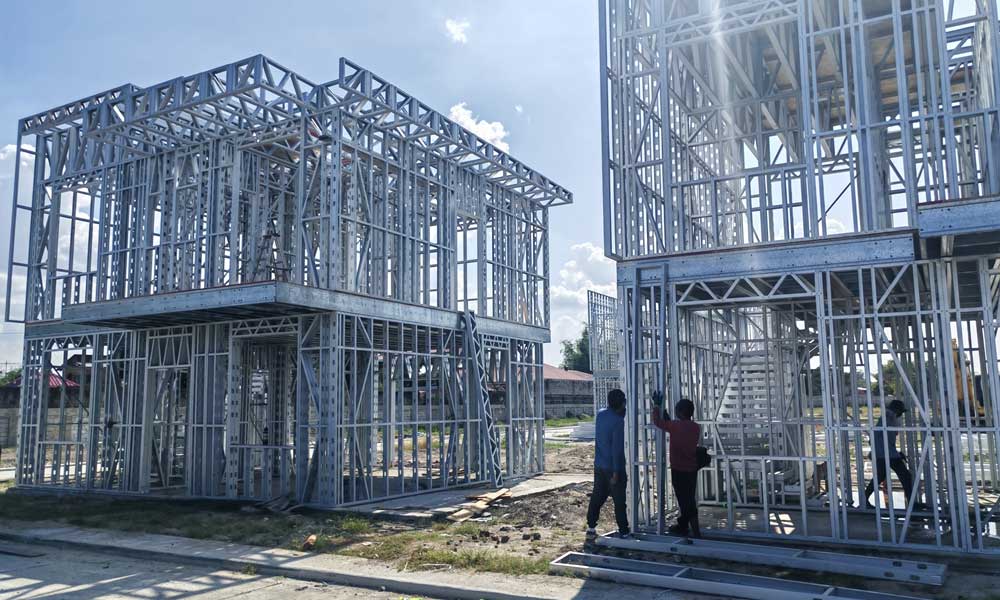
The green design of prefabricated light steel villas takes the full-life-cycle environmental impact as the core, integrating terrain adaptability, energy conservation, and material recyclability. Professional designers integrate on-site terrain conditions and user requirements to complete the overall design, utilizing BIM (Building Information Modeling) technology to simulate the building’s energy consumption, carbon emissions, and material utilization rate. This enables the optimization of structural layouts to minimize unnecessary resource waste. Meanwhile, the design fully considers the recyclability of components, ensuring that more than 90% of the components can be disassembled and reused upon the expiration of the building’s service life, which is consistent with the general principles of prefabricated buildings specified in ISO/DIS 25084.
More than 85% of the components of prefabricated light steel villas are prefabricated in dust-free factory environments, employing automated assembly line production processes to ensure that processing accuracy is controlled within ±0.2mm. The main structural components are fabricated from high-strength hot-dip galvanized steel, which is processed through physical cold pressing without the addition of any harmful additives. Notably, the steel can be 100% recycled without any loss of performance. During the prefabrication process, factories strictly implement energy-saving management measures, reducing production energy consumption by 30% relative to traditional component processing methods. Waste generated during production is centrally recycled, with a recycling rate of 95% or higher, fundamentally eliminating environmental pollution caused by on-site processing.
On-site assembly of prefabricated light steel villas adopts a dry construction method, which eliminates the need for on-site concrete mixing and effectively mitigates dust, noise, and sewage pollution. Prefabricated components are connected using physical fasteners instead of formaldehyde-containing adhesives, ensuring zero formaldehyde emissions during the construction process. A 200㎡ two-story light steel villa can be completed by 6-8 professional workers within 20 days, with the construction period shortened by 60% compared to traditional brick-concrete buildings. This significantly reduces energy consumption and carbon emissions during the construction phase. Additionally, the lightweight nature of the components reduces the demand for foundation materials, achieving savings of 60% in concrete and 55% in water consumption compared to traditional buildings.
The supporting materials of prefabricated light steel villas all comply with international environmental protection standards. The wall insulation layer adopts rock wool or glass wool produced by melting natural ores, which are non-toxic, harmless, and non-volatile, with a thermal conductivity as low as 0.032W/(m·K). This results in an energy-saving effect 3.2 times that of traditional brick walls. Decorative panels utilize fiber cement boards with water-based paint finishes, whose VOC (Volatile Organic Compounds) content is ≤30g/L, significantly below the national standard, thus ensuring healthy indoor air quality. All materials have passed ISO 14001 environmental management system certification, forming a full-chain green material system from selection to application.
To intuitively reflect the green advantages of the prefabricated light steel villa construction technology, the following parameter table compares its core green indicators with those of traditional brick-concrete buildings, based on test data from authoritative third-party institutions and international industry standards:
Green Indicators | Prefabricated Light Steel Villas | Traditional Brick-Concrete Buildings | Relevant Standards/Requirements |
|---|---|---|---|
Life-Cycle Carbon Emissions (kg CO₂eq./㎡) | 2848.58 | 3055.11 | ISO 14040 Life Cycle Assessment Standard |
Construction Waste Generation (kg/㎡) | ≤2.5 | ≥20 | Prefabricated Building Evaluation Standard |
Material Recyclable Rate (%) | ≥90 | ≤30 | ISO/DIS 25084 Prefabricated Building Standard |
Construction Energy Consumption Reduction (%) | 30 | 0 | ISO 14001 Environmental Management Standard |
VOC Content (g/L) | ≤30 | ≥80 | GB 18582-2020 Indoor Decoration Material Standard |
Construction Period (200㎡ Two-Story Building) | 20 Days | 60 Days | Construction Industry Efficiency Standard |
The green construction technology of prefabricated light steel villas has gained widespread recognition from international authoritative bodies. High-quality projects have obtained ISO 9001 quality management system certification, ISO 14001 environmental management system certification, and EN 1090 certification, with their green performance passing rigorous testing by institutions such as SGS and BV. In practical application scenarios, this technology can reduce the full-life-cycle carbon emissions of buildings by 6.76% compared to traditional buildings, and the environmental benefit during the end-of-life phase is 170.05% higher.
In rural renovation, cultural tourism homestay, and emergency resettlement projects worldwide, prefabricated light steel villas have become the preferred building form due to their green and efficient characteristics. This technology not only addresses the high pollution and low efficiency issues associated with traditional construction but also achieves the organic integration of environmental protection, safety, and practicality.
As a key technology driving the transformation of the construction industry towards green and low-carbon development, the green construction technology of prefabricated light steel villas integrates standardized production, eco-friendly materials, and efficient construction. It possesses significant advantages in energy conservation, emission reduction, and resource recycling. With the continuous improvement of global green building standards, this technology will be widely applied in more fields, leading the construction industry towards a more sustainable and healthy development direction.
 Follow us