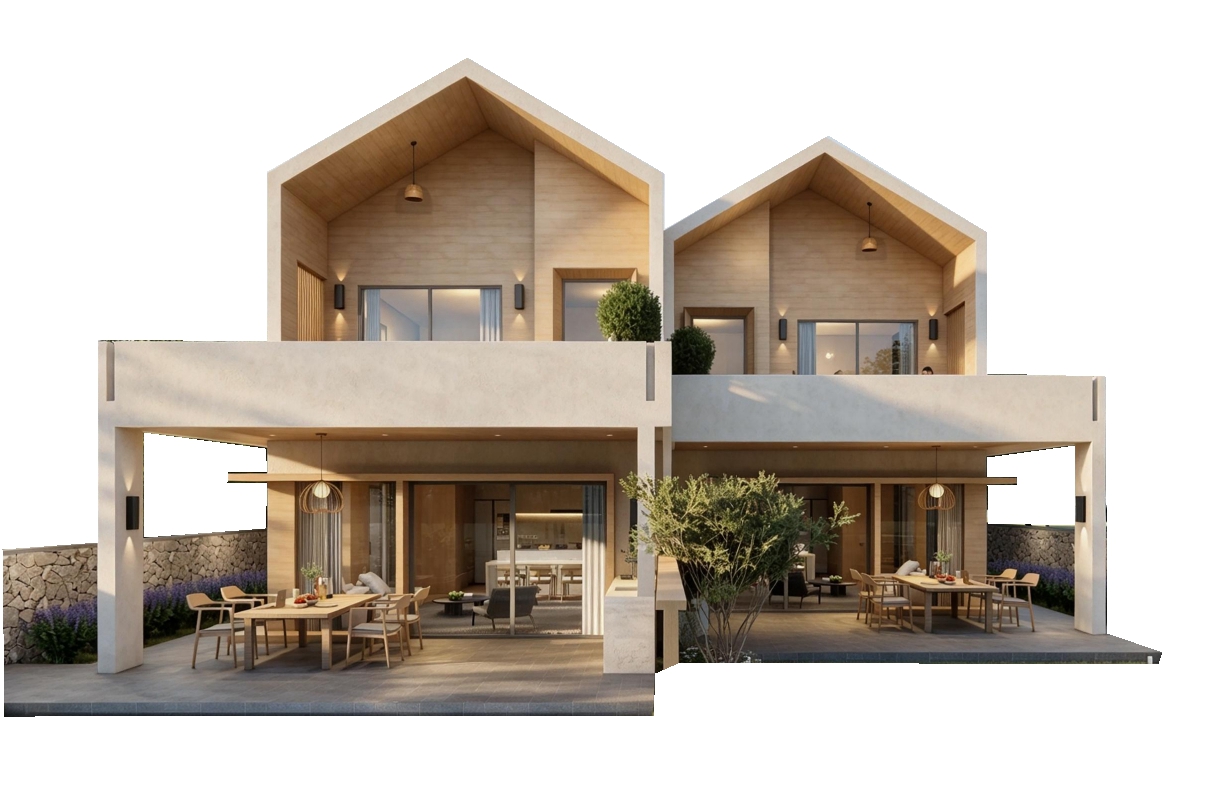
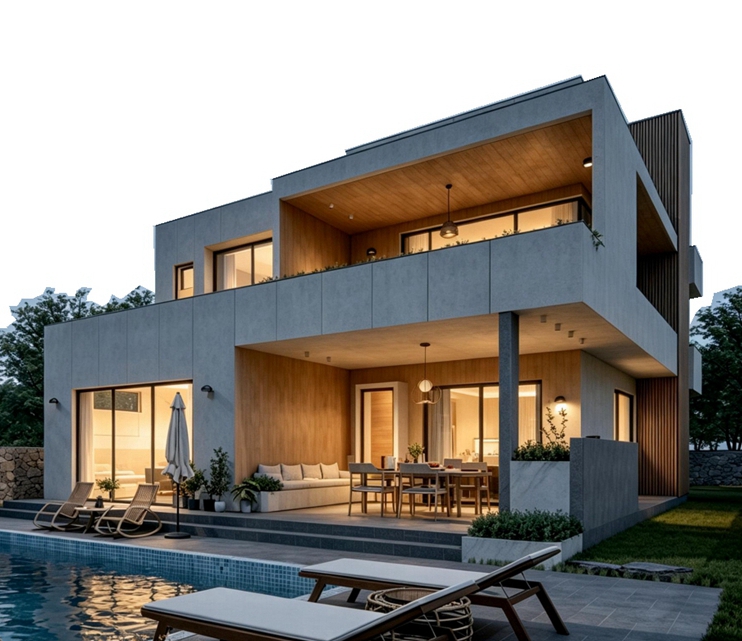
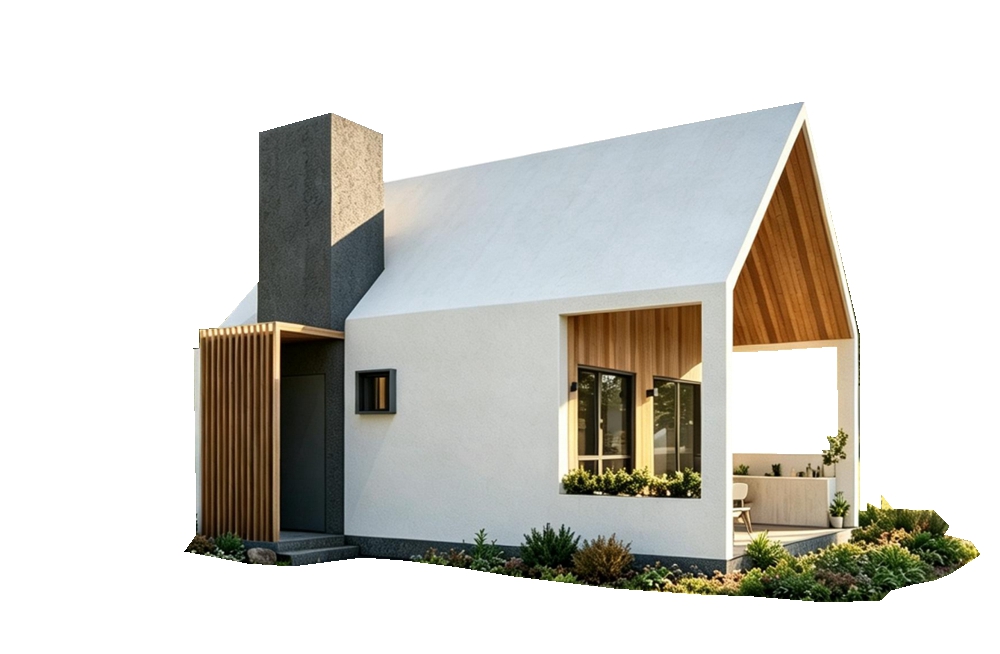
In Australia, light steel villas have been widely adopted in residential, rural, and tourism development projects, attributed to their superior durability, sustainability, and adaptability to the country’s diverse climatic conditions. All design and construction activities, however, must strictly adhere to the National Construction Code (NCC) and relevant Australian Standards (AS), which regulate structural safety, fire resistance, energy efficiency, and environmental adaptability. This article elaborates on the core design and construction requirements for Australian standard light steel villas, based on the latest standards and industry best practices, to provide authoritative technical guidance for developers, designers, and construction teams.
The design of Australian standard light steel villas is primarily governed by the NCC 2022 (Volume Two for residential buildings) and a series of AS standards, which establish the legal and technical framework for compliance. The NCC specifies minimum requirements for structural safety, energy efficiency, and fire safety, while dedicated AS standards govern the specific technical details of design and construction.
Key standards include AS/NZS 4600:2018 (Cold-formed Steel Structures), the primary technical standard for light steel framing design, which defines requirements for structural members, load-bearing capacity, and connection details. Additionally, AS 3959:2018 (Construction of Buildings in Bushfire Prone Areas) outlines fire resistance requirements for villas located in bushfire-prone regions, while AS 4055:2021 (Wind Loads for Housing) specifies wind resistance design criteria based on regional wind classifications. Compliance with these standards is mandatory for obtaining building approvals and ensuring the long-term structural integrity of light steel villas.
Structural design constitutes the cornerstone of Australian standard light steel villas, focusing on load-bearing capacity, wind resistance, seismic performance, and adaptability to local geological conditions. Light steel frames must be designed in strict accordance with AS/NZS 4600:2018, which governs the structural performance of cold-formed steel members, bracing systems, and connection details.
The thickness of light steel keels ranges from 0.8mm to 1.5mm, with Q355B or S550 high-strength alloy steel as the preferred material to ensure sufficient load-bearing capacity for multi-story light steel villa designs. Wind resistance design must comply with AS 4055:2021, with regional design wind speeds specified accordingly—for instance, 45m/s in Melbourne, 50m/s in Sydney, and 60m/s in coastal Queensland. Seismic design adheres to the AS/NZS 1170 series, with most regions requiring compliance with seismic zone 2 standards to resist minor to moderate seismic activity.
All materials utilized in Australian standard light steel villas must comply with stringent quality and compliance criteria, with an emphasis on durability, fire resistance, and energy efficiency. Light steel components must undergo hot-dip galvanization treatment, with a zinc layer thickness of no less than 80μm to ensure corrosion resistance, particularly in coastal or high-humidity regions.
Exterior wall materials must meet the fire resistance requirements specified in AS 3959:2018, with non-combustible materials (such as cement fiberboard or metal carved board) mandatory for villas in bushfire-prone areas. Thermal insulation materials, including glass wool or extruded polystyrene (XPS) boards, must comply with the energy efficiency requirements of NCC 2022, with a minimum thermal resistance (R-value) of 3.5 for walls and 4.5 for roofs to achieve the mandatory 7-star energy rating. OSB boards used for wall and roof sheathing must conform to EU EN 300 standards to ensure structural stability and moisture resistance.
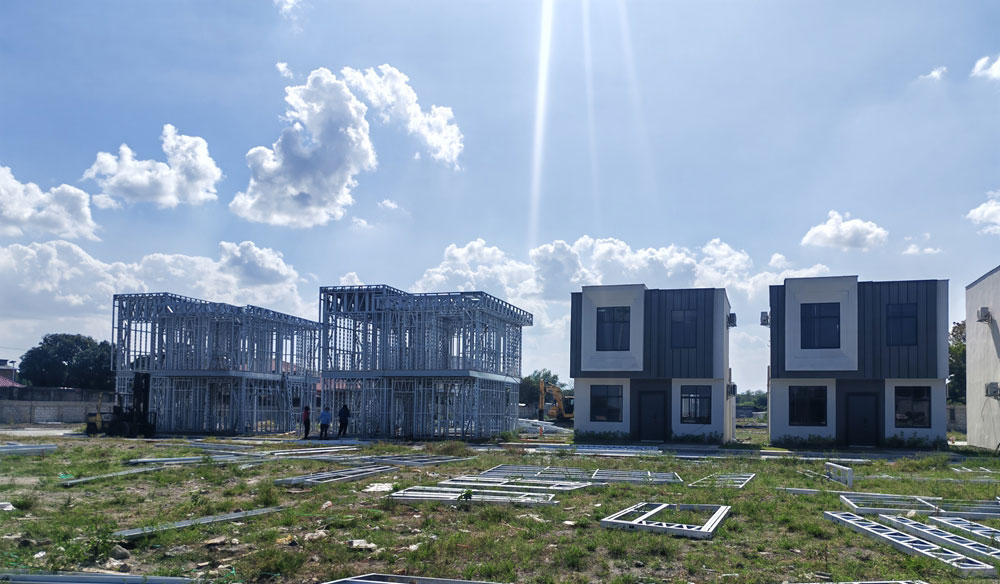
The construction of Australian standard light steel villas must adhere to rigorous on-site practices, with a focus on prefabrication quality, installation accuracy, and compliance with safety standards. Prefabricated light steel components must be manufactured in accordance with AS 3623:1993 (Domestic Metal Framing) to ensure consistent quality and adherence to specified tolerances.
On-site installation must be conducted by certified contractors—for example, in New South Wales, a valid contractor licence is mandatory for projects with labour and material costs exceeding $5,000. Connection details between steel frames, walls, and foundations must comply with AS/NZS 4600:2018, utilizing high-strength self-tapping screws to avoid welding, which may compromise the corrosion resistance of light steel components. Foundation design must be tailored to local geological conditions, with shallow foundations (400-600mm) suitable for most regions, while additional reinforcement is required for soft soil areas.
Parameter Category | Standard Requirement | Relevant Standard | Regional Adaptation Notes |
|---|---|---|---|
Light Steel Keel Thickness | 0.8-1.5mm | AS/NZS 4600:2018 | 3-story villas require ≥1.2mm thickness |
Zinc Layer Thickness | ≥80μm | AS/NZS 4600:2018 | Coastal areas require ≥100μm |
Thermal Resistance (R-value) | Walls ≥3.5; Roofs ≥4.5 | NCC 2022 | Cold regions (e.g., Tasmania) require R≥5.0 for roofs |
Design Wind Speed | 45-60m/s | AS 4055:2021 | Coastal Queensland: 60m/s; Melbourne: 45m/s |
Bushfire Attack Level (BAL) | BAL 12.5-40; Flame Zone | AS 3959:2018 | Rural areas require BAL 29+; Flame Zone for high-risk areas |
Energy Rating | ≥7-star | NCC 2022 | Mandatory for all new residential buildings |
Q1: What are the core standards governing the design of Australian standard light steel villas?A1: The core standards include the NCC 2022 (Volume Two) for overall compliance, AS/NZS 4600:2018 for cold-formed steel structure design, AS 3959:2018 for bushfire resistance in high-risk areas, and AS 4055:2021 for wind load design. These standards collectively guarantee structural safety, energy efficiency, and environmental adaptability, and compliance is mandatory for obtaining building approvals.
Q2: How does the Bushfire Attack Level (BAL) impact the construction of light steel villas in Australia?A2: BAL is determined based on the risk of bushfire attack, with five categories (BAL 12.5, 19, 29, 40, and Flame Zone) specified in AS 3959:2018. Higher BAL levels necessitate stricter fire-resistant measures, including non-combustible external cladding, sealed building envelopes to prevent ember ingress, and heat-resistant glazing. For example, Flame Zone areas require fully non-combustible framing and cladding systems to enhance resilience against direct flame contact.
Q3: What qualifications are required for contractors undertaking the construction of light steel villas in Australia?A3: Contractors must hold a valid building licence relevant to the project scope. In most states (e.g., New South Wales), a contractor licence is mandatory for projects with labour and material costs exceeding $5,000. Furthermore, contractors must possess expertise in cold-formed steel installation and compliance with AS standards, and all on-site work must be supervised by a qualified professional to ensure alignment with NCC and AS requirements.
Compliance with Australian standards is critical to ensuring the safety, durability, and long-term performance of light steel villas. By adhering to the design and construction requirements outlined above, developers and construction teams can deliver projects that meet legal obligations, withstand local climatic conditions, and provide sustainable, high-quality residential solutions.
 Follow us