For a long time, the development of affordable housing in Africa has been constrained by multiple bottlenecks, making it difficult to truly achieve the dual goals of "affordability" and "applicability". Traditional affordable housing generally adopts brick-concrete structure, which has high costs of building material transportation and construction. The construction cycle is as long as 2-3 months, and it requires a lot of manpower and material resources, which is not compatible with the current situation of weak infrastructure and tight labor resources in Africa.
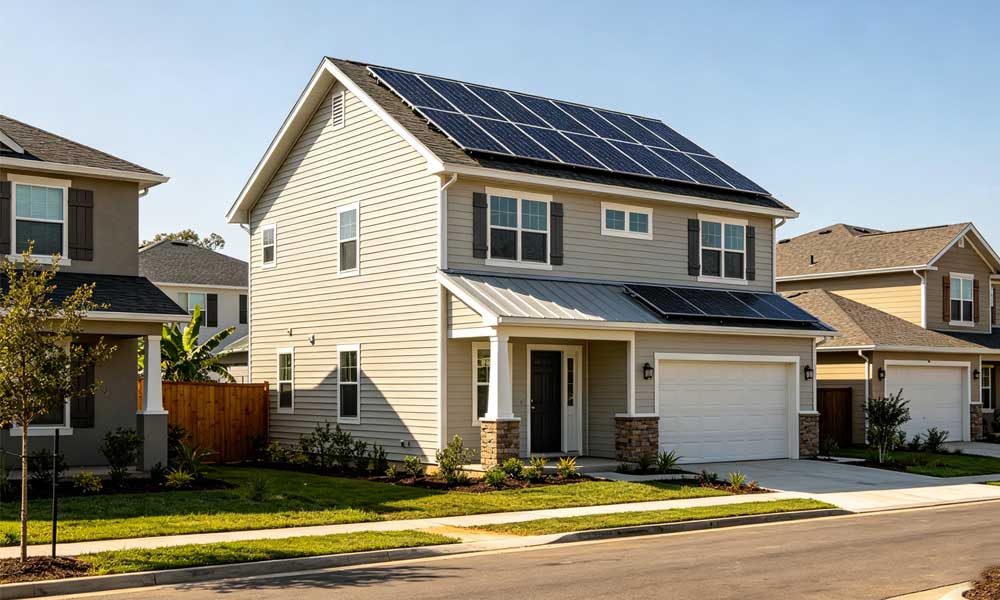
More prominently, power supply is unstable in most areas of Africa. Traditional affordable housing is not equipped with energy solutions, so residents have to rely on diesel generators for power supply. This not only has high use costs—monthly electricity expenses account for 15%-20% of household disposable income, increasing the living burden of low-income groups—but also diesel power generation has problems such as pollution and unstable power supply. At the same time, traditional brick-concrete buildings are difficult to adapt to the climatic characteristics of high temperature and high salt spray in Africa, and are prone to problems such as wall mold and structural damage, resulting in high later maintenance costs, which violates the core design purpose of affordable housing.
Hanliang Ruijie breaks through the inherent limitations of traditional affordable housing, deeply integrates light steel villas with photovoltaic energy storage systems, and restructures the core logic of affordable housing in Africa from three dimensions: cost, efficiency and energy. In terms of cost control, Q355B grade high-strength light steel keels are used as the main structure. Through the modular construction mode of factory prefabrication and on-site assembly, the loss of building materials and transportation costs are greatly reduced. The cost of a single unit is 18%-25% lower than that of traditional brick-concrete affordable housing, which accurately matches the economic bearing capacity of low-income groups in Africa.
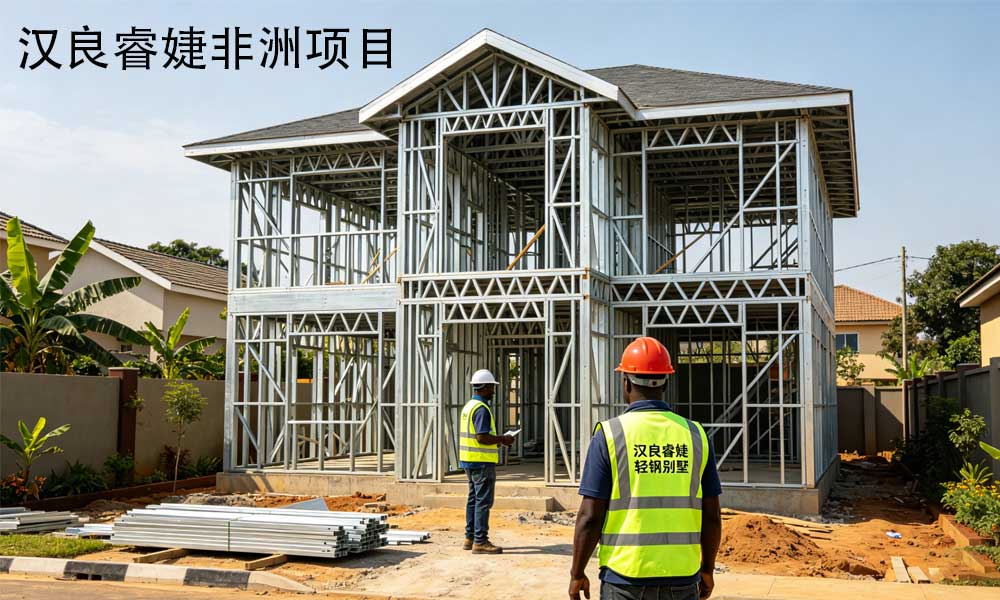
In terms of construction efficiency, 3-5 professional constructors can complete the installation and commissioning of a single house within 7 days. The construction cycle is 80% shorter than that of traditional brick-concrete buildings. No large-scale construction equipment is required, which is compatible with the actual situation of weak infrastructure in Africa and can quickly alleviate the pressure of local housing gap. In terms of energy supply, relying on the abundant solar energy resources in Africa, it is equipped with high-efficiency monocrystalline silicon photovoltaic panels and lithium iron phosphate energy storage equipment to build an independent energy supply system, realizing a closed-loop mode of "generating electricity during the day and storing electricity at night". A single 5kW photovoltaic energy storage system can meet the daily electricity needs of a family, with an energy self-sufficiency rate of more than 75%, completely getting rid of the dependence on diesel power generation and unstable power grids. It can save residents 300-500 US dollars in electricity bills every year, effectively reducing the living burden.
The core essence of affordable housing lies in "applicability". Based on the climatic characteristics and people's livelihood needs in Africa, Hanliang Ruijie comprehensively improves product quality and builds a reliable line of defense for people's livelihood housing. The light steel keels are treated with AZ150-AZ200 galvanizing, combined with high-density rock wool sandwich panels, which can effectively resist the erosion of complex environments such as high temperature and high salt spray. The wind resistance level reaches level 12, and the service life can reach 50 years, far exceeding the standard of traditional temporary housing. At the same time, the house is equipped with an efficient heat insulation layer, which can stably control the indoor temperature below 28℃ in a high temperature environment of 40℃, significantly improving the living comfort.
In terms of compliance, the relevant products have passed ISO9001 quality management system certification and EU CE certification. It can assist customers in handling relevant certification procedures in various African countries such as SONCAP in Nigeria and ECTN in Ghana, which strictly complies with local building codes and ensures the smooth acceptance of the project. In view of the climatic differences in different regions of Africa, customized adaptation solutions are provided: anti-corrosion treatment of buildings is strengthened in coastal areas, and ventilation design is optimized in inland high-temperature areas, truly realizing "adapting to local conditions" product adaptation.
At present, Hanliang Ruijie's light steel villa + photovoltaic energy storage solution has been applied in low-income communities in many African countries, proving the redefinition of affordable housing with practical cases. In the low-income community project in Nairobi, Kenya, an integrated solution was provided for 30 families. The cost of a single unit is 30% lower than that of local traditional housing. The photovoltaic energy storage system realizes full household electricity self-sufficiency, and residents do not need to pay electricity bills every month, which significantly reduces the living burden and has been highly recognized by the local government and residents.
In the "SolarSteel House" people's livelihood project in Ghana, 100 light steel villas equipped with photovoltaic energy storage systems were successfully delivered, and rainwater recycling systems were supporting synchronously, effectively solving the problem of water shortage in the local dry season. The photovoltaic system provides stable power support for community public lighting and small medical stations, further improving the local people's livelihood service system. The above cases fully show that Hanliang Ruijie's solution not only achieves the core demand of "affordability", but also achieves the people's livelihood goal of "usability and sustainability", completely breaking the limitations of traditional affordable housing.
Hanliang Ruijie accurately meets the people's livelihood needs in Africa through technological innovation. Through the in-depth integration of light steel villas and photovoltaic energy storage systems, it redefines the core value of affordable housing in Africa—not a simple low-cost residence, but a sustainable living solution integrating "affordability, applicability, energy saving and reliability".
 Follow us