With the acceleration of global green building transformation and the deepening of international trade cooperation, light steel villas, as a new type of prefabricated building with the advantages of energy conservation, environmental protection, fast construction and earthquake resistance, have been widely welcomed in the international market. However, many light steel villa exporters often face a core problem: what certifications are required to export light steel villas to overseas markets? Among numerous international certifications, CE and ISO certifications are the most basic and important access certificates, which directly determine whether products can smoothly enter the global market and gain the trust of overseas customers. This article combines international certification standards, actual export cases and professional operation experience to detailedly interpret the core requirements, application processes and key points of CE and ISO certifications for light steel villa export, helping exporters avoid certification risks, improve export efficiency and steadily expand the international market.
Before exploring the specific requirements of CE and ISO certifications, it is necessary to clarify the core significance of export certifications for light steel villas. In the international market, certifications are not only the "legal pass" for products to enter the target market, but also the key to proving product quality, safety and compliance. For light steel villas, which belong to prefabricated building products, different countries and regions have strict technical and safety requirements. Without corresponding certifications, products may be rejected at customs, banned from sale, or even face legal liabilities, resulting in huge economic losses for exporters. Among them, CE certification is a mandatory certification for entering the European Economic Area (EEA), while ISO certification is a globally recognized quality and environmental management certification, which can significantly enhance the market competitiveness and credibility of products.
CE certification is a mandatory safety certification for products sold in the European Economic Area, including the European Union (EU) member states and the European Free Trade Association (EFTA) countries. For light steel villas exported to the EU and EEA regions, CE certification is an indispensable access condition, which marks that the product complies with the relevant provisions of the EU Construction Products Regulation (CPR 305/2011/EU) and meets the basic safety and performance requirements of European construction products.
The core requirements of CE certification for light steel villas mainly focus on four aspects. First, structural safety. Light steel villas must comply with the European standard EN 1090, which specifies the technical requirements and implementation rules for steel structure and aluminum structure products, including the quality control of raw materials, production processes and structural design. The main steel frame of the light steel villa should use high-strength galvanized steel, such as S350 galvanized aluminum-magnesium steel or Q355B steel, with a zinc layer thickness meeting the standard requirements to ensure the structural stability and corrosion resistance of the product under different environmental conditions. Second, fire safety. According to the CPR directive, light steel villas must pass strict fire performance tests, and the external wall panels, roof materials and insulation materials used should meet the EU fire rating standards (at least B1 level), so as to avoid fire spread and ensure the safety of personnel and property. Third, environmental protection and health. The materials used in light steel villas, such as insulation materials and coatings, should not contain harmful substances such as formaldehyde and benzene, and meet the EU environmental protection standards to ensure that they will not cause pollution to the environment and human health during use. Fourth, energy conservation and thermal insulation. Light steel villas should be equipped with efficient thermal insulation systems, and the thermal insulation coefficient U value should meet the local energy conservation requirements of the EU, which is not only in line with the global green development trend, but also can meet the living needs of overseas customers in different climate regions.
The application process of CE certification for light steel villas is systematic and needs to be carried out in accordance with strict procedures. The first step is product classification and standard confirmation. Exporters need to confirm the specific EU harmonized standards applicable to light steel villas, mainly EN 1090 series standards, and clarify the performance indicators and test requirements that the product needs to meet. The second step is performance testing. Exporters need to entrust a third-party testing institution recognized by the EU to conduct comprehensive performance tests on light steel villas, including structural strength, fire resistance, corrosion resistance, thermal insulation and other items, and obtain a formal test report. The third step is the establishment of factory production control system. Exporters need to establish a complete production quality control system to ensure that the products produced in batches are consistent with the tested samples, and retain relevant production records and quality inspection reports. The fourth step is the preparation of technical documents, including product design drawings, material inspection reports, test reports, production process specifications and declaration of performance (DoP), which are used to prove the compliance of the product with CE certification requirements. The fifth step is certification application and mark affixing. After completing the above steps, exporters can apply for CE certification to the EU notified body (if required by the product classification), and affix the CE mark on the product and its packaging after passing the review, which indicates that the product can be freely circulated in the EEA region.
ISO certification is a globally recognized international standard certification, which mainly involves quality management, environmental management and occupational health and safety management. For light steel villa exporters, the most commonly used ISO certifications are ISO 9001 (Quality Management System Certification) and ISO 14001 (Environmental Management System Certification). Unlike CE certification, ISO certification is not mandatory in most countries, but it is an important "business card" to enhance product credibility and market competitiveness, and is often a basic requirement put forward by overseas customers when purchasing light steel villas.
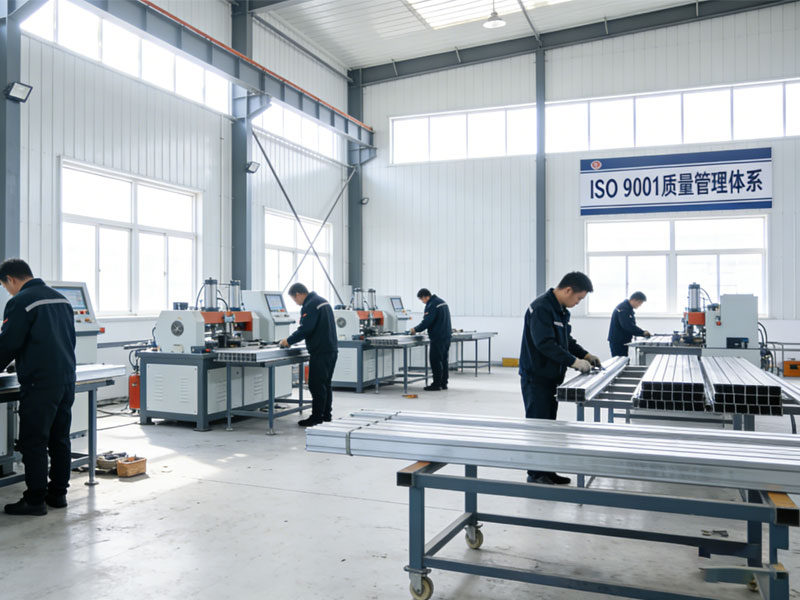
ISO 9001 quality management system certification focuses on the whole process quality control of light steel villas from design, production, installation to after-sales service. The core requirement is that exporters establish a complete quality management system, clarify the responsibilities of each link, standardize the production process, and ensure that the product quality is stable and consistent. Specifically, exporters need to formulate quality control plans, establish raw material inspection mechanisms (such as testing the quality of steel, insulation materials and other raw materials), strengthen the quality inspection of semi-finished products and finished products, and retain relevant quality records. After passing ISO 9001 certification, it can not only improve the internal management level of the enterprise, but also let overseas customers trust the product quality, thereby increasing the probability of signing orders.
ISO 14001 environmental management system certification focuses on the environmental impact of light steel villa production and construction. With the global attention to environmental protection, more and more overseas customers pay attention to the environmental performance of products. ISO 14001 certification requires exporters to reduce environmental pollution during the production process, such as controlling the emission of waste water, waste gas and solid waste, using environmentally friendly and recyclable materials, and reducing energy consumption and resource waste. For light steel villas, which are green and environmentally friendly prefabricated buildings, ISO 14001 certification can further highlight their environmental advantages, help exporters enter the markets of countries with strict environmental requirements, and gain more market opportunities.
The application process of ISO certification is relatively flexible, mainly including four steps. The first step is system establishment. Exporters need to formulate environmental management system documents (for ISO 14001) or quality management system documents (for ISO 9001) in accordance with the requirements of ISO standards, and clarify the management objectives, processes and responsibilities. The second step is internal audit. Enterprises conduct internal audits to check whether the established management system is effectively implemented and find out existing problems and rectify them. The third step is certification audit. Exporters entrust a third-party certification body recognized by the International Organization for Standardization (ISO) to conduct on-site audit, including reviewing system documents, checking production sites and verifying relevant records. The fourth step is certificate issuance. After passing the audit, the certification body issues the ISO certification certificate, which is valid for three years. During the validity period, the enterprise needs to accept the annual supervision and audit of the certification body to ensure that the management system is continuously effective.
In the process of applying for CE and ISO certifications for light steel villa export, exporters need to pay attention to several key points to avoid certification failures and delays. First, select a formal certification institution. Whether it is a CE certification notified body or an ISO certification body, it must have official recognition qualifications to ensure the validity and authority of the certification certificate. Some small and irregular certification institutions may issue invalid certificates, which will lead to product customs detention and other risks. Second, accurately grasp the certification standards. The EU CE certification standards and ISO standards are updated and revised regularly. Exporters need to pay attention to the latest standard requirements in a timely manner and adjust the product design and production process accordingly to ensure that the product meets the latest certification requirements. For example, the EN 1090 standard has been updated many times, and the latest version has higher requirements for the quality of steel components. Third, prepare complete application materials. Whether it is CE certification technical documents or ISO certification system documents, they need to be complete, standardized and true, including product drawings, test reports, production records, etc. Incomplete or untrue materials will lead to audit failure or certification delay. Fourth, combine the characteristics of light steel villas. Light steel villas have the characteristics of modularization and prefabrication. When applying for certification, exporters need to highlight these characteristics, such as explaining the production process of modular components and the advantages of on-site assembly, so as to better pass the certification audit.
At the same time, exporters often encounter some common problems in the certification application process. For example, the product does not meet the EN 1090 standard requirements, resulting in unqualified performance tests. The solution is to optimize the product structural design, select high-quality raw materials, and strengthen the quality control during the production process. Another example is that the technical documents are not standardized, which leads to the failure of the certification review. Exporters can entrust professional institutions to sort out and compile the technical documents to ensure that they meet the certification requirements. In addition, the certification cycle is too long, which affects the export schedule. Exporters can reasonably arrange the certification time in advance, understand the certification process and cycle, and speed up the application progress by communicating with the certification body in a timely manner.
For light steel villa exporters, CE and ISO certifications are not only the "pass" to enter the international market, but also the core support to enhance product competitiveness and market credibility. CE certification ensures that products can smoothly enter the EU and EEA regions and meet the mandatory safety and performance requirements, while ISO certification helps enterprises improve management level, enhance product quality and environmental performance, and gain the trust of overseas customers. In the process of international market expansion, exporters should attach great importance to the application of CE and ISO certifications, accurately grasp the certification requirements and processes, avoid certification risks, and continuously improve the quality and compliance of products. With the support of professional certifications, light steel villa exporters can better seize the opportunities of global green building development, expand the international market share, and promote the high-quality development of China's light steel villa export industry.
Q1: Is CE certification mandatory for light steel villa export? Which markets require it?
A1: Yes, CE certification is mandatory for light steel villas exported to the European Economic Area (EEA), including all EU member states and EFTA countries (such as Switzerland, Norway, Iceland). Without CE certification, products cannot pass customs clearance and cannot be sold in the EEA region. For markets outside the EEA, CE certification is not mandatory, but it can still serve as a proof of product quality and help improve the market competitiveness of products.
Q2: What is the difference between ISO 9001 and ISO 14001 certifications, and do I need to apply for both?
A2: The two certifications focus on different aspects. ISO 9001 focuses on quality management, ensuring the stability and consistency of product quality; ISO 14001 focuses on environmental management, reducing the environmental impact of production and operation. It is not mandatory to apply for both, but it is recommended that exporters apply for both. Many overseas customers, especially those from developed countries, often require suppliers to have both certifications, which can significantly enhance the credibility of enterprises and the competitiveness of products in the international market.
Q3: How long does it take to apply for CE and ISO certifications for light steel villas, and what is the approximate cost?
A3: The certification cycle varies according to the complexity of the product and the efficiency of the certification body. Generally, the CE certification cycle is 4-8 weeks, and the ISO certification cycle is 2-3 months. The cost is related to the scale of the enterprise, the scope of certification and the certification body. For small and medium-sized exporters, the total cost of CE and ISO certifications is usually between 10,000 and 30,000 US dollars. It is recommended that exporters choose formal certification institutions and obtain detailed quotation plans in advance to avoid unnecessary costs.
 Follow us